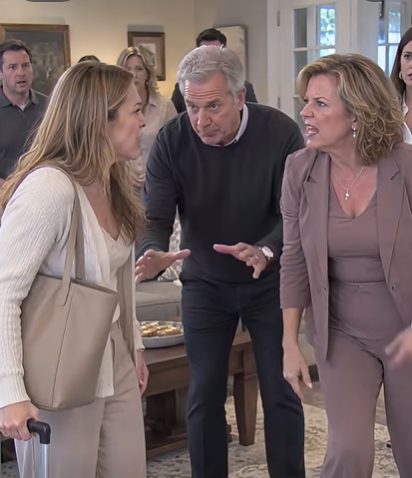
Mi madre me echó de la cena familiar de Acción de Gracias delante de veintitrés parientes, gritando que yo era la hija más egoísta que jamás había criado. No tenía ni idea de que yo había pagado en secreto cuarenta y ocho cuotas de la hipoteca para evitar que le embargaran la casa. Cuando señaló la puerta principal y me ordenó que me fuera, cogí mi bolso sin protestar. Esa noche, cancelé las transferencias automáticas. Cinco semanas después, papá me llamó presa del pánico. El banco había enviado un aviso de impago y mamá exigía saber dónde había ido a parar el dinero de la hipoteca.
Me llamo Rebecca Collins. Tengo treinta y siete años y soy gerente de proyectos en Charlotte, Carolina del Norte. Cuatro años antes, mi padre sufrió un derrame cerebral que lo obligó a jubilarse anticipadamente. Los gastos médicos agotaron sus ahorros y mis padres se atrasaron en el pago de la hipoteca. El banco ya les había advertido sobre una posible ejecución hipotecaria cuando mi padre me llamó llorando.
Organicé los pagos mensuales de $2,350 directamente a la entidad que administraba la hipoteca. Papá prometió avisarle a mamá, pero me pidió que no lo avergonzara delante de nuestros familiares. Acepté porque proteger su hogar me parecía más importante que obtener un crédito. En cuatro años, aporté $112,800 sin pedir ni un solo dólar a cambio.
Lamentablemente, mi hermano menor, Tyler, se llevó todos los elogios. Mamá les decía a todos que él era quien mantenía económicamente a la familia. En realidad, Tyler solo compraba comida de vez en cuando y nos visitaba los fines de semana. Sabía que yo pagaba la hipoteca porque papá se lo había dicho, pero nunca corrigió las suposiciones de mamá.
En Acción de Gracias, la discusión comenzó cuando mamá anunció que Tyler necesitaba 15.000 dólares para expandir su negocio de jardinería. Esperaba que yo aportara el dinero porque tenía un trabajo estable y no tenía hijos. Le expliqué con calma que no podía permitirme otro gasto importante.
Mamá golpeó la mesa con la cuchara de servir. Me acusó de acaparar dinero mientras Tyler lo sacrificaba todo por la familia. Cuando le recordé que ya había ayudado bastante, se rió y me exigió pruebas.
Miré a papá. Bajó la mirada y siguió cortando el pavo. Tyler sonrió con picardía. Nadie dijo nada.
Entonces mamá se puso de pie, señaló hacia la puerta y anunció que las hijas desagradecidas ya no eran bienvenidas en su casa. Mi tía Denise intentó intervenir, pero mamá le ordenó que no se metiera.
Me fui sin revelar los pagos de la hipoteca. Al llegar a casa, inicié sesión en mi cuenta bancaria y cancelé las transferencias recurrentes. También le envié un correo electrónico a mi padre explicándole que ya no pagaría una hipoteca de una casa donde no era bienvenido.
Forty days later, he appeared at my apartment holding a bank notice. His hands shook as he confessed that Mom had finally discovered who had been keeping their home.
But then he admitted something worse. Tyler had been collecting $1,500 every month from Mom, supposedly to help pay the mortgage.
I stared at Dad, trying to understand what he had just confessed. For four years, Mom had been giving Tyler money while I paid the actual mortgage. Dad explained that she believed Tyler was adding her contributions to his own and sending everything to the lender. Instead, the only payments reaching the mortgage account came from me.
I asked why Dad had never corrected her. He admitted he was ashamed of needing financial assistance and feared Mom would blame him for losing control of their retirement. Eventually, keeping quiet became easier than confronting Tyler. His silence had allowed my brother to steal tens of thousands of dollars while receiving praise for his generosity.
Dad handed me a folder containing bank statements and handwritten notes. Mom had withdrawn $1,500 almost every month and given it to Tyler. Over four years, those payments totaled approximately $72,000. Nobody knew how much of the money remained.
The notice Dad carried stated that the current payment was overdue and that additional missed payments could lead to further collection action. Their lender had not started foreclosure proceedings, but Dad was terrified because he had previously experienced the humiliation of nearly losing the property.
I explained that I was not listed on the mortgage and had never promised to support it indefinitely. I also reminded him that I had warned him before canceling the payments. Dad began crying and said he finally understood how badly he had failed me.
That evening, Mom called. Instead of apologizing, she demanded that I restart the transfers immediately. She claimed I was punishing her for one unfortunate argument. When I mentioned Tyler’s monthly collections, she went silent.
Then she accused me of trying to turn the family against my brother. She insisted Tyler had used the money responsibly, although she could not explain why the mortgage account showed no payments from him. I told her that the bank statements would answer more questions than her accusations.
Two days later, Aunt Denise called me. She had confronted Tyler after hearing about the missing money. He admitted using some of Mom’s contributions to cover gambling debts and business expenses. He promised to repay everything but refused to provide financial records.
I met with an attorney to understand whether my previous mortgage payments created any legal obligation. She confirmed that, based on the documents, I had voluntarily helped my parents without assuming responsibility for their mortgage. She also warned me not to resume payments without establishing clear boundaries.
Meanwhile, Dad contacted the lender to discuss their options. The bank offered information about hardship assistance and repayment arrangements, but approval depended on their actual income and financial circumstances. Tyler refused to contribute anything immediately.
Then Dad discovered that Mom had secretly taken out a $28,000 personal loan eighteen months earlier.
