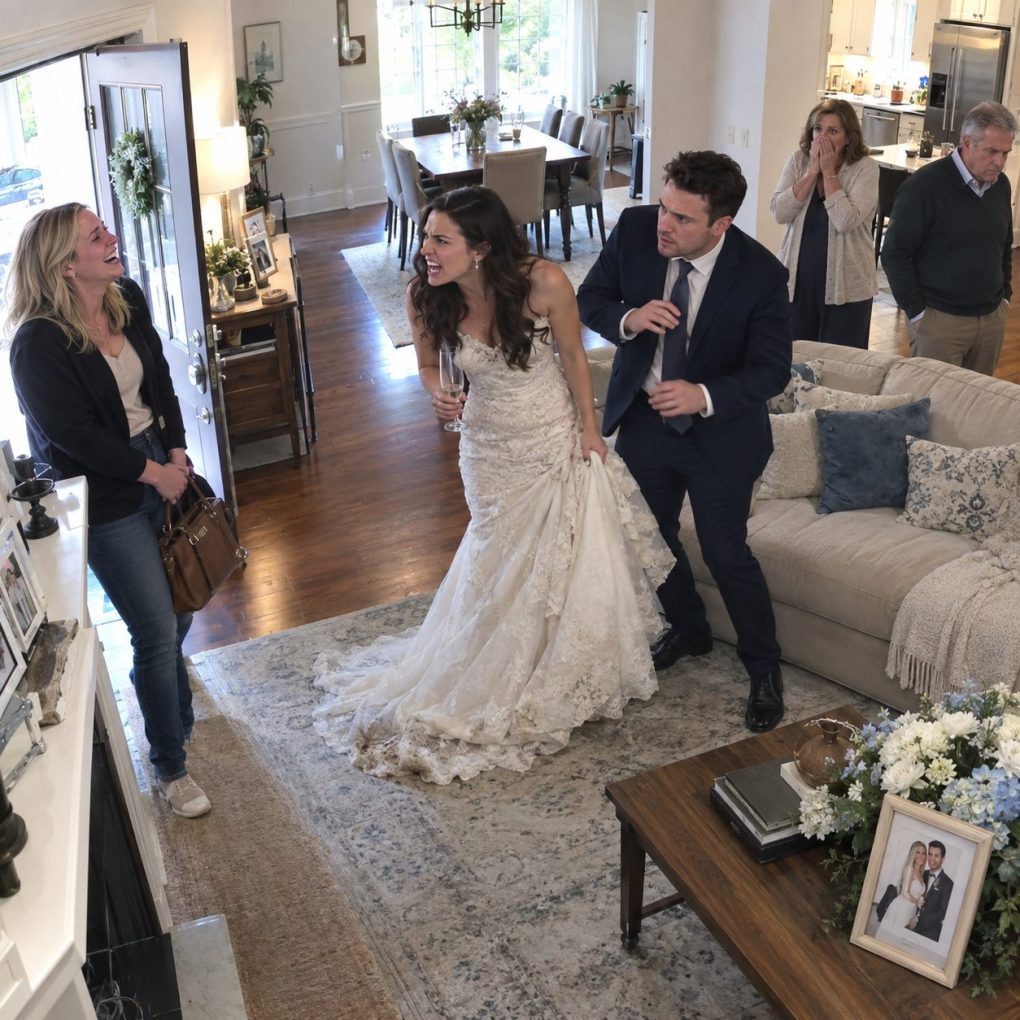
Cuando entré en casa de mis padres en Connecticut tres semanas después de haber desaparecido sin dejar rastro, mi hermana menor, Vanessa, estaba en el salón con el vestido de novia que yo misma había elegido. El encaje estaba arrugado en la cintura, el dobladillo manchado de champán, y Ethan —el hombre con el que se suponía que me casaría— estaba a su lado con la mano apoyada con orgullo en su espalda. Vanessa levantó la mano izquierda para que viera el anillo y sonrió. «Te perdiste la boda, Claire. Pero no te preocupes. Cuidé muy bien de tu prometido».
Mi madre palideció, pero aun así susurró: «Por favor, no lo arruines». Mi padre evitó mirarme a los ojos. Sobre la repisa de la chimenea había una fotografía del juzgado de Vanessa con mi vestido, Ethan con el traje azul marino que le había comprado y mis padres sonriendo forzadamente a su lado. Durante meses, Vanessa había bromeado diciendo que yo siempre lo conseguía todo primero: las mejores notas, el mejor trabajo, el apartamento más bonito; y ahora me miraba como si finalmente hubiera saldado cuentas. «Me eligió a mí», dijo. «Quizás eso es lo que más te duele».
Debería haberme enfurecido. En cambio, me reí tanto que tuve que dejar mi bolso sobre la mesa del comedor. La sonrisa de Vanessa desapareció primero, pero la cara de Ethan cambió por completo; sabía que esa risa no era de desamor. —¿Qué es gracioso? —preguntó ella. Miré a Ethan y le hice una pregunta: —¿Le contaste a tu esposa por qué cancelé nuestra boda? Él se acercó a mí de inmediato. —Claire, no empieces con esto. Fue entonces cuando mi padre finalmente levantó la vista.
Dos semanas antes de mi boda, descubrí que habían desaparecido 186.400 dólares de mi empresa de organización de eventos mediante facturas falsas de proveedores. No se lo conté a mi familia porque mi abogado me aconsejó documentarlo todo primero, y cuando confronté a Ethan en privado, solo admitió lo suficiente como para que me diera cuenta de que no conocía al hombre con el que estaba a punto de casarme. Rompí el compromiso, bloqueé todas las cuentas que controlaba y me fui de la ciudad mientras un perito contable rastreaba el dinero. Ethan les dijo a todos que yo había entrado en pánico y lo había abandonado.
Vanessa se cruzó de brazos. —¿Así que ahora vas a acusar a mi marido de robo porque no soportas que haya seguido adelante? —Abrí mi bolso y saqué un sobre cerrado. Ethan se alejó antes de que pudiera siquiera ponerlo sobre la mesa.
—No —dije—. Vine por lo que hizo después de que me fui.
Entonces deslicé el sobre hacia Vanessa.
“Antes de que llames a esto una victoria, deberías ver lo que tu marido firmó en tu nombre dos días antes de casarse contigo.”
Vanessa tore open the envelope so aggressively that the first page nearly ripped in half. She expected another accusation about my missing business money, but what she found was a loan application for $94,000 under her full legal name. It listed her Social Security number, salary, childhood address, and the exact value of the inheritance our grandmother had left her. At the bottom was Vanessa’s signature. She stared at it and whispered, “I never signed this.”
Ethan reached for the papers, but my father got there first. “Explain it,” he said. Ethan claimed Vanessa had agreed to start a business with him and had probably forgotten signing during their rushed wedding week. Vanessa shook her head. “I never agreed to borrow ninety-four thousand dollars.” For the first time since I arrived, she was no longer looking at me with triumph. She was looking at her husband like a stranger.
That was when I told them the part Ethan had left out. My accountant traced the fake payments from my company to a consulting account linked to a private mailbox Ethan rented, and my attorney found an attempted loan against my condominium using a forged version of my signature. When I confronted him, Ethan cried, blamed gambling debts, and begged for forty-eight hours to “fix everything.” Instead, he told my family I was unstable, selfish, and afraid of marriage.
My mother covered her mouth. Vanessa turned toward her. “You knew Claire was trying to warn you?” Mom admitted I had called the night Vanessa announced the courthouse wedding, but she had told me not to destroy my sister’s happiness because she assumed I was jealous. Vanessa had blocked me minutes later and sent a photograph of herself wearing my dress with the message, Some things look better on the right sister.
I watched that sentence come back to her without saying it aloud. Ethan shouted that I had manufactured everything, but I placed a second page on the table: a notice from the lender confirming the application had been frozen after my attorney reported suspected identity fraud. The money had not been released.
Vanessa’s hands trembled as she reached the last page, where Ethan had written the loan’s purpose: expansion of a private consulting business.
Then she noticed the date.
It had been filed before Ethan proposed to her.
Vanessa slowly lifted her eyes. “You didn’t marry me because you chose me, did you?”
Ethan said nothing.
And in that silence, my sister finally understood why I had laughed when I saw her in my wedding dress: she had not stolen my future.
She had stepped directly into the trap I escaped.
