I kept records anyway. Old habit. And two years ago, I started to worry. Your father’s treatments had changed. Cheaper. Less frequent. I asked around, carefully. His doctors told me the family had repeatedly declined the advanced treatment, the one your money was more than enough to pay for, and chosen the minimum instead.
I looked up from the letter. My father was watching me, struggling to breathe, confusion in his eyes.
Dad didn’t know, I realized. He’d been told for twenty-five years that they couldn’t afford his treatment. He had no idea I’d been sending a fortune home for his lungs.
And for the last thirteen years, neither had anyone been spending it on him.
PART 3
I kept reading, and the floor seemed to tilt.
I don’t know where the rest went, Doyle wrote. That’s not my place to prove. But I pulled what records I could, and they’re attached. In thirteen years, I can account for roughly two hundred thousand dollars that reached your father’s actual care. You sent, by my count, well over a million. I’m an old man and I’m dying and I couldn’t go to God still holding this. I’m sorry I didn’t tell you sooner. Find the rest, Claire. Your father deserves to know someone was trying to save him the whole time.
I lowered the letter.
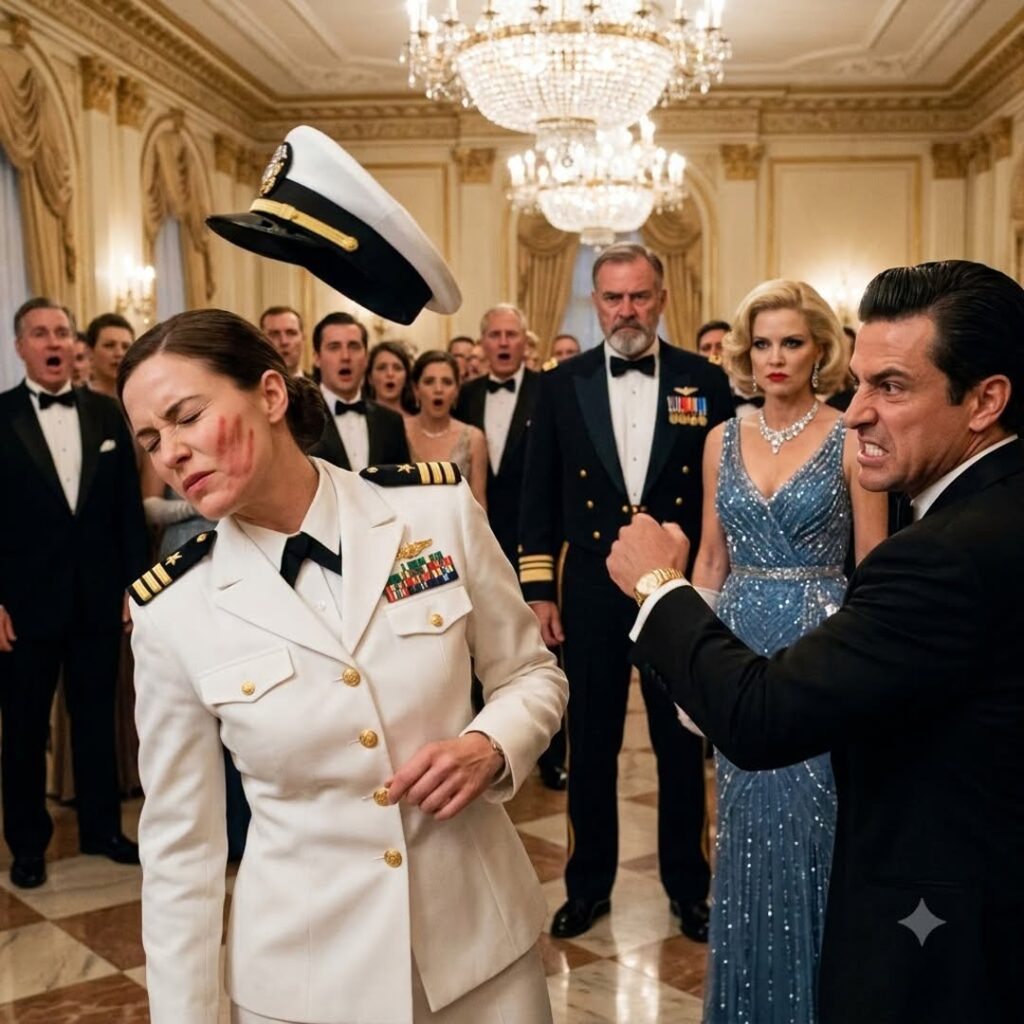
The ballroom was silent. Four hundred people, still standing, watching an admiral read a letter at her father’s wheelchair.
I looked at the bank records beneath. They were partial, the records of an old chaplain keeping careful notes. But they told enough of a story. Money sent. Money that reached the clinic for twelve years. Then a diversion. Then a trickle to my father’s care, while the full amount kept arriving every month.
I looked up at my mother.
“Mom,” I said quietly. “For thirteen years, where did the money go?”
Her chin was still high, but something had shifted in her eyes. “I don’t know what that man’s talking about. We spent everything we had on your father.”
“You didn’t have anything,” I said. “You had me. I’ve been sending money home every month for twenty-five years. For Dad’s lungs. Through Chaplain Doyle.” I watched the words land on my father, who went very still in his wheelchair. “Over a million dollars, Mom. And for the last thirteen years, almost none of it went to his treatment.”
My father’s voice came out cracked and thin. “Claire. What are you saying?”
“I’m saying I never stopped helping you, Dad,” I said, kneeling beside him. “The day I left, Mom told me if I went, not to come back asking for help. So I didn’t ask. I just sent. Quietly. Through the chaplain, so you’d never have to know it came from the daughter who left. Every month for twenty-five years.” My eyes burned. “You were told we couldn’t afford your treatment. We could. I made sure we could. The money was always there.”
My father turned to look at my mother. And in that look, thirty years of something I’d never understood finally came clear.
“Gloria,” he whispered. “Where did it go?”
My mother said nothing.
But my sister Natalie did.
“The house,” Natalie said, very quietly, staring at the floor. “The cars. Mom’s club memberships. Evan’s business that failed, twice. The second business that failed.” Her voice shook. “I found the statements two years ago. I didn’t know where the money came from. I thought it was Dad’s pension. I didn’t know it was you, Claire.”
Evan had gone white.
“Natalie, shut up,” my mother said.
“No,” Natalie said. “I’ve been covering for you for two years, Mom. Watching Dad get the cheap treatment while you told him it was all we could afford. I couldn’t figure out where the money was coming from or where it was going. I just knew Dad was getting worse and you kept buying things.” She looked at me, and she was crying. “I turned his oxygen down tonight. You saw. Mom told me to, before the gala. She said the portable unit’s battery lasts longer on a lower setting and we couldn’t afford to replace the battery.” Her voice broke completely. “We could afford anything. I didn’t know. I’m so sorry, Dad. I’m so sorry.”
PART 4
The oxygen. Set to one when the label said three. My mother had been rationing my father’s air, at a gala honoring veterans, to save a battery, while sitting on thirteen years of money meant to keep him breathing.
I stood up slowly.
I have faced a lot of enemies in twenty-five years. I have never felt the cold I felt looking at my mother in that ballroom.