“You took the money I sent to keep him alive,” I said, “and you spent it on a lifestyle. For thirteen years. While telling him he was dying because you couldn’t afford to save him.” My voice didn’t rise; it didn’t need to. “You turned down the treatment that would have helped his lungs, the treatment I was paying for in full, because keeping him sick and grateful and dependent cost less than keeping him well. And tonight you turned his oxygen down to save four dollars of battery.”
“You don’t understand the pressures I was under,” my mother said. The same sentence I would later learn these people always say. “Your father’s care, the house, the family’s standing—”
“His care,” I repeated. “His care was fully funded, Mom. By me. For twenty-five years. There were no pressures. There was only you, deciding that a sick husband and a million dollars was a better arrangement for you than a well husband and the truth.”
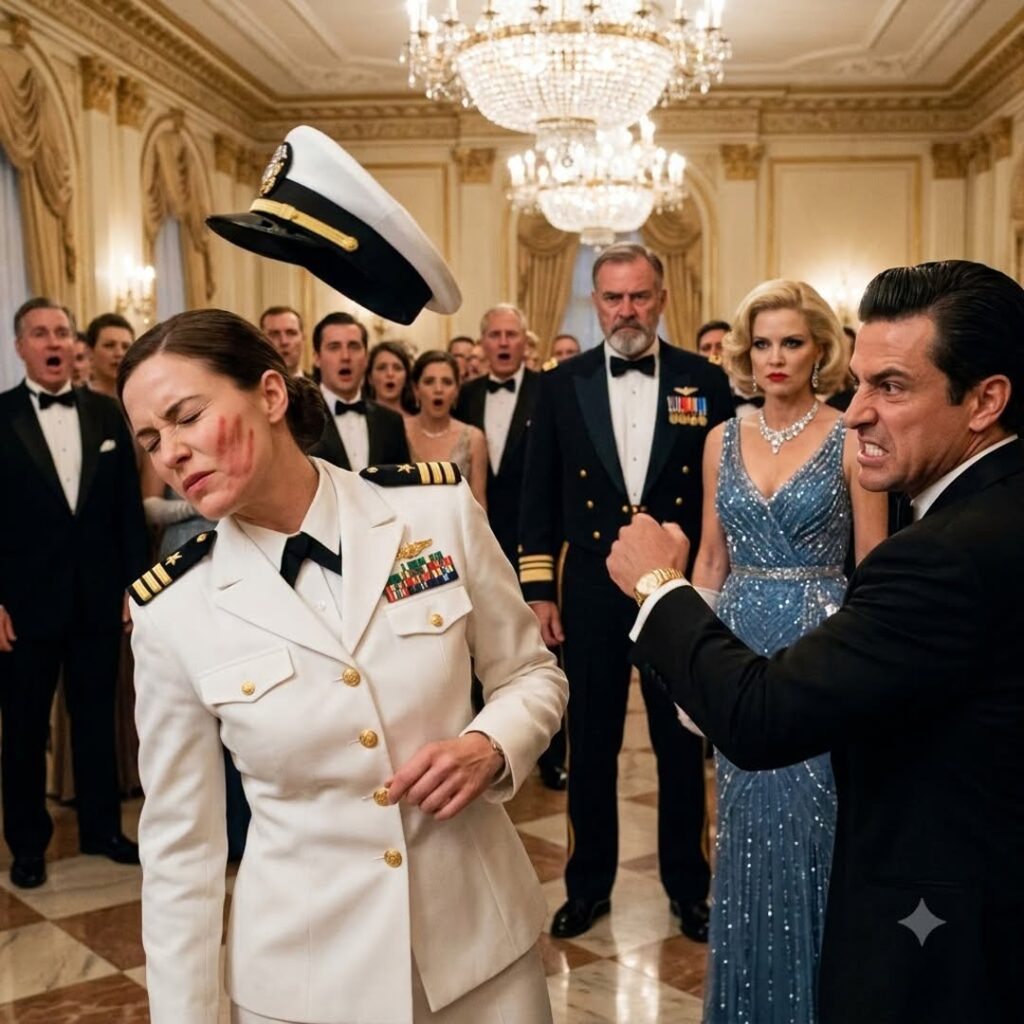
Commander Mercer had stepped back, but he hadn’t left. Neither had the four hundred veterans, who had heard every word, because the ballroom was that silent and my voice carries; they teach you that too.
My father was crying. A retired colonel, oxygen line in his nose, weeping in his wheelchair.
“All these years,” he said. “I thought you’d abandoned us, Claire. Your mother told me, when you left, that you’d washed your hands of this family. That you never sent a word, never a dollar, never asked after me.” He could barely get the breath for it. “I was angry at you for twenty-five years. For leaving a sick father. And you were keeping me alive the whole time, from the other side of the world, and letting me hate you for it.”
“I didn’t let you hate me, Dad,” I said gently. “Mom did. The same way she made you believe you were too poor to be saved. The story that I abandoned you and the story that we couldn’t afford your lungs were the same lie. They had to be. Because if you ever found out I was sending money, you’d have found out where it was going.”
Evan finally spoke. My brother, who’d struck me across the face ten minutes earlier for embarrassing the family.
“I didn’t know,” he said. His voice had lost all its swagger. “Claire. The business money. Mom said it was an inheritance. From an aunt. I swear to God I didn’t know it was yours. I didn’t know Dad was—” He looked at our father, gray and gasping, and something broke in his face. “I hit you. For embarrassing the family. And you’ve been the only one keeping it alive.”
PART 5
I did not handle the rest of it in that ballroom. Some things you don’t do in public, even when the person deserves it, because your father is struggling to breathe four feet away and he matters more than your vindication.
I got my father out of there. Mercer helped. We took him straight to a hospital that night, where I authorized, in person, with my own name on the paperwork and my own money, the full advanced treatment his lungs had needed for thirteen years. The doctors were careful not to promise too much. Thirteen years of inadequate care does damage you can’t fully undo. But they could give him more time, and more comfortable time, than the cheap version ever would have.
He had two more years. Good ones, mostly. I took leave I’d been banking for a decade and spent as much of it as I could with him, on the porch my sister used to photograph him on. We had twenty-five years of conversations to catch up on. He wanted to hear all of it, every deployment, every thing I’d never been able to tell him. He said, more than once, that the worst part wasn’t the money. It was the twenty-five years he’d spent believing his daughter didn’t love him, when she’d been loving him the whole time in the only way my mother had left open to her: silently, from far away, through a chaplain, where it couldn’t be twisted into something he’d have to feel grateful for.
My mother was investigated. Chaplain Doyle’s records, partial as they were, plus the bank statements Natalie had kept, plus my twenty-five years of transfer confirmations, added up to a clear enough picture. Financial exploitation of a dependent adult, among other things. The full amount was impossible to recover; most of it was long spent. But the house was sold, and what it brought went into a trust for my father’s care, and then, after he passed, to Natalie, who had earned it ten times over.