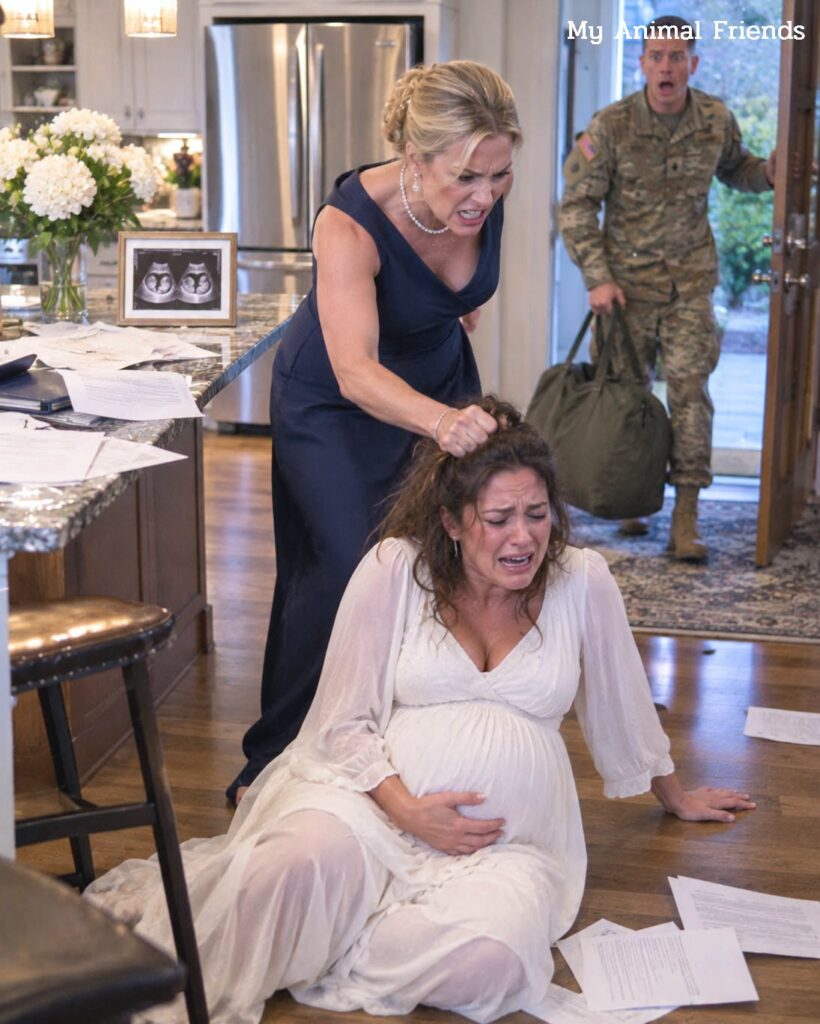
“I need you to look at something,” I said.
A minute passed after I sent the image.
Then another.
“Ryan?”
“I’ve never seen this.”
“Your name is on it too.”
“I didn’t sign it.”
His answer came quickly, but I could hear him studying the page.
“The trust isn’t administered by our bank,” he said. “It’s through Merritt Fiduciary. They wouldn’t release money just because someone sent a form.”
“But someone tried.”
“Yes.”
The distinction mattered. Trying had put me on a kitchen floor. Failure had made Brianna furious. I needed to understand what had happened before she rang our doorbell.
Ryan gave me the name of the trust officer, Nathan Cole. Then he sent an email authorizing Nathan to speak with me about the account, copying our attorney, Claire Benton.
There was no dramatic speech. No promise to ruin everyone. Just three people brought into a conversation that Denise would have preferred to keep private.
Nathan called the next morning.
“First, the funds are secure,” he said. “No distribution has been made.”
I held the phone tightly enough to hurt my hand.
“Was a request submitted?”
“Yes. We identified inconsistencies and did not process it.”
“What inconsistencies?”
“The requested destination account wasn’t associated with an approved provider. The supporting invoice also required verification. We contacted Mr. Brooks through the number we had on file.”
Ryan had been in meetings and asleep across the world. Nathan had left a message. Brianna had come to our house before Ryan returned it.
“What was the invoice for?”
“A neonatal home nursing package.”
I looked toward the hospital corridor.
“They used my babies.”
Nathan paused.
“I’m sorry.”
I was learning that people who were actually sorry rarely spent five minutes explaining why they weren’t responsible for how you felt.
Claire arrived that afternoon with a legal pad and a canvas bag. She was in her fifties, with silver hair cut neatly at her chin. She introduced herself, asked whether I was comfortable discussing financial matters, and waited while a nurse checked my incision.
Only after the nurse left did she sit down.
“I represent you and Ryan in the trust matter,” she said. “If your interests ever diverge, we will address that directly. Right now, I want to help secure your records and your home.”
“Can you get the money away from his family?”
“The trust already keeps them from controlling it. We can make sure contact instructions and security procedures reflect what happened.”
“Denise has our house key.”
“That is easier to fix.”
Mrs. Alvarez offered to meet a locksmith. Ryan approved the change from his phone. Claire reminded me to preserve messages rather than argue with them.
Then she asked about the signature.
I gave her examples from old documents. On the forged page, my first name curved exactly as it did on a holiday card I’d sent Denise. But my last name had been copied from a different signature, one with a flourish I’d stopped using years earlier.
Someone had assembled me from scraps.
Claire photographed the examples with my permission and asked that the originals remain where they were until Ortiz advised us.
“Don’t try to investigate this yourself,” she said. “Write down what you remember. Keep what arrives. Let the investigators handle the rest.”
“I don’t even know who sent the photo.”
“Then don’t respond yet.”
Around four, Denise appeared outside my room holding flowers.
I saw her through the glass before she saw me.
For one humiliating moment, I wanted her to come inside and hug me. I wanted her to say she’d been wrong. I wanted a mother so badly that my own heart kept reaching for the nearest person willing to wear the title.
Then I remembered her message.
We need to think about the children.
I pressed the call button and told Felicia I didn’t want the visitor admitted.
Denise protested in the hallway.
“I’m her mother-in-law.”
“The patient has declined visitors,” Felicia said.
“She’s upset.”
“Yes,” Felicia replied. “And she has declined visitors.”
The flowers disappeared with Denise.
Twenty minutes later, Ryan called.
“My mother says you humiliated her.”
I stared at the blanket.
“I asked for privacy.”
“I told her that.”
“You don’t have to keep reporting every awful thing she says.”
He went silent.
Then he said, “You’re right. I’m sorry.”
It was a small correction, but I felt its weight. For years, he’d brought me his family’s complaints as if delivering the mail. I had been expected to answer all of them.
Now the mail could stop at his door.
In the hour between Claire’s visit and the next trip to the neonatal unit, I opened the notes app on my phone and began a list.
People who had keys.
Places where we kept copies of documents.
