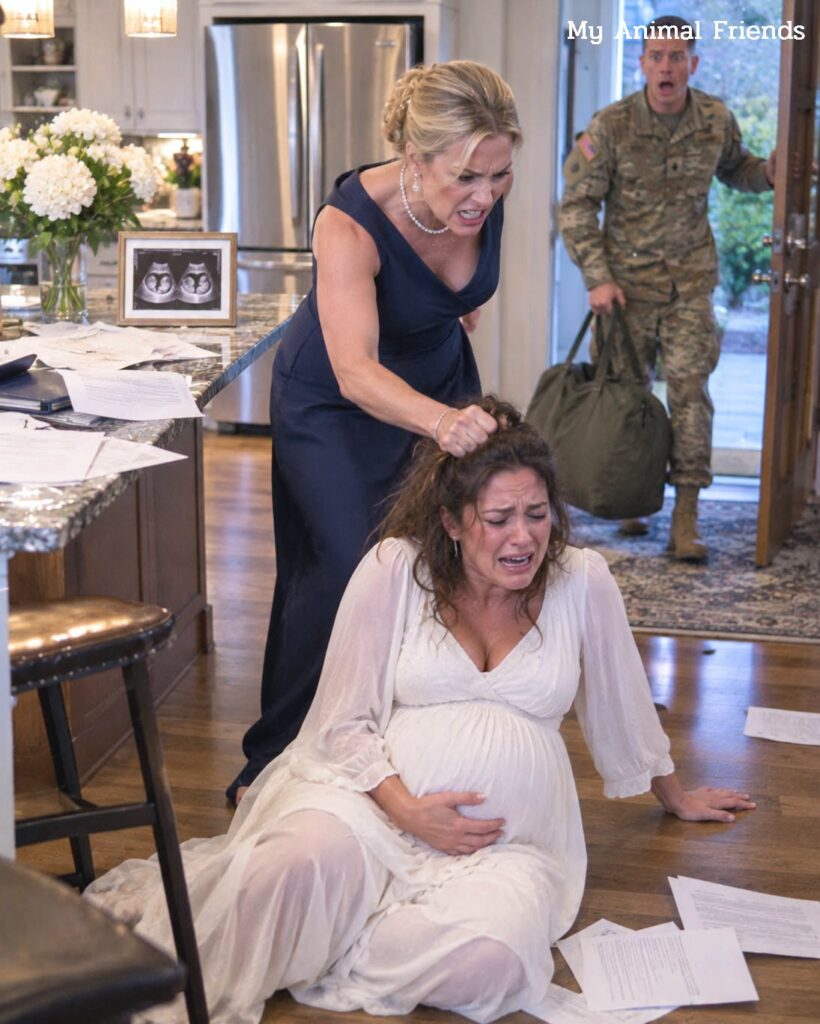
Things Brianna had said about Friday.
I did not call it evidence. I called it things to remember, because that was all it was until someone could check them.
The list took longer than I expected. There were ordinary gaps in my knowledge. I didn’t know which bank held Brianna’s business account. I didn’t know whether Denise had borrowed against her house. I didn’t know who had first suggested the trust was available to rescue a failing salon.
For years, I’d been told those matters weren’t my business.
Now my body had become the place where their business landed.
A nurse noticed me rubbing my eyes and asked whether I needed a break. I said I needed to finish.
“Will the list disappear if you rest?” she asked.
“No.”
“Then let it wait.”
I locked the phone. A simple action, but it felt like learning a foreign language. Everything in Ryan’s family had always been urgent when they wanted something and inconvenient when I did.
For once, without offering an explanation, I let the list wait.
Mrs. Alvarez helped me brush my hair. She worked from the ends upward, patiently freeing the tangles. My mother used to do that when I was sick.
I told her so.
“Mine too,” she said.
We talked about our mothers for a while. Recipes they never measured. Songs they misremembered. The strange way grief could hide for months, then step out of a hairbrush.
When we finished, I looked less exhausted.
More importantly, I felt like a person someone had taken time to care for.
That night, Sophie needed more support than she had the previous afternoon. The nurse explained the change without making it sound either meaningless or hopeless. I sat beside my daughter with a paperback Ryan had packed in the hospital bag weeks ago.
It was a children’s book about a rabbit searching for home.
I read three pages before my voice gave out.
“Finish it tomorrow,” the nurse said.
“What if she needs the ending tonight?”
“She needs your voice. She has that.”
I started again.
Across the room, another mother rocked in a chair with empty arms. We exchanged a look that contained no introductions. Neither of us needed to explain why we were there after midnight.
When I returned to my room, Ortiz was waiting.
“We’ve identified the number that sent the photograph,” she said. “The sender has agreed to meet with us.”
“Who is it?”
“A woman named Tessa Ward. Does that name mean anything to you?”
I shook my head.
“She works at Brianna’s salon.”
Brianna owned a small boutique salon in a shopping center near Denise’s house. Every holiday, we heard about expanding locations, hiring celebrity stylists, launching products. Every spring, she borrowed more money to cover the winter.
“What does she know?”
“We’ll determine that after the interview.”
There was something Ortiz wasn’t saying. I recognized restraint now. It was different from secrecy. She wasn’t hiding my life from me. She was protecting facts from becoming guesses.
Before leaving, she asked whether Brianna had mentioned a deadline during the attack.
I shut my eyes and let the kitchen return in fragments.
The sound of her heels. The glass in my hand. Her perfume.
“Friday,” I said. “She said everything had to be fixed by Friday.”
Ortiz wrote it down.
After she left, I listened to a voice message from Ryan. His final flight had departed. He would reach the hospital before morning.
For the first time in days, I felt myself loosen.
Then a second message arrived from Denise.
If you force them to investigate Brianna’s business, you won’t like what they find about your husband.
I read it once.
Twice.
Then I sent it to Ortiz and Claire.
Whatever Friday meant, Denise knew enough to be afraid of it.
Chapter 4 – THE MAN WHO CAME HOME
Ryan arrived at five seventeen in the morning carrying the hospital bag he had found beside our front door.
He looked older than he had on the screen. His shirt was wrinkled. His beard had grown unevenly. He stopped just inside my room as if approaching too quickly might make me disappear.
“Come here,” I said.
He crossed the room, bent carefully, and held me without touching the places that hurt.
For a while, neither of us talked.
His face was wet against my shoulder.
When he finally sat down, he placed two tiny knitted hats on the blanket. I’d packed them before he left for Singapore. At the time, I’d worried the babies would outgrow them too quickly.
Now they looked enormous.
“Tell me where you need me,” he said.
“Here.”
He nodded.
“And don’t ask me to make peace with your mother.”
“I won’t.”
“Even if she cries.”
His jaw tightened.
“Even then.”
