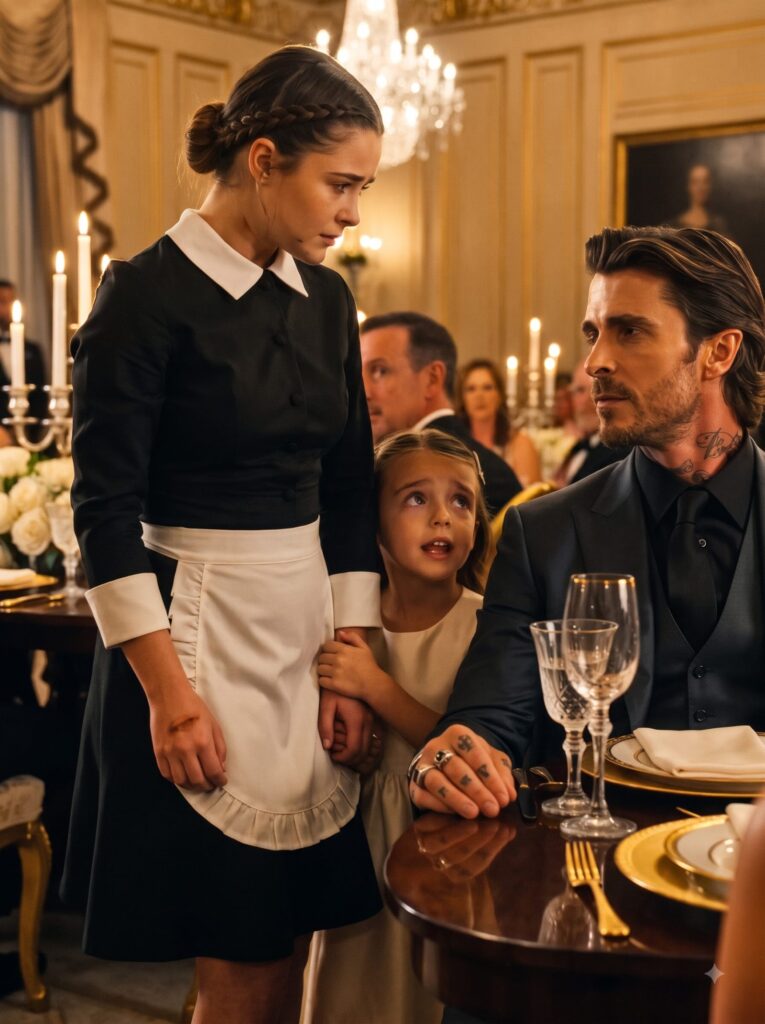
I had learned in nursing school that certainty could be dangerous; observations were safer. In Moretti mansion dining room, the details kept pulling me back to the same lesson: I could not protect anyone by pretending a frightening possibility was already a fact. I refuse the lawyer’s demand and call emergency services. I checked what I knew against what I had written, and where the record ended, I said so. It was an uncomfortable discipline, especially with Luca’s life and my own livelihood tangled together.
“I thought money could fix this,” he admitted. “Money can pay for help,” I said. “It cannot replace the truth.” His answer never made the situation simple. We had to decide whether to trust a document, a witness, or a memory, and sometimes the honest response was to wait for corroboration. I thought about how Vanessa had controlled the room by speaking first and loudly. I had nearly allowed her certainty to become mine. Instead I asked another question, listened carefully, and refused to let embarrassment decide what happened next.
Outside, ordinary people continued their ordinary lives. A bus passed, somebody laughed at a joke, and a phone rang behind a closed door. The contrast felt cruel at first. Then it steadied me. There was a world beyond this crisis, and whatever came next would have to leave room for it. I had spent years learning how to remain useful when I was afraid. That did not make me fearless. It gave me something practical to do with fear.
The lawyer tells a guard to lock the doors.
Chapter 2 – The Woman in the Scarlet Dress
By sunrise, everyone had a version of what happened.
Dr. Shah spoke plainly: Luca had suffered a serious hypoglycemic episode and needed observation, testing, and a careful review of everything he had been given. She did not promise an easy answer. Vanessa arrived with a bouquet and an expression practiced for cameras. The doctor refused to discuss Luca’s care with her without his permission. That single boundary transformed Vanessa’s sympathy into rage. A hospital administrator then told me a complaint had been filed alleging I had tampered with medication. I asked for the allegation in writing and offered my time-stamped nursing notes. Luca heard the exchange through the partly open door. “She kept me alive,” he said, voice thin but certain. “Then why is she the one being investigated?” I could not answer. I knew only that the complaint was meant to pull my attention away from the man who had almost died.
Luca watched me carefully, as if he expected the next person to ask him for something. In St. Catherine’s emergency department, the details kept pulling me back to the same lesson: I could not protect anyone by pretending a frightening possibility was already a fact. At the hospital, Dr. I checked what I knew against what I had written, and where the record ended, I said so. It was an uncomfortable discipline, especially with Luca’s life and my own livelihood tangled together.
“Are you frightened?” he asked. “Yes,” I said. “That does not make me wrong.” His answer never made the situation simple. We had to decide whether to trust a document, a witness, or a memory, and sometimes the honest response was to wait for corroboration. I thought about how Vanessa had controlled the room by speaking first and loudly. I had nearly allowed her certainty to become mine. Instead I asked another question, listened carefully, and refused to let embarrassment decide what happened next.
Outside, ordinary people continued their ordinary lives. A bus passed, somebody laughed at a joke, and a phone rang behind a closed door. The contrast felt cruel at first. Then it steadied me. There was a world beyond this crisis, and whatever came next would have to leave room for it. I had spent years learning how to remain useful when I was afraid. That did not make me fearless. It gave me something practical to do with fear.
The easiest thing would have been to answer anger with anger. I did not. In St. Catherine’s emergency department, the details kept pulling me back to the same lesson: I could not protect anyone by pretending a frightening possibility was already a fact. Priya Shah stabilizes Luca. I checked what I knew against what I had written, and where the record ended, I said so. It was an uncomfortable discipline, especially with Luca’s life and my own livelihood tangled together.
“You could walk away,” Luca said. “I know. That is why staying means something.” His answer never made the situation simple. We had to decide whether to trust a document, a witness, or a memory, and sometimes the honest response was to wait for corroboration. I thought about how Vanessa had controlled the room by speaking first and loudly. I had nearly allowed her certainty to become mine. Instead I asked another question, listened carefully, and refused to let embarrassment decide what happened next.