Armand felt an older unease mingle with his concern, because this way of protecting the establishment did not come from nowhere.
For years, he had been telling his teams that major donors, official delegations and long-standing clients required special attention.
He had never ordered an employee to be humiliated or a refusal to be ignored, but he had rewarded those who made conflicts disappear before they reached private rooms.
Damien had simply applied this culture with a brutality that the presence of Madame Beaumont now made visible.
At 11:40, Céleste Varenne sent a letter from her lawyer to the palace contesting any forced manipulation of the chair and denouncing a public attack on her reputation.
The letter reminded them that the Varenne family had to pay eight hundred thousand euros to the Lumière Foundation over the next three years.
He demanded a written apology from Nora, her permanent exclusion from events supported by the family, and the removal of any photographs showing Celeste during the incident.
“That’s the price,” murmured Armand.
“The price of what?” asked the compliance officer.
“Of all the times we’ve led our patrons to believe that their support also bought our version of events.”
At two o’clock, Nora received a second call, this time from Armand.
She hesitated before answering.
“I want to inform you that the departure proposal sent this morning was not approved by Ms. Beaumont.”
“But it was validated by someone.”
“By the human resources department, with my agreement in principle before I read the final draft.”
Nora clutched the phone to her ear.
“You say that as if your agreement mattered less because you hadn’t read all the lines.”
Armand accepted the reproach without trying to defend himself.
“You’re right.”
“Why suggest I leave before even watching the footage?”
“Because I thought I was protecting you from an unequal battle and protecting the establishment from a public crisis.”
“You wanted to protect the palace from the moment I revealed what he had done.”
” Yes. “
The frankness surprised her, but it did not lessen her anger.
“So you’re no different from Damien.”
“Not as much as I would have thought last night.”
He asked her not to sign any documents before the adversarial interview and informed her that she could be accompanied by a person of her choice.
Nora noted every detail, then asked him the only question that still mattered.
“Did you find the images?”
“No decisive sequence yet.”
“So, for now, you have a very wealthy woman telling the truth and a low-wage worker saying the same thing.”
“For now, I also have an executive who has written an incomplete report.”
“Incomplete or false?”
Armand did not reply.
After the call, Nora printed the proposal and placed it next to her bills.
The sum seemed even larger on paper.
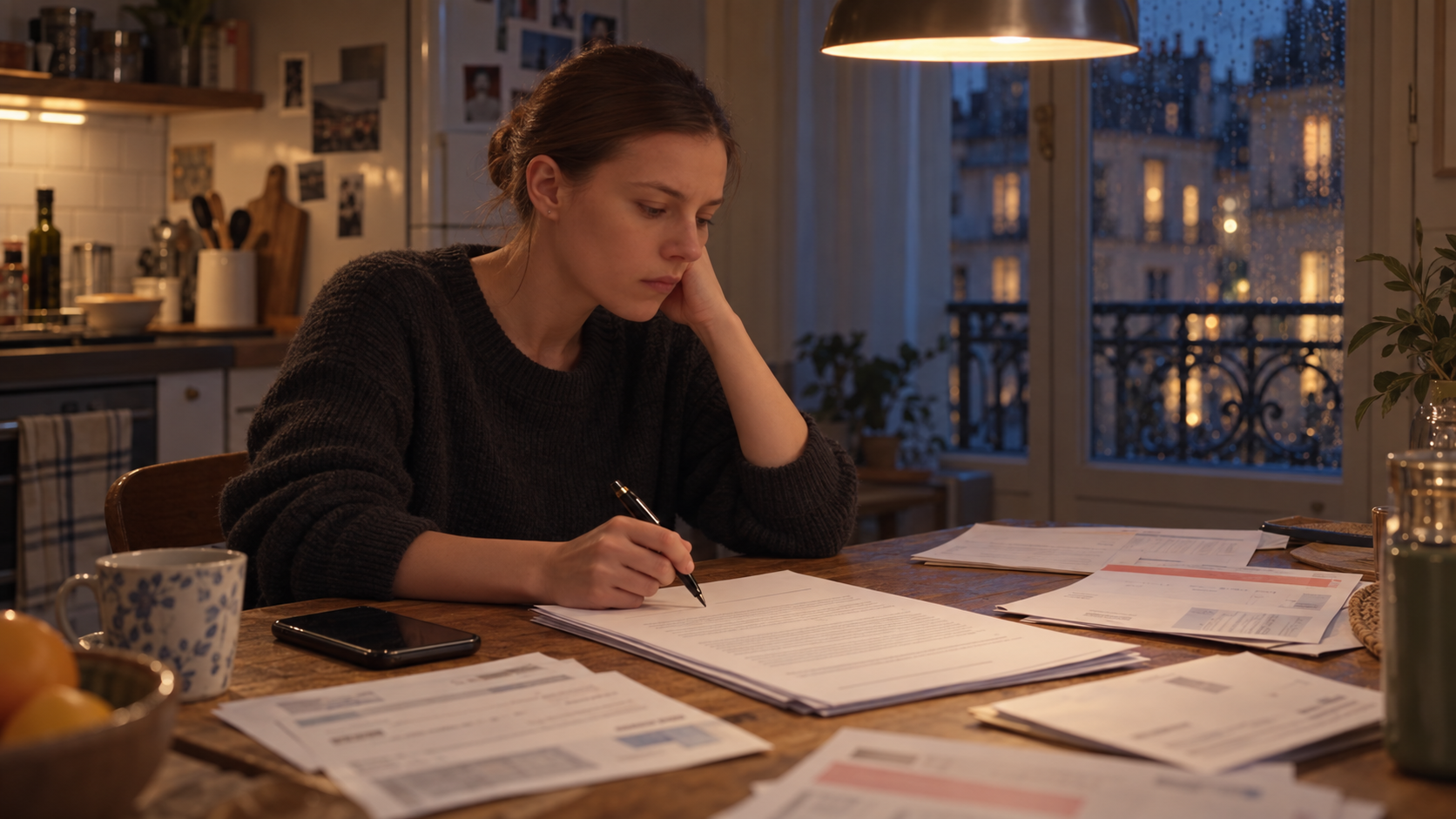
She took a pen, wrote the date above her signature, then remained motionless until the ink dried on the tip.
Instead of signing, she wrote down on a separate sheet of paper everything Damien had told her on the phone, with the exact time and the phrases she remembered.
In the evening, Lucas arrived with pasta, two shopping bags and his laptop.
“I asked the university for a payment plan,” he announced before she could protest.
“I don’t want you to sacrifice your semester.”
“And I don’t want you to sell your silence to pay my debt.”
They ate in the small kitchen while the rain beat against the window, surrounded by numbers that no amount of talk about courage could make disappear.
At 9 p.m., an unexpected email arrived from a work address she did not recognize.
The sender introduced himself as Julien Morvan, the photographer in charge of the gala.
He explained that he had taken a burst of images at the moment the chair moved and wanted to confirm the address to which the original files should be sent.
Nora reread the message, then immediately called Madame Lefèvre at the number indicated in her summons.
The head of security showed no surprise, as Julien had also just contacted her.
“Don’t download anything and don’t ask him to send you the images directly,” she advised, “because we need to maintain a clear chain of transmission.”
“Do they show what happened?”
“He thinks so.”
For the first time since the previous day, Nora felt something other than fear taking hold of her.
It was not yet a relief.
It was the possibility that truth existed elsewhere than in the memory of those who could be intimidated.
Chapter 3 — What the cameras had captured
On Monday morning, Nora entered the palace through the main entrance rather than the staff door, accompanied by Sophie Benali, a staff representative whom she only knew by sight.
