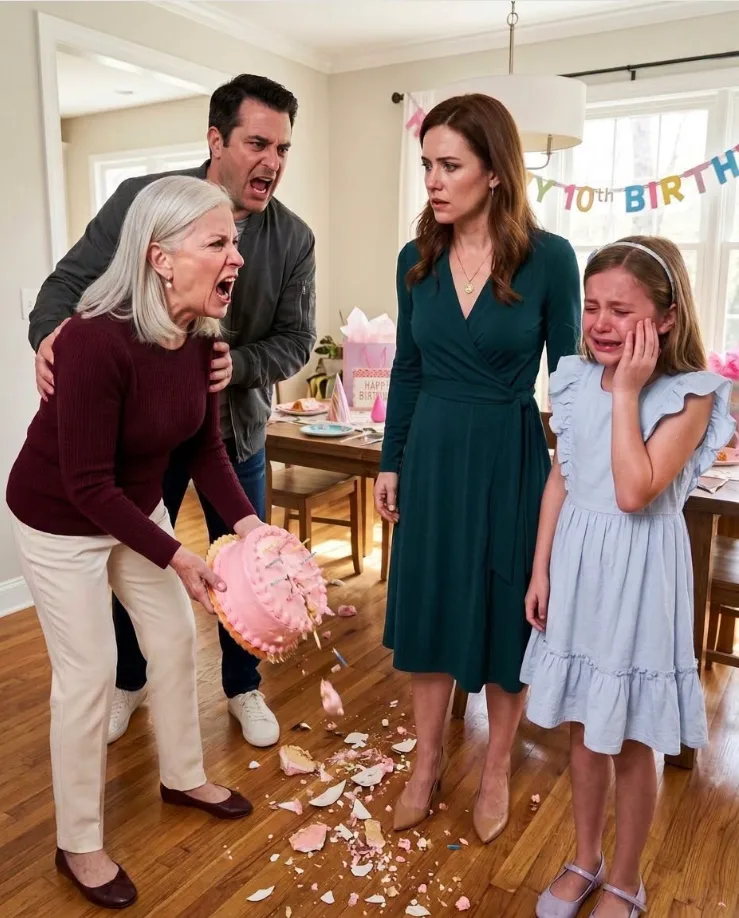
Un silencio tan profundo se apoderó de la habitación que toda conversación se detuvo abruptamente, como si se cortara de repente un cable eléctrico.
Emma se detuvo junto a la mesa del comedor, con su manita aún extendida hacia el pastel rosa que yo había decorado minuciosamente durante cinco horas. Tenía los ojos bien abiertos, brillando con esa curiosidad pura e intensa que solo un niño de diez años puede sentir.
Junto a ella estaba mi suegra, Diane Mercer.
La boca de Diane estaba delgada y sin color. Vestía un traje beige ajustado, más apropiado para una auditoría que para la fiesta de cumpleaños de un niño, y sus joyas de plata tintineaban con precisión quirúrgica. Sus manos, con manicura impecable, se cernían en el aire como aves de rapiña.
—No lo toques —espetó Diane. La orden fue dada en voz baja, pero con la nitidez de una navaja de afeitar.
Emma retiró los dedos como si las flores de azúcar fueran brasas ardientes. Le tembló la barbilla al instante y sus ojos color avellana se llenaron de lágrimas. «Abuela, este es mi pastel. Mamá lo hizo para mi cumpleaños».
El rostro de Diane se contrajo en una expresión de absoluto disgusto. Sin decir una palabra más, colocó ambas manos debajo del pesado soporte de cristal para pasteles —una reliquia familiar que mi propia madre me había regalado cinco años antes— y lo tiró violentamente del borde de la mesa de caoba.
El ruido que siguió fue ensordecedor.
Fragmentos de vidrio cubrían el oscuro suelo de parqué, formando un centenar de afilados dientes. El delicado bizcocho, relleno de fresas frescas y crema de vainilla, se había desmoronado en una masa informe de color rosa, rojo y blanco. Diez velas de tonos pastel rodaban como pequeños troncos caídos sobre el barniz, quedando apoyadas contra los zócalos y debajo de las sillas del comedor.
“Sin hijo, no hay fiesta”, dijo Diane.
Se frotó las palmas de las manos, como para quitarse el polvo, mientras su mirada recorría a los invitados allí reunidos con gélida indiferencia.
Durante tres segundos, mi cerebro se negó a reconocer la realidad de la escena. Me quedé de pie junto a la isla de la cocina, con un cuchillo de servir de plata aún en equilibrio en mi mano derecha, contemplando los restos.
Across the room, near the kitchen doorway, stood my husband, Mark. Beside him, his father, Richard, stared resolutely at the tip of his loafers, pretending the floor was the most fascinating thing in the world. Mark’s younger sister, Claire, looked vaguely uncomfortable, shifting her weight from one high heel to the other, but her lips stayed pressed together.
Emma didn’t move. She stood framed against the splintered glass, her small shoulders shaking as silent, terrified sobs racked her frame.
I set the serving knife down on the marble island with a soft, deliberate *clink*. I turned to face the man I had lived with for eleven years. The man whose student loans I had paid off, whose wardrobe I had upgraded, and whose children I had carried.
“Mark?” I said. My voice was eerily level, devoid of the frantic hysteria everyone in that room expected.
I had expected outrage from him. I had expected him to step forward, grab his mother by the elbow, and demand to know what kind of monster deliberately shatters a ten-year-old child’s spirit on her birthday.
Instead, Mark crossed his arms over his chest. He rolled his eyes, gave a dismissive shrug, and looked away from his daughter’s weeping eyes.
“She’s right,” Mark muttered.
The silence grew heavier, thick and suffocating.
“Mark, what did you just say?” I asked.
He sighed, the theatrical sigh of an aggrieved patriarch who believed his domestic authority was absolute. “I said she’s right, Sarah. Mom bought most of the gifts in the corner anyway. Emma needs to learn she can’t always be the center of attention. She’s spoiled, and you indulge her constantly.”
“It’s her tenth birthday,” I replied. Every word tasted like cold iron in my mouth.
Diane let out a sharp, mocking laugh that sounded like dry leaves scraping across concrete. “And what exactly are we supposed to be commemorating, Sarah? Someday she’ll turn twenty, marry some boy, and take another man’s name. What are we celebrating? Another Mercer name disappearing into nothing?”
She had sung that song for twelve years. When Emma was born, Diane had refused to hold her until three days after delivery, openly asking the nurses when we planned to “try properly for the real heir.” When our younger daughter, Lily, arrived four years later, Diane had dropped off a generic card in our mailbox and gone to Cabo for two weeks.
Every single time, Mark had shielded his mother with a litany of pathetic excuses: *She’s old-fashioned. She comes from a different generation. She doesn’t mean anything by it. Sarah, that’s just Mom.*
Emma looked up from the floor. Her wet eyes met mine.
That look changed everything. She wasn’t looking for comfort, and she wasn’t asking why Grandma hated her so bitterly. She was looking at me to see if I was going to let this happen. She was asking if her mother was going to force her to bend her neck, apologize for existing, and sweep up the ruins of her own childhood.
No grité. No corrí por la habitación. No le rogué a Mark que recordara que tenía hijas.
Crucé la habitación con calma, me agaché y recogí una vela rosa intacta de debajo del aparador. Limpié con el pulgar un poco de mermelada de fresa de la cera, la coloqué con cuidado sobre la encimera de granito y volví la mirada hacia mi suegra.
“De acuerdo”, dije.
Diane sonrió. Era una sonrisa arrogante y victoriosa. Sinceramente creía que por fin me había doblegado.
