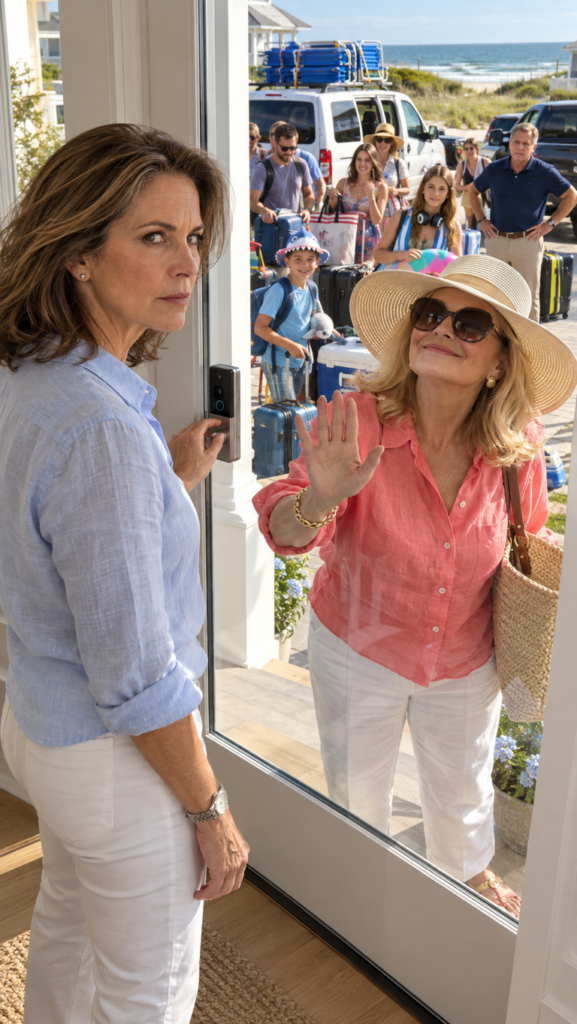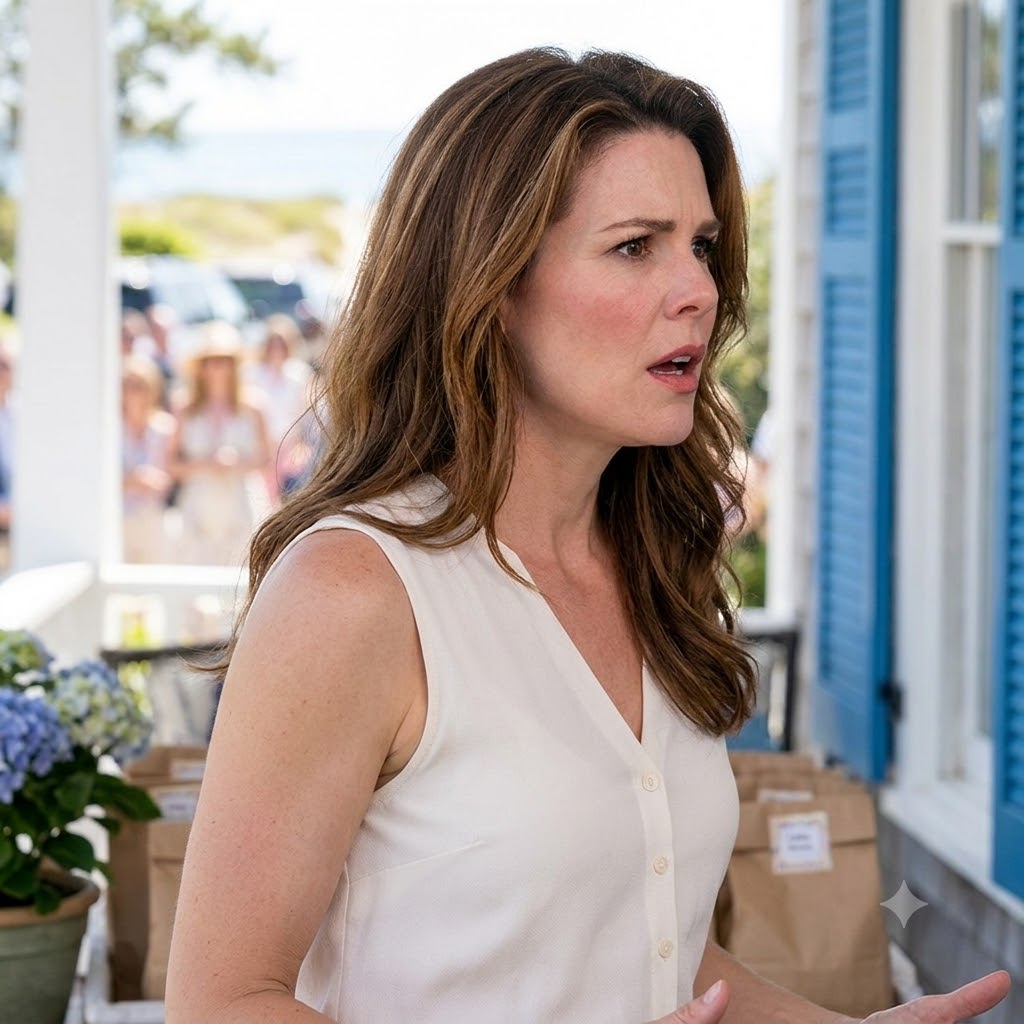
Brooke froze, because the vendor’s records claimed she had confirmed access before I even owned the cottage. I thought that was the worst thing in the file until Meredith turned to the final page. One charge was dated two full weeks before my closing, and when Brooke saw the address line, her entire expression changed.
She did not look at the amount. She looked at me.
Then she said quietly, “That isn’t the only address you bought, is it?”
PART 1: TWENTY-TWO GUESTS
The first thing my family did with my new beach house was plan a party without me.
I had owned the cottage for exactly two hours.
I was still barefoot in the living room, surrounded by unopened boxes and the sharp smell of fresh paint, when my phone vibrated across the kitchen counter.
Outside, beyond the open French doors, the Connecticut coast glittered beneath a pale June sky. The cottage sat behind a low line of dunes, with blue shutters, weathered cedar siding, a covered porch, and a narrow sandy path that disappeared toward the water.
For ten years, I had dreamed about that path.
For ten years, I had saved.
And for two glorious hours, the place had belonged completely to me.
Then Brooke texted.
Twenty-two guests arrive tonight. Clean, cook, and make room.
I stared at the message long enough for the screen to dim.
Then I read it again.
Not congratulations.
Not, How does it feel?
Not even, Can we come see it?
Twenty-two guests arrive tonight.
Clean, cook, and make room.
I was sixty-seven years old, and somehow my daughter-in-law could still make me feel like a teenager being assigned chores.
The brass key to the cottage was in my left hand.
I remember that because I squeezed it so tightly the teeth pressed little half-moons into my palm.
My phone rang before I could decide whether to answer the text.
Brooke.
I nearly let it go to voicemail.
Then I thought of my son.
Bradley.
And because that was how it had always worked, I answered.
“Hello?”
“Dorothy, thank God.”
No congratulations.
I closed my eyes.
“What is it, Brooke?”
“We’re running behind. Bradley’s still at the office, and the florist called me twice because apparently GPS is sending people to the wrong road. You’ll need to keep an eye out.”
I looked around my empty kitchen.
“I think you sent me a text meant for someone else.”
There was a pause.
“What?”
“You said twenty-two people are coming here.”
“Yes.”
“Tonight.”
“Yes.”
“To my house.”
Another pause.
This one colder.
“Dorothy, Bradley landed the Westfield account.”
As though that explained everything.
I leaned against the counter.
The refrigerator hummed behind me.
“Bradley told me he was working on it.”
“He wasn’t working on it. He got it. Do you understand how important this is? The senior partners are coming, Jonathan and Elise Westfield are coming, my parents are coming, and a few friends. This weekend has to look effortless.”
I glanced at a cardboard box marked KITCHEN.
“I haven’t unpacked a plate.”
“There’s a grocery store.”
I almost laughed.
Instead I said, “Brooke.”
“Don’t make this difficult, Dorothy. Bradley’s career is finally moving.”
There it was.
The sentence beneath the sentence.
If I said no, I wasn’t refusing a party.
I was hurting my son.
Brooke had always been talented at taking whatever she wanted and tying it to somebody else’s happiness.
I had heard variations of it for years.
Bradley needs help with tuition.
Bradley works so hard.
Bradley can’t host Christmas because the commute is exhausting.
Bradley deserves one nice vacation.
Bradley would be so embarrassed if his mother didn’t come through.
And because I loved my son, I came through.
Again.
And again.
And again.
My former husband, Richard, had been less elegant about it.
He used to laugh whenever I talked about saving money.
“You’re a librarian, Dorothy. Not a Rockefeller.”
Once, during the last ugly year of our marriage, I stopped outside the window of a real estate office and admired a photograph of a small cottage overlooking the Sound.
Richard noticed.
“A librarian could never afford anything beautiful,” he said.
That sentence outlived the marriage.
I carried it for fifteen years.
Maybe that was why, after the divorce, I began putting money aside.
Not dramatically.
Twenty dollars here.
A hundred there.
Then more after Bradley finished college.
More when my pension became predictable.
More after I stopped paying for emergencies that somehow always belonged to someone else.
I learned investments.
I learned property taxes.
I learned not to announce my plans.
And that morning, after a decade of saving, I had signed my name thirty-seven times and walked out of an attorney’s office carrying the key to a blue-shuttered cottage near the sea.
Mine.