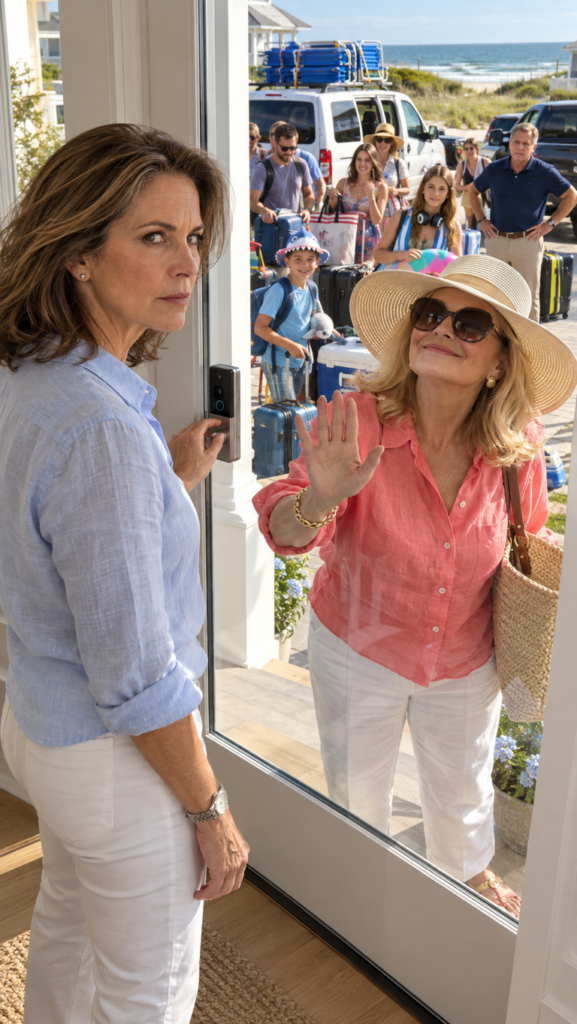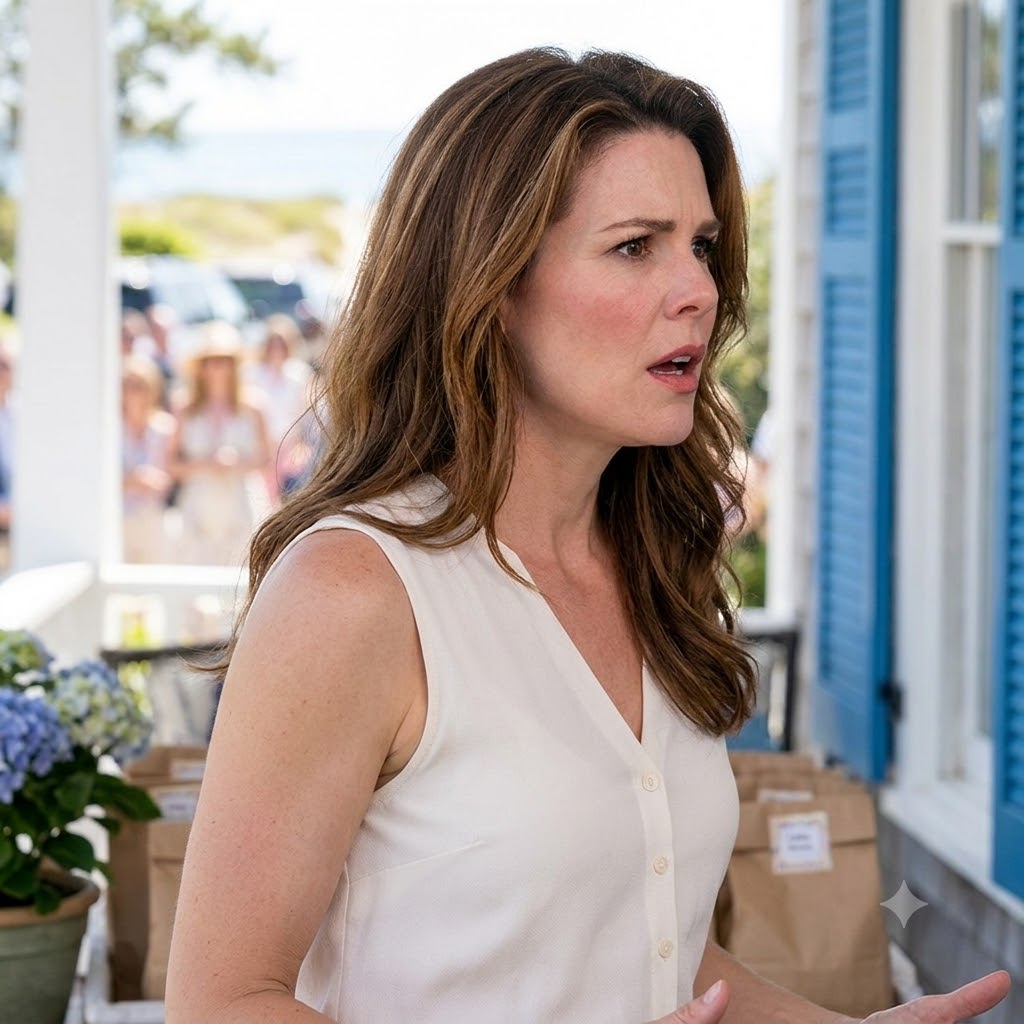
That part was true.
Seven years earlier, Bradley and Brooke had been living in a two-bedroom apartment outside Hartford.
Bradley had finished graduate school with more debt than he expected.
Brooke had recently changed jobs.
They found a colonial on Maple Avenue.
Three bedrooms.
A fenced yard.
Good schools nearby, though they had not yet decided whether they wanted children.
They loved it.
The bank did not love them.
Their financing collapsed six days before closing.
Bradley called me at midnight.
I still remembered his voice.
“Mom, I’m sorry. I shouldn’t ask.”
“What happened?”
He told me.
Then he said, “Forget it. We’ll lose the deposit. We’ll find something else.”
I had enough money.
Not beach-house money.
That did not exist yet.
But I had savings.
I had proceeds from the sale after my divorce.
And I had watched my son work two jobs while finishing school.
So I made a choice.
I bought the house.
In my name.
They would live there.
They would cover the monthly expenses.
When they were financially ready, they could purchase it from me.
It was not a gift.
It was not a secret.
It was simply something I did because my son needed help.
At least that was what I believed then.
For the first two years, Brooke thanked me constantly.
Then gradually, language changed.
Dorothy’s house became our house.
Then our property.
Then our investment.
When I once mentioned the eventual sale, Brooke looked surprised.
“I assumed you’d just transfer it to Bradley.”
I had laughed because I thought she was joking.
She had not laughed.
After that, we stopped discussing it.
They continued living there.
I continued paying the property taxes directly because I wanted records.
Bradley sent me money each month toward expenses.
No formal lease.
No threats.
No pressure.
I never used ownership against them.
Not once.
Now Brooke stood on my porch and offered that history as evidence that I had somehow wronged her.
“Yes,” I said. “I own Maple Avenue.”
Her cheeks flushed.
“There. See?”
Jonathan looked puzzled.
“See what?”
Brooke faltered.
She had expected the fact itself to be damning.
It wasn’t.
She tried again.
“Dorothy likes control.”
I felt something inside me settle.
Not break.
Settle.
Like sand sinking after a wave.
“You have lived in a house I own for seven years,” I said, “and I have never entered without calling.”
Brooke said nothing.
“I have never scheduled a party there.”
Nothing.
“I have never told you what furniture to buy.”
Nothing.
“I have never sent you a list of chores.”
Patricia stepped forward.
“This family discussion is becoming inappropriate.”
I looked at her.
“Your daughter made it public.”
Bradley rubbed a hand over his face.
“Mom, can we talk somewhere else?”
“Of course.”
Brooke exhaled.
I pointed toward the beach path.
“There.”
He looked at me.
“Outside?”
“Yes.”
“This is ridiculous.”
“No, Bradley. What’s ridiculous is having to negotiate privacy at the front door of my own house.”
He flinched.
That hurt me.
I loved my son.
That had not changed.
It was what made the next part difficult.
If I hated him, boundaries would have been easy.
But most boundaries are not built against people we hate.
They are built because love without boundaries becomes permission.
Bradley followed me down the side of the cottage toward the dunes.
We stopped where the others could no longer hear us.
For several seconds, neither of us spoke.
Finally he said, “I’m sorry.”
“For what?”
He looked at me.
“All of it.”
“That’s broad.”
“Mom.”
“I need to know what you’re apologizing for.”
He looked toward the water.
“I knew Brooke wanted to host something here.”
“Before I closed?”
His silence was enough.
“How?”
“I sent her the listing.”
My chest tightened.
“When?”
“A few weeks ago.”
“Why?”
“She was excited for you.”
I waited.
Bradley looked miserable.
“And?”
“She thought it would be perfect for a small celebration if the account came through.”
“Twenty-two people is small?”
“For work.”
“That wasn’t my question.”
He sighed.
“I thought she’d ask.”
“She didn’t.”
“I know.”
“Did you know she had vendors?”
“I knew she was arranging things.”
“Did you know she was using my name?”
“No.”
I searched his face.
He held my eyes.
I believed him.
Then I asked the question that mattered more.
“When she told you she was arranging this, why didn’t you call me?”
He swallowed.
“Because I thought you’d say yes.”
The ocean broke behind us.
One wave.
Then another.
“And if I didn’t?”
He said nothing.
There it was.
I nodded slowly.
“You didn’t want to ask because asking would give me a chance to say no.”
“That’s not fair.”
“Isn’t it?”
“She was trying to help me.”
“So you let her volunteer me.”
“I didn’t think of it like that.”