PART 1- THE WEDDING THAT NEVER STARTED
The wedding was over before the champagne ever made it into a glass.
It did not end with Stephanie running from the altar or with me suddenly realizing I had stopped loving her.
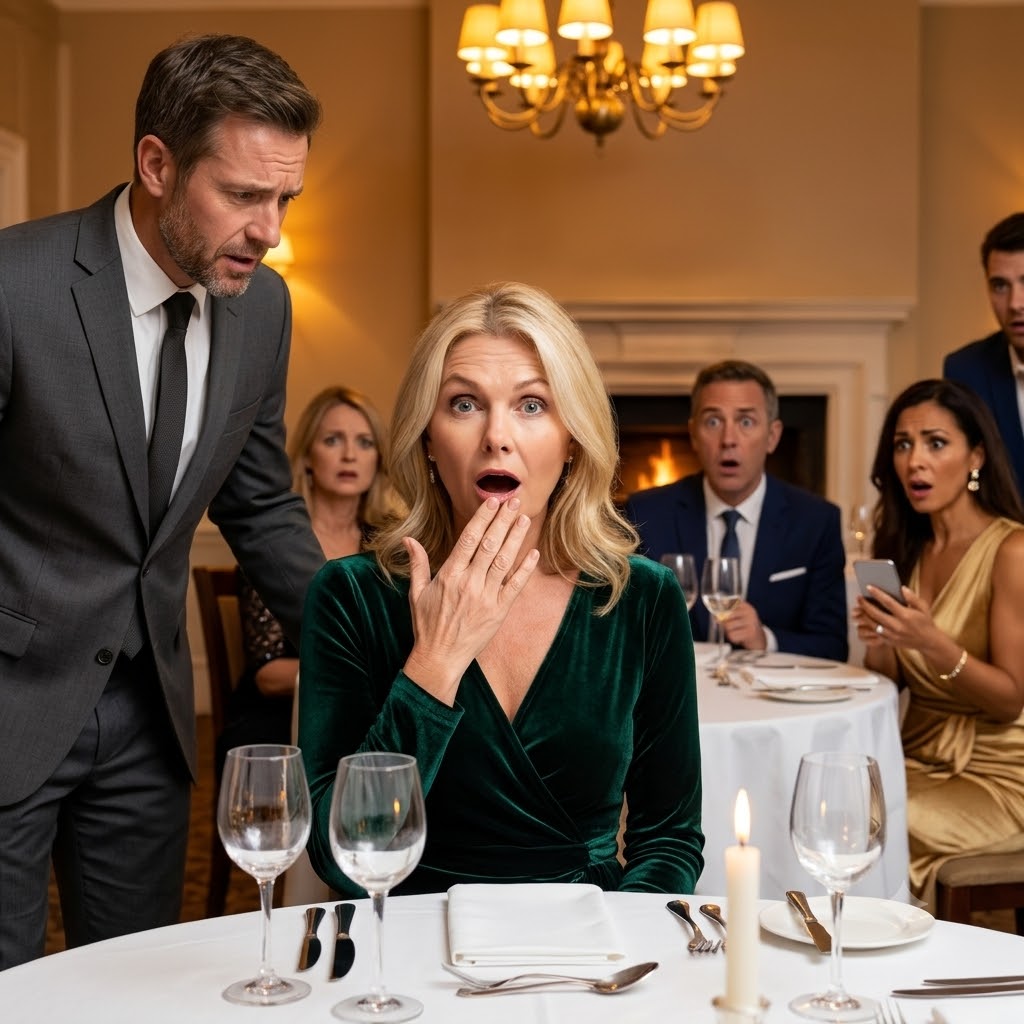
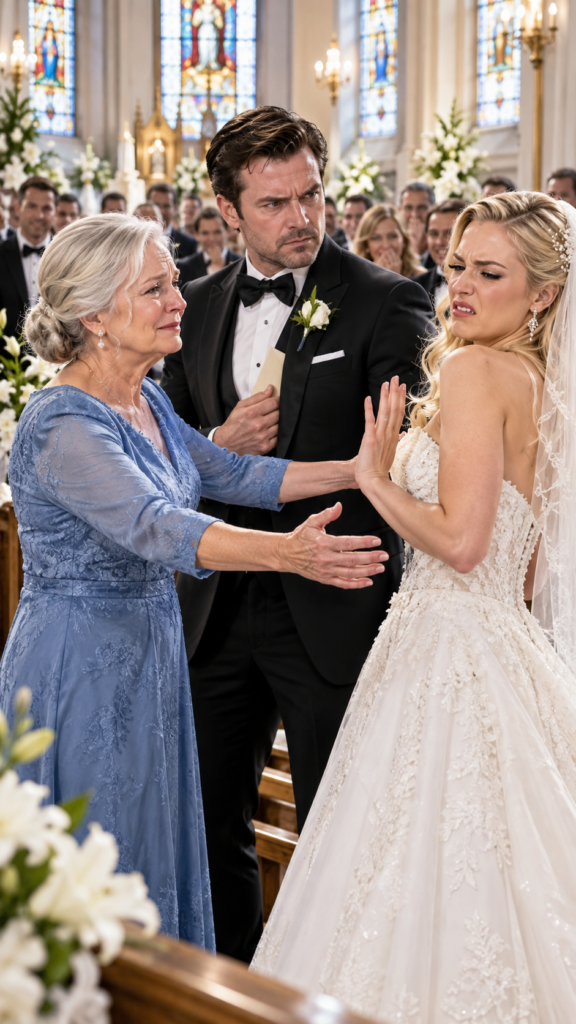
It ended beneath the white lilies of St. Mary’s, in front of 260 guests wearing silk, diamonds, and polished expressions, when the woman I was supposed to marry looked at my mother as though she were something tracked in from a barnyard.
My mother, Margaret Hartwell, had only wanted to hug her.
She had been nervous about that hug all morning.
I knew because she had asked me twice whether she should wait until after the photographs.
“Maybe Stephanie won’t want to wrinkle her dress,” Mom had said.
Then, immediately embarrassed by her own suggestion, she had added, “Not that I’m saying she would mind. I just know how expensive these things are.”
That was my mother.
Someone could insult her, exclude her, make her feel small, and Margaret Hartwell would somehow find a way to worry that she had caused the inconvenience.
At sixty-nine, she still carried herself with the quiet caution of someone who had spent a lifetime trying not to take more than her share.
She wore a hand-stitched blue dress that day.
Not designer blue.
Not whatever shade Stephanie’s mother had spent three weeks discussing with the wedding planner.
Just a soft cornflower blue Mom had chosen because my father once told her it made her eyes look brighter.
Her gray hair was pinned neatly behind her ears. She wore pearl earrings that had belonged to her own mother. Her shoes were new and uncomfortable, though she had refused to complain about them.
I saw her coming toward us after the ceremony.
Her face was glowing.
For months she had worried she might embarrass me around Stephanie’s family.
That thought alone should have warned me.
Instead, I had spent those months reassuring her.
“You could never embarrass me.”
I meant it.
I just had not proved it yet.
She stepped toward Stephanie with her arms beginning to open.
Stephanie leaned backward.
Sharp.
Immediate.
There was nothing accidental about it.
Her mouth twisted.
Then she laughed.
“Please don’t hug me,” she said.
The volume of her voice made my stomach tighten before she even finished.
“You smell like manure. Keep that peasant away from me.”
For one second, nobody moved.
The string quartet near the side aisle continued playing because they either had not heard or were too professional to react.
Mom’s arms remained suspended halfway between us.
Her smile stayed on her face a fraction too long.
That was the part I would remember later.
Not the insult.
Not the laughter.
That smile.
Because I watched the exact moment her mind understood that Stephanie had said it seriously.
Her hands slowly dropped.
A soft ripple moved through the people standing near us.
Someone coughed.
Someone else laughed.
Then another person did.
Quietly.
Politely.
The kind of laughter I had learned to recognize around Stephanie’s family.
Cruelty softened by expensive clothing.
My mother glanced at the floor.
“Of course,” she whispered. “I’m sorry.”
Sorry.
She apologized.
On my wedding day, after being humiliated by my bride, my mother apologized for trying to embrace her.
Something in me went still.
I looked at Stephanie.
She was smiling at her cousin.
Her cousin covered her mouth, clearly trying not to laugh again.
I heard myself say, “Apologize to my mother.”
Stephanie looked at me.
“What?”
“You heard me.”
Her expression changed.
Not guilt.
Annoyance.
“Oh my God, Charles.”
“Apologize.”
“It was a joke.”
Mom immediately touched my sleeve.
“Charles, honey, it’s all right.”
“No.”
She flinched.
I had not meant to sound harsh with her.
I turned toward her.
“No, Mom. It isn’t.”
Stephanie exhaled dramatically.
Several people were watching now.
Her mother had appeared near the front pew, her face already tight with the particular panic people like her seemed to feel when something unpleasant happened publicly.
“Charles,” Stephanie said under her breath. “You’re making a scene.”
That sentence brought months of memories back so quickly they almost made me dizzy.
Her father calling Willowbrook Farm “Charles’s charming little inheritance problem.”
Her mother suggesting that Mom might be more comfortable skipping a country club dinner because “the crowd can be intimidating if you aren’t used to it.”
Stephanie joking that my truck smelled like hay even after I had sold it ten years earlier.
The seating chart that originally placed my mother at a table near the kitchen until I demanded she be moved.
The rehearsal dinner where Stephanie’s father had raised his glass and said, “We’re proof America still works. A farm boy can marry up.”
Everyone had laughed.
Including me.
Not because it was funny.
Because I had been trying to survive my own engagement.
For months, every insult had come wrapped in a sentence afterward.
They don’t mean it that way.
You’re being sensitive.
Dad jokes with everyone.
Mom’s from another generation.
You know Stephanie gets nervous.
Why are you turning this into something?
I had accepted each explanation because the alternative was admitting I was planning a marriage to someone who despised the woman who had sacrificed almost everything for me.
My father died when I was twelve.
One day he was repairing a tractor shed.
Three days later an undetected infection had taken him.
My mother became everything after that.
She woke at four-thirty.
Fed animals before sunrise.
Sold produce.
Kept records at the kitchen table.
Fixed fencing with hands that cracked in winter.
When money ran short during my second year of engineering school, she told me a field had produced poorly and we needed to “tighten things up.”
I learned years later she had sold the antique dining set my grandmother left her.
She never told me.
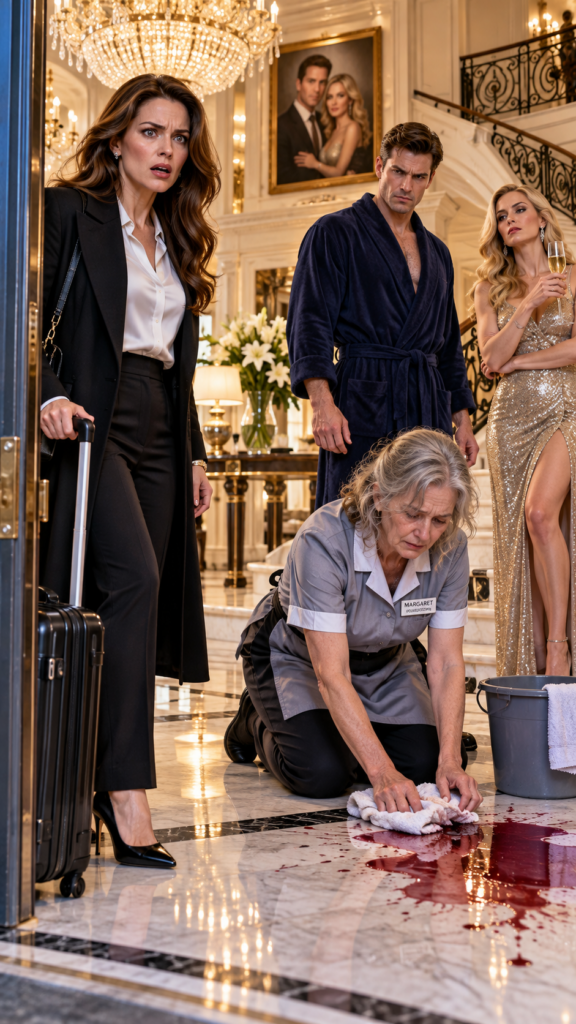
That woman stood three feet from me now, staring at the church floor because my bride thought she smelled beneath her.
I looked back at Stephanie.
“Apologize.”
Her eyes hardened.