
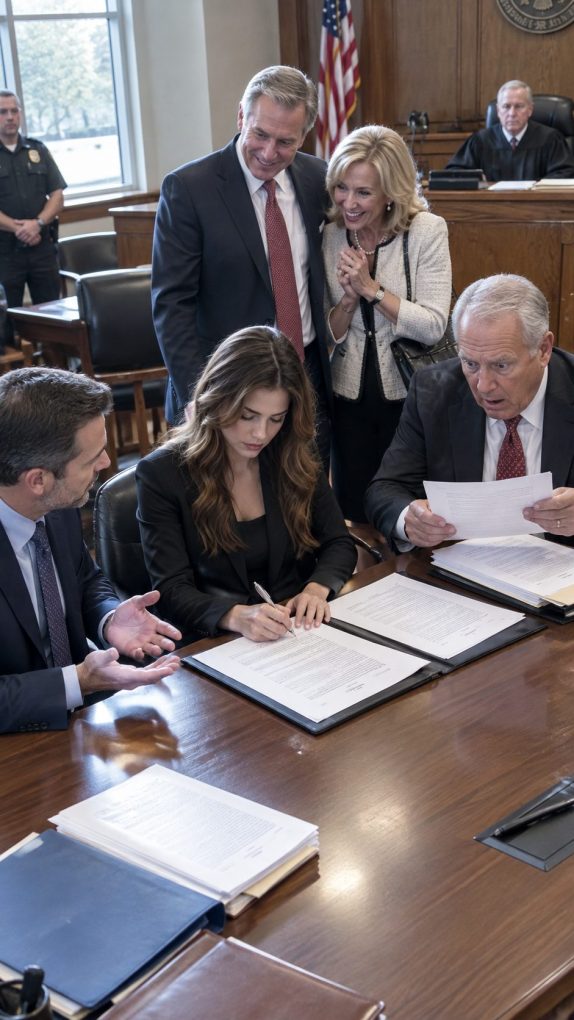
“Give them every single acre,” I told my attorney.
Daniel Mercer stared at me across the courthouse conference table. “Emily, your grandfather left you 120 acres. You don’t have to surrender your inheritance just because your parents threatened you with a lawsuit.”
Behind the glass doors, my father was laughing with my younger brother, Jason. Mom stood beside them, straightening the collar of Dad’s expensive jacket.
They looked like people waiting to collect a prize.
“I’m sure,” I whispered.
Six weeks earlier, my parents had sued me, claiming I’d manipulated Grandpa Walter into transferring his Ohio farm to me before he died. They called me a greedy daughter who had taken advantage of an old man’s declining health.
They never mentioned that I’d spent seven years caring for him.
I remembered the winter his arthritis became so painful that he couldn’t button his work shirts. Every morning before leaving for my job at the county library, I’d stop by his farmhouse, warm his hands between mine, and fasten the little pearl buttons he refused to replace.
“Your grandma picked these,” he’d always say.
He died two winters ago, still keeping her photograph beside his bed.
The farm had been legally transferred to me while Grandpa was alive, through an attorney he’d known for decades. He’d been mentally competent, and the paperwork was properly recorded.
But Dad insisted the land belonged to the entire family.
Especially after a developer began purchasing properties near the new highway.
“You’re sitting on a fortune,” Dad had shouted during our last argument. “That farm should have gone to your brother!”
When I refused to sell, the lawsuit arrived.
Now Daniel pushed the settlement agreement toward me.
“If you sign, the farm is theirs. You understand?”
I nodded.
He hesitated, then tapped the thick folder beside his elbow. “The recorded title documents are attached. I’ve disclosed everything, exactly as we discussed.”
“I know.”
Across the room, Dad noticed my pen moving.
He leaned toward Mom and whispered loudly enough for me to hear, “Finally, she knows her place.”
My hand stopped briefly.
Then I finished signing.
I thought about Grandpa standing beside the old red barn, wiping grease from his fingers before teaching me how to repair a broken gate.
“Never mistake wanting something for knowing how to care for it,” he’d once told me.
My parents’ attorney, Richard Collins, collected the documents with a satisfied smile.
Then he turned to the final attachment.
His smile vanished.
He adjusted his glasses, reread the heading, and whispered something to my father’s attorney’s assistant.
Dad frowned.
“What is it?”
Richard looked at him.
“Mr. Bennett, did you actually read the restrictions recorded against this property?”
Richard didn’t answer immediately. Instead, he pulled another sheet from the folder and compared the recording numbers. His assistant leaned over his shoulder, and I watched her expression change.
Dad grew impatient. “Richard, we’ve been fighting over this farm for months. We won. What’s the problem?”
“Please give me a moment.”
My brother stepped forward. “Is there a problem with her signature?”
“No,” Richard replied. “Her signature is valid.”
Mom turned toward me. “Emily, don’t start anything. You’ve already put this family through enough.”
I looked down at the indentation my pen had left on the settlement agreement.
“I haven’t said anything.”
The truth was, I’d tried to warn them.
Three weeks before the hearing, Dad had driven to Grandpa’s farm with a real estate developer and two surveyors. They walked through the east pasture without asking permission, discussing where a new access road could be built.
Thomas Reed, the farmer who leased forty acres from me, called while I was working.
“Your father’s telling people they’re building fifty houses here,” he said. “What happens to my lease?”
I promised Thomas that nobody could simply ignore his existing rights. Then I called Dad.
“The property records are available at the county recorder’s office,” I told him. “Please have your attorney review everything before making promises.”
He laughed.
“Don’t lecture me about property. I’ve owned houses since before you were born.”
Two days later, Jason posted an aerial photograph of Grandpa’s farm on Facebook with the caption: Big things coming. Finally bringing this land into the future.
He’d already started referring to himself as the project’s managing partner.
I saved the photograph but didn’t respond.
At our next settlement meeting, Daniel advised me to fight. The deed was valid, the claims against me were weak, and surrendering the property would mean losing something Grandpa had intended me to keep.
But I was exhausted by the accusations. Dad had stopped inviting me to family gatherings. Mom told relatives I’d stolen from a dying man. Jason called my employer twice, demanding to know whether I was using work hours to handle the property dispute.
I could defend my ownership. I couldn’t make them treat me like family.
So Daniel prepared a voluntary settlement transferring the land, subject to every recorded restriction and existing legal obligation. He supplied the title documents to their attorney before the hearing.
Now, standing inside that courthouse, I watched Richard flip through the pages they had received.
“Mr. Bennett,” he asked quietly, “what exactly did the developer offer you?”
Dad straightened.
“Two point four million dollars. Once the subdivision gets approved.”
Richard pressed his lips together.
Then he turned the document toward my parents and pointed to a paragraph bearing Grandpa’s signature.
“There’s something you need to understand. Your father recorded this eleven years ago.”
Mom leaned forward.
Richard swallowed.
“This isn’t an ordinary deed restriction. It’s a permanent conservation easement. And the word permanent means exactly what it says.”
For several seconds, nobody spoke.
Then Dad snatched the document from Richard’s hand.
“What do you mean, permanent?”
Richard took a slow breath.
“Your father granted a conservation easement to the county land conservancy eleven years ago. It’s recorded against the property. The farm can continue operating as agricultural land, but residential subdivision and commercial development are prohibited.”
Dad stared at him.
