Ma sœur et moi avons obtenu notre diplôme de MBA dans le même programme, mais mes parents n’ont financé que les études de ma sœur. Ils avaient pris leur décision des années auparavant, sans la moindre hésitation.
« Elle a un avenir », m’ont-ils dit. « À vous de trouver le vôtre. »
Je n’ai pas discuté avec eux ni imploré une autre chance. J’ai cessé de leur demander de l’argent, j’ai gardé mes difficultés pour moi et j’ai commencé à construire une vie qui ne dépendait pas de leur approbation.
Cinq ans plus tard, ils arriveraient à une autre cérémonie de remise de diplômes avec les mêmes sourires confiants, persuadés de savoir déjà quelle fille méritait d’être honorée. Puis ils verraient mon nom sur scène, et ma mère s’accrocherait au bras de mon père.
« Harold, » murmurait-elle d’une voix tremblante, « qu’avons-nous fait ? »
Ils avaient passé des années à tout investir dans la fille qu’ils considéraient comme leur plus grand investissement, sans jamais réaliser que celle qu’ils avaient négligée était en train de se construire son propre avenir.
Mais avant que ce moment n’arrive, il y avait l’addition du restaurant.
Le dossier en cuir noir glissa sur la table et s’arrêta juste devant moi, portant tout le poids d’un jugement déjà rendu.
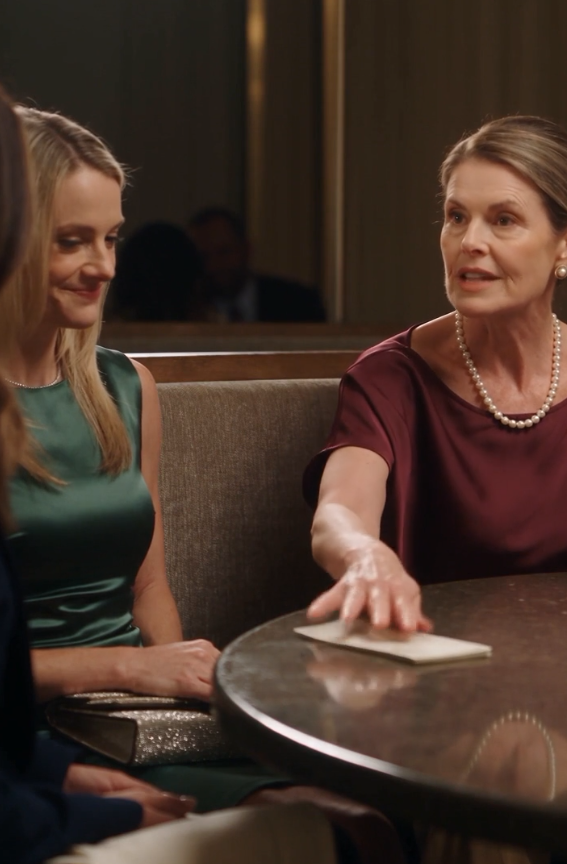
Pendant un silence interminable, personne ne dit un mot. Le serveur resta près de notre table privée, le regard discrètement baissé vers la moquette, feignant poliment de ne pas avoir vu ma mère remettre à ma sœur cadette un chèque de banque de 100 000 dollars avant de me tendre une addition de 1 200 dollars pour le déjeuner.
C’était comme si j’avais été invité uniquement pour payer la fête de tous les autres.
Ma mère, Patricia Whitmore, ne laissait transparaître aucune gêne. Elle n’en semblait jamais capable. Assise sous la douce lumière dorée d’un élégant restaurant de Chicago, ses perles scintillant au soleil, elle arborait l’air impassible qu’elle prenait toujours lorsqu’elle voulait faire passer une décision désagréable pour parfaitement raisonnable.
« Diana, dit-elle d’une voix toujours aussi froide et posée, tu peux t’en occuper. »
En face d’elle, mon père leva son verre de vin sans daigner croiser mon regard.
Harold Whitmore avait consacré une grande partie de sa vie d’adulte à paraître plus riche et plus important qu’il ne l’était réellement. Sa montre de luxe, sa veste soigneusement taillée et son bronzage de club de golf faisaient partie intégrante de son image. Il affichait l’assurance lasse d’un homme qui n’avait jamais remis en question son autorité et qui confondait souvent le fait de parler fort avec le fait d’avoir raison.
À côté de lui, ma sœur Sydney glissa le ticket de caisse dans son sac à main de marque et sourit.
Cet argent était censé l’aider à acheter une maison. Ma mère l’avait décrit comme un acompte, un début respectable pour l’avenir extraordinaire que, j’en étais certaine, Sydney méritait.
In just two hours, Sydney and I were scheduled to cross the very same graduation stage and receive our Master of Business Administration degrees. Yet anyone overhearing my parents at that table would have assumed Sydney was the only daughter who had accomplished anything.
She was the reason for the celebration.
I was the person expected to settle the bill.
I lowered my gaze to the leather folder resting near my plate. The spotless white tablecloth was surrounded by reminders of how extravagantly they had ordered: empty champagne glasses, delicate silverware, and a dessert Sydney had barely touched after insisting she wanted it.
She had never needed to worry about wasting anything. In our family, even her carelessness was treated more generously than my hard work.
Patricia settled against the back of the booth and clasped her hands neatly in her lap.
“Your father and I used up our savings paying Sydney’s tuition years ago,” she explained. “She has potential. You’ve always needed to learn how to be responsible.”
Potential.
That single word seemed to strike the table harder than anything she could have thrown.
But I didn’t recoil.
Not anymore.
Five years earlier, I would have been devastated by a remark like that. Back then, I would have absorbed the humiliation without defending myself, forced a polite smile, apologized for taking up too much space, and eventually returned home to cry into the inexpensive pillow I’d purchased from a clearance rack.
But I wasn’t twenty-seven anymore.
I was thirty-two, and those five years had taught me how to remain composed while people underestimated me. I’d discovered that silence didn’t always mean surrender. Sometimes it was the sharpest response you could offer, provided you understood when and how to use it.
The waiter shifted uncomfortably beside the table. He maintained a professional expression, but I could see how uneasy he was.
He had likely served countless affluent families who smiled through expensive meals while quietly measuring one another’s importance. Even so, my mother’s effortless dismissal of me seemed to surprise him.
Sydney gave a little laugh and lifted her champagne glass.
She had always laughed at the moments when our parents made me feel small. Never so openly that anyone could call her cruel, but always noticeably enough for me to understand that she enjoyed it.
“Stop being so dramatic, Diana,” she said. “It’s only lunch. You do know how to pay for things, don’t you?”
Her husband turned toward her sharply.
That small movement was the only sign of compassion anyone at the table had shown me.
Terrence Carter was a high school history teacher with gentle eyes, a patient manner, and the persistent exhaustion of a decent person trying to survive in an environment where kindness was treated as a weakness.
He had married Sydney three years earlier, at a time when she was still presenting herself as an ambitious young woman rather than someone who believed the world owed her everything.
