If Tyler broke something, I was too sensitive for complaining. If he embarrassed me in front of relatives, I couldn’t take a joke. If I cried, everyone sighed until I apologized for ruining the evening.
But this time, there was a video.
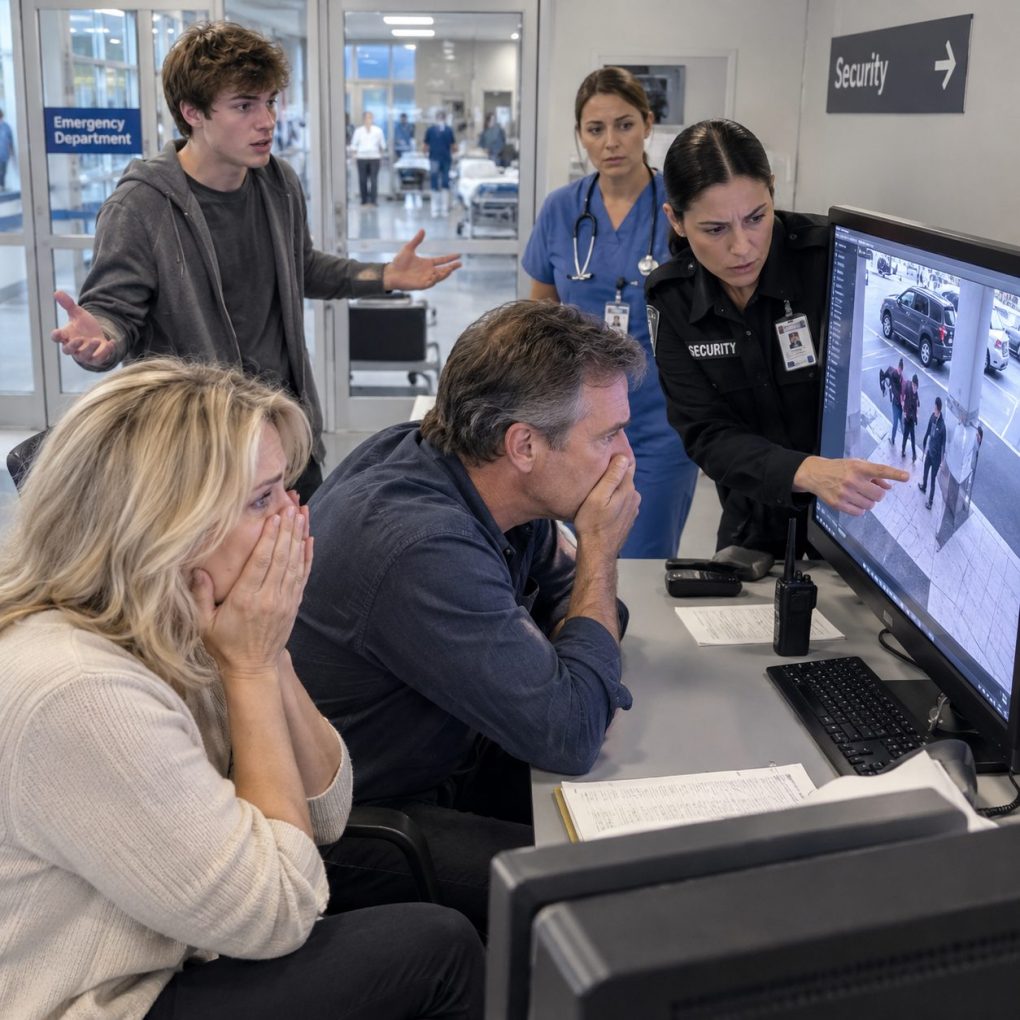
And nobody could argue with what it showed.
Dad turned toward Tyler.
“Your sister thought I was dying.”
Tyler looked down.
“You called her and told her I was having emergency surgery. You frightened her half to death, hurt her, and then stood there filming.”
“I didn’t know she’d fall!”
“Then why didn’t you help her?”
Tyler opened his mouth, but nothing came out.
My mother began crying.
“Jim, please. He’s your son.”
Dad looked at her.
“And she’s our daughter.”
I’d waited twenty-nine years to hear him say something like that.
I wish I could tell you it made everything better immediately.
It didn’t.
That night, I went home with a concussion, a fractured wrist, and instructions to return if my symptoms worsened. My friend Megan stayed with me because I was advised not to spend the first night alone.
Dad offered to drive us.
I thanked him, but Megan already had my keys.
Three days later, Tyler sent me a message.
I never wanted you to get hurt. You know that, right?
I read it while sitting at my kitchen table, struggling to open a bottle of water with my uninjured hand.
There was no apology for frightening me. Nothing about leaving me on the pavement.
Just another request that I make him feel better.
I didn’t respond.
With the hospital’s help, I requested that the surveillance footage be preserved. I also filed a police report and provided my medical records. Investigators obtained the relevant footage through the hospital’s procedures.
After reviewing the evidence, the prosecutor filed a misdemeanor charge. Months later, Tyler accepted a plea agreement that included probation and community service. He also agreed to reimburse my uninsured medical expenses and documented lost wages.
My wrist required several weeks of therapy. I missed work, struggled to wash my hair, and found myself flinching whenever someone unexpectedly touched my arm.
Dad visited every Saturday.
Sometimes he brought groceries. Sometimes he sat at the kitchen table while I worked through the exercises my therapist had given me.
One afternoon, he noticed I was having trouble fastening my watch.
He reached toward my wrist, then stopped.
“Can I help?”
That small question nearly brought me to tears.
Mom didn’t visit for six weeks.
When she finally called, she asked whether we could put everything behind us now that Tyler had faced consequences.
I told her I wasn’t ready.
She grew quiet.
Then I said, “Mom, I was lying in a hospital bed, and you were more worried about Tyler being embarrassed than about whether I was okay.”
She didn’t argue.
“I’m sorry, Grace,” she whispered.
It was the first apology she’d ever given me without adding an excuse.
Six months later, Dad invited me to Sunday dinner. He told me Tyler wouldn’t be there and that nobody would pressure me to reconcile.
I went.
Mom had made my favorite chicken casserole. She didn’t mention the incident until we were clearing the dishes.
Then she touched my shoulder gently.
“I should have believed you before anyone showed me that video.”
I looked at her for a moment.
“Yes,” I said. “You should have.”
We didn’t hug. We kept putting dishes into the dishwasher.
And somehow, that felt more truthful than pretending one apology could erase twenty-nine years.
Tyler and I still don’t speak. My parents are slowly learning that loving both their children doesn’t mean defending both of their choices.
I still have a faint scar near my hairline.
Sometimes, when I catch it in the mirror, I remember the sound of Tyler laughing outside that emergency room.
For years, I thought being a good daughter meant swallowing every insult to keep the family together.
Now I know that sometimes the most important thing you can do is stop defending someone who keeps hurting you.
My brother called it a harmless prank.
But that night, for the first time in my life, I didn’t have to prove that my pain was real.
Someone finally believed me.
