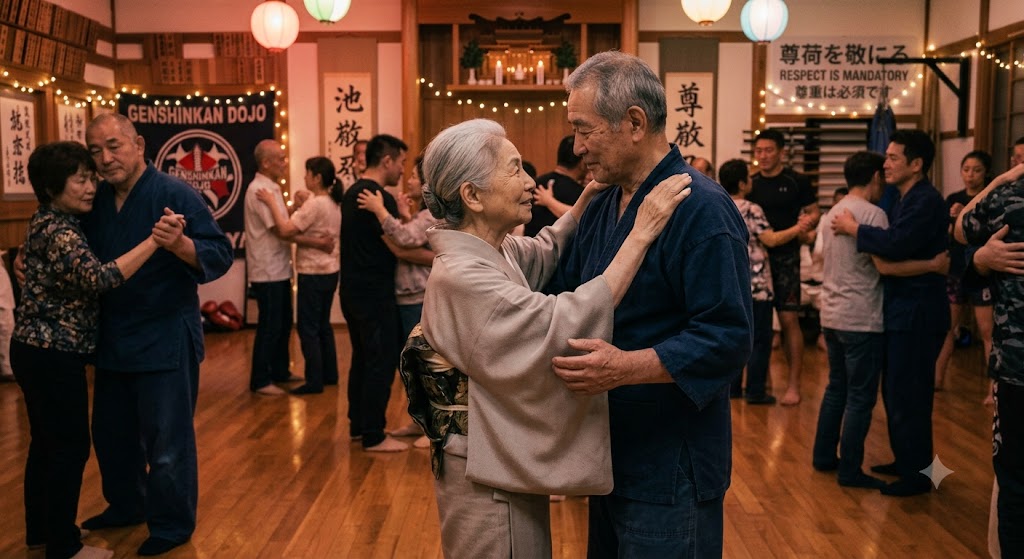
And for the first time in years, I didn’t feel the need to question what holding someone’s hand was supposed to mean.
There were no hidden comparisons.
No audience.
No performance.
Just two people enjoying an ordinary evening.
Almost two years after Brandon’s reunion, I attended a wedding in Cincinnati.
It was for a childhood friend.
The ceremony was beautiful.
The reception was held in a ballroom overlooking the Ohio River.
At one point, the DJ announced a slow song.
Several couples moved onto the dance floor.
I watched them.
And for a moment, I remembered the reunion.
Jessica’s arms around Brandon’s neck.
His hand resting against her waist.
The laughter.
The way he’d told me not to make it weird.
Andrew noticed my expression.
“You okay?”
I nodded.
“Yes.”
He looked toward the dance floor.
“Want to dance?”
I hesitated.
Then smiled.
“I think I do.”
We joined the other couples.
Andrew held me gently.
There was no dramatic declaration.
No audience cheering about an old romance.
No spouse sitting nearby wondering why their feelings had become an inconvenience.
Just a slow dance.
A simple one.
And somewhere during the song, I realized I no longer associated dancing with betrayal.
I associated it with a choice.
Who you hold.
How you hold them.
What promises you’ve made.
And whether those choices respect the person who trusts you.
When the song ended, Andrew kissed my forehead.
I smiled.
Then we returned to our table.
Later that evening, I looked at the wedding decorations and remembered my own ceremony nine years before everything changed.
I had believed marriage meant choosing the same person every day.
I still believed that.
What I’d learned was that those choices mattered most when nobody was forcing them.
Brandon could have greeted Jessica warmly without kissing her.
He could have danced at the reunion without holding her intimately.
He could have acknowledged their shared history without comparing it to our marriage.
He could have been honest about the feelings that developed.
He had opportunities to protect our relationship.
He chose otherwise.
And when I finally understood that, I stopped blaming myself for his decisions.
Sometimes people ask why I sent the video to Matthew instead of confronting Brandon privately.
The answer is complicated.
At the time, I was hurt.
I was embarrassed.
And I wanted someone else to understand what I was seeing.
But I also knew Matthew was sitting only a few tables away, unaware that his wife was behaving intimately with another man.
I didn’t post the video publicly.
I didn’t send it to coworkers.
I didn’t show it to the entire reunion.
I sent it to the person directly affected.
Twenty-three seconds.
No commentary intended to humiliate.
Just enough for him to understand why he might want to ask questions.
I don’t regret that.
Because if our positions had been reversed, I would have wanted him to tell me.
And that twenty-three-second video revealed something neither Brandon nor Jessica expected.
Their private emotional connection had become visible.
Not only through the kiss or the dance.
But through their assumption that the people they’d married would accept whatever explanation they offered.
Matthew and I weren’t jealous strangers trying to interrupt a romantic memory.
We were spouses who had made promises and expected those promises to mean something.
The reunion didn’t destroy our marriages.
It exposed choices our spouses had been making for months.
That distinction took me a long time to understand.
The night I sent the video, I thought I was responding to one humiliating moment.
Now I know the real problem began much earlier.
It began when Brandon started comparing our ordinary life to his teenage relationship.
It continued when he concealed private meetings.
It grew when he kissed Jessica and decided I didn’t need to know.
And it became impossible to ignore when he held her close in front of me and told me not to make things weird.
He had already made things complicated.
My reaction simply forced him to acknowledge it.
There is one detail about the reunion that I still remember clearly.
When Jessica kissed Brandon near the entrance, several people cheered.
When they danced, people laughed about their old romance.
And when they shared cake, someone called them the perfect couple.
I used to wonder whether those reactions encouraged them.
Maybe they did.
Being surrounded by people who remembered you at seventeen can make the past feel unusually powerful.
But that doesn’t make the present disappear.
Brandon wasn’t seventeen anymore.
Jessica wasn’t the girl he dated before college.
They were adults with marriages, responsibilities, and people who trusted them.
The reunion gave them a stage.
It didn’t give them permission.
And when Brandon told me not to make it weird, he was asking me to accept a version of events in which his behavior was innocent simply because he said it was.
For years, I had been willing to overlook small discomforts to keep our marriage peaceful.
I told myself trust meant not asking too many questions.
That being secure meant never appearing jealous.
And that a good wife should understand her husband’s past without feeling threatened.
I still believe trust matters.
But I no longer believe trust requires ignoring obvious dishonesty.
Security doesn’t mean accepting humiliation.
And respecting someone else’s history doesn’t require allowing it to replace your place in their present.
Brandon eventually understood that.
I believe his apology was sincere.
I believe counseling helped him recognize the harm he’d caused.
And I genuinely hope he builds healthier relationships in the future.
But his growth didn’t obligate me to rebuild our marriage.
That was the hardest lesson of all.
People can change.
People can regret their decisions.
People can become better versions of themselves.
And the people they hurt can still decide to leave.
Those truths can exist together.
My divorce wasn’t revenge.
It wasn’t punishment for a single dance.
It wasn’t a reaction to one kiss.
