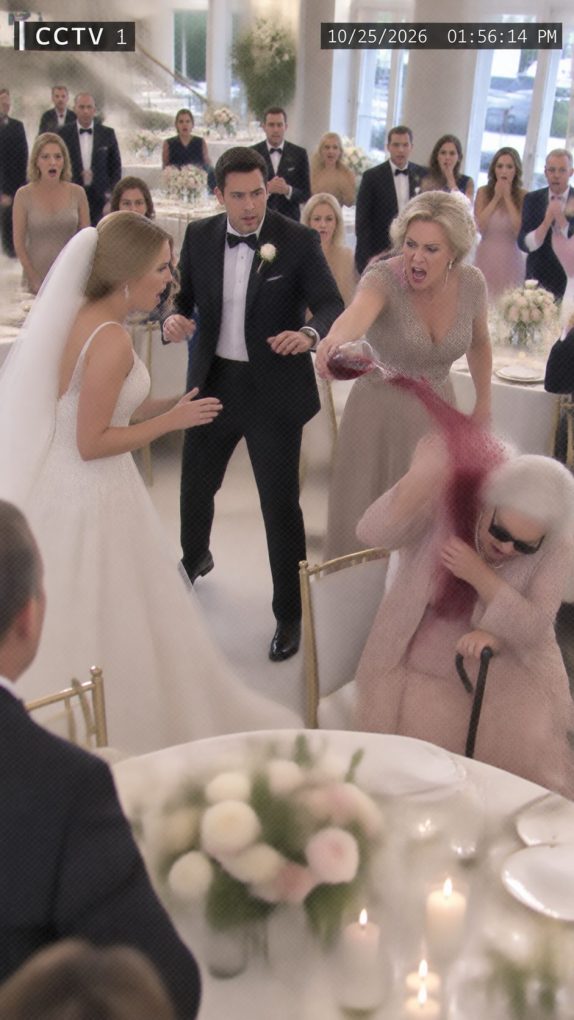
Der Rotwein traf das weiße Kleid meiner Mutter, bevor irgendjemand begriff, was Caroline Whitmore getan hatte.
Meine Mutter stand neben dem Tisch der Verlobungsfeier, eine Hand leicht auf meinem Arm, ihren weißen Gehstock zusammengeklappt unter dem Stuhl hinter ihr. Fünf Jahre zuvor hatte sie fast ihr gesamtes Sehvermögen verloren, nachdem eine Netzhauterkrankung schneller voranschritten war als von den Ärzten erwartet. Sie hasste Mitleid, lehnte Hilfe ab, wenn sie sie nicht brauchte, und hatte den ganzen Abend höflich gelächelt, während meine zukünftige Schwiegermutter Bemerkungen über „Einschränkungen“, „Äußerlichkeiten“ und die Frage machte, ob sich meine Eltern auf einer Hochzeit mit „wichtigen Leuten“ wohlfühlen würden.
Dann griff Mama versehentlich nach Carolines Wasser anstatt nach ihrem eigenen.
Caroline riss ihr das Glas aus der Hand.
„Eine Familie wie Ihre würde uns in Verlegenheit bringen“, sagte sie.
Mama erstarrte.
Ich dachte, das wäre das Schlimmste.
Dann nahm Caroline ihr Weinglas und warf es ihrer Mutter quer über die Brust.
Dreiundzwanzig Gäste verstummten.
Ich blickte Nathan an, den Mann, den ich in sechs Wochen heiraten sollte.
Drei Jahre lang hatte er versprochen, dass er irgendwann aufhören würde, seiner Mutter alles entscheiden zu lassen – wo wir die Ferien verbrachten, in welchem Viertel wir wohnen sollten, welche Art von Hochzeit wir feiern sollten, ja sogar, ob Mamas Gehstock auf den Fotos zu sehen sein sollte.
Das war der Moment.
Sicherlich.
„Nathan“, sagte ich.
Er sah seine Mutter an.
Dann auf mich.
Und seufzte.
„Claire, bitte mach das nicht größer, als es ist.“
Ich starrte ihn an.
„Deine Mutter hat gerade Wein auf meinen Wein geschüttet.“
„Mama war frustriert.“
Caroline verschränkte die Arme.
Nathan senkte die Stimme.
„Entschuldige dich einfach für deine Überreaktion, dann können wir den Abend beenden.“
Etwas in mir wurde vollkommen ruhig.
Ich habe meinen Verlobungsring abgenommen.
Er stellte es neben sein Champagnerglas.
Und er sagte: „Es wird keine Hochzeit geben.“
Nathan lachte tatsächlich.
„Ihr beendet drei Jahre bei einem Glas Wein?“
“NEIN.”
Ich betrachtete das befleckte Kleid meiner Mutter.
„Ich beende es, weil ich endlich verstehe, wer du wirst, wenn die Entscheidung für mich dich etwas kostet.“
Mein Vater hatte den gesamten Wortwechsel vom anderen Ende des Zimmers aus beobachtet.
Thomas Bennett war 67 Jahre alt, sprach leise und war meist so gekleidet, als käme er gerade vom Eisenwarenladen. Nathans Familie wusste, dass er „einige Produktionsbetriebe“ besaß. Mehr hatten sie aber nie erfahren wollen.
Papa begleitete Mama zur Toilette, half ihr, einen sauberen Schal zu finden, kam dann zurück und stellte mir eine Frage.
„Sind Sie sich sicher?“
“Ja.”
Er nickte.
Keine Rede.
Keine Bedrohung.
Er holte einfach sein Handy heraus.
Bis Mitternacht hatte Nathan mich siebzehn Mal angerufen.
Ich habe die achtzehnte Frage beantwortet.
His voice sounded nothing like it had at dinner.
“What did your father do?”
“I don’t know.”
“My parents’ attorney says the financing commitment disappeared.”
Then Nathan’s father grabbed the phone.
“Tell Thomas to reverse it. We close Monday.”
That was when Dad stepped into my apartment carrying Mom’s ruined dress in a garment bag.
He heard the shouting.
And calmly said, “There is nothing to reverse. I never signed.”
Nathan went silent.
Dad looked at me.
Then added, “Their hotel expansion depended on a twelve-million-dollar bridge guarantee from my holding company.”
I stared at him.
“You were financing them?”
“I was going to.”
He placed the garment bag on a chair.
“Because I thought they were going to be your family.”
Then his expression hardened.
“Tonight they made it clear they never intended to treat yours like one.”
The next morning, Dad’s attorney explained exactly what had happened. Whitmore Hospitality was trying to acquire and renovate a historic hotel outside Boston. Their lender required additional support before releasing the final construction financing because costs had increased and two investors had withdrawn. Dad’s holding company had issued a nonbinding term sheet indicating it was willing to consider a limited guarantee.
Nothing had been finalized. No guarantee agreement had been executed, no collateral had been pledged, and no lender had the right to force Dad’s company to proceed. Whitmore Hospitality had simply begun behaving as though the closing was inevitable because weeks of negotiations had gone well.
That confidence explained Nathan’s panic. His father, Richard, had already signed contracts with architects, ordered imported fixtures, and publicly announced the redevelopment timeline. Losing Dad’s support did not automatically bankrupt the company, but it created an immediate financing gap they now had to solve themselves.
Nathan arrived at my apartment before noon. He brought flowers for Mom and an apology that lasted almost seven minutes. Most of it concerned the financing. He said Caroline had been under pressure, the wine was “an emotional mistake,” and my father was punishing hundreds of employees for one family argument.
I asked him whether he believed I should have apologized the night before. He looked away. That was the only answer I needed.
Mom refused the flowers. She was not dramatic about it. She simply said, “I don’t want an apology purchased because the price of insulting me changed overnight.” Nathan’s face reddened. For the first time, I saw how much he depended on people accepting polished words as evidence of character.
Caroline called next. She did not apologize at all. She accused my parents of hiding their wealth to “test” her family. Dad had hidden nothing. Nathan knew he owned Bennett Industrial Holdings; he simply never bothered asking what that meant. The company manufactured commercial refrigeration components and had investments across several regional businesses.
Richard’s response was more practical. He requested a formal meeting with Dad and offered additional fees, stronger indemnities, and a larger equity interest in the hotel project. Dad listened to the proposal and declined. He told Richard the decision was not revenge; his company had discretion not to enter a new risk relationship with people whose judgment he no longer trusted.
