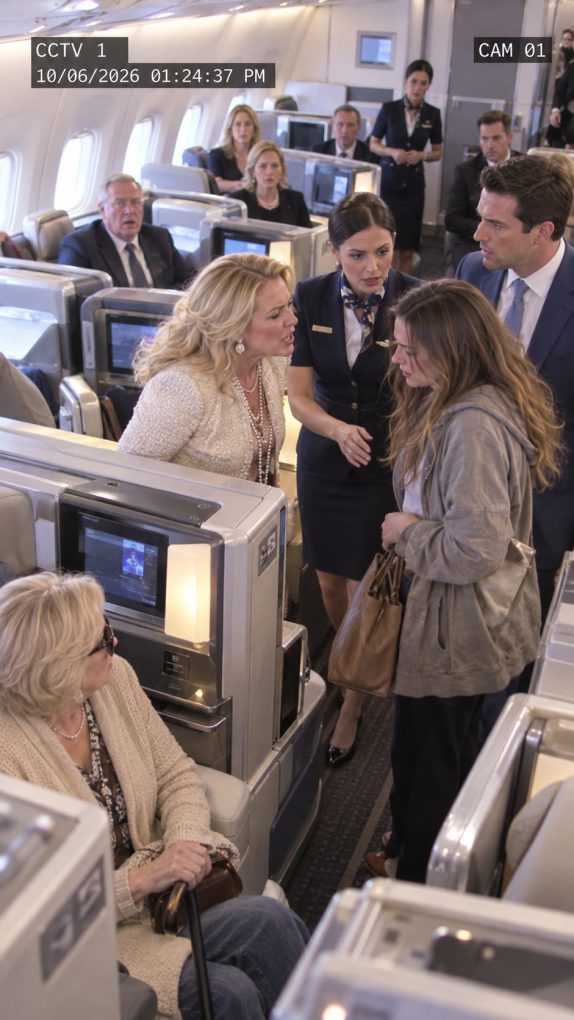
La azafata no me pidió que le mostrara mi tarjeta de embarque antes de decidir que no pertenecía a primera clase.
Miró mi abrigo gris desteñido, las zapatillas desgastadas que había comprado en una farmacia esa mañana y la bolsa de lona que descansaba debajo del asiento 2A. Luego se inclinó hacia la azafata principal y dijo en voz alta, para que la oyera media cabina: «Saquen a esta pobre mujer del avión. Ahora mismo. Está contaminando el aire de primera clase».
Algunos pasajeros se rieron.
No hice.
Veinticuatro horas antes, una tormenta había inundado parte de mi ciudad natal, a las afueras de Des Moines. Pasé la noche ayudando a mi tía de ochenta años a sacar cajas del sótano, mis zapatos se estropearon en el agua lodosa y perdí el taxi que debía llevarme al aeropuerto. Me cambié en el baño de una gasolinera, compré las zapatillas más baratas que encontré y subí al vuelo 417 sin parecerme en nada a la mujer cuya fotografía aparecía en los informes anuales.
Eso me venía de maravilla.
Yo era Eleanor Hayes, presidenta de Hayes Meridian Capital.
Seis meses antes, mi empresa había adquirido el 61 por ciento de NorthStar Atlantic Airways tras liderar su reestructuración.
Yo no gestionaba el servicio de cabina. No programaba las tripulaciones. No contrataba personalmente a los auxiliares de vuelo.
Pero yo era el accionista mayoritario de la empresa cuyo empleado ahora intentaba destituirme del puesto que yo mismo había comprado.
“Me han asignado al 2A”, dije.
La empleada, Mónica, echó un vistazo a mi teléfono sin leerlo realmente.
“Ha habido un error en la asignación de asientos.”
“No, no lo ha habido.”
Su expresión se endureció.
Un hombre del otro lado del pasillo soltó una risita. “Probablemente subió desde la clase económica”.
Mónica le sonrió.
Entonces se volvió hacia mí.
“Señora, no lo complique.”
Podría haber terminado la escena inmediatamente diciendo mi nombre.
Decidí no hacerlo.
“¿Por qué exactamente me están despidiendo?”
Mónica bajó la voz, pero no lo suficiente.
“En esta cabina tenemos ciertos estándares.”
Esa frase importó más que el insulto.
El capitán no solicitó mi expulsión. No estaba ebrio, no causaba disturbios, no amenazaba ni tenía una multa indebida. Nadie me mostró ninguna infracción de las normas porque no existía ninguna.
Así que abrí la grabadora de voz de mi teléfono.
“Por favor, explique la norma.”
Finalmente, Mónica llamó a un supervisor de la puerta de acceso.
Cinco minutos después, un hombre llamado Trevor subió al vehículo, me miró, luego miró a Mónica y dijo: “Vamos a cambiarla de sitio para poder cerrar la puerta”.
“¿Dónde debo reubicarme?”
“Economía. Le reembolsaremos la diferencia.”
Miré su placa.
Entonces hice una pregunta.
“¿Estás documentando el motivo?”
Trevor se quedó paralizado.
Before he could answer, another man stepped onto the aircraft carrying a tablet.
He wore a NorthStar executive badge.
I recognized him.
Chief Operating Officer Daniel Reeves.
He had come to inspect the departure after a morning operations meeting.
Daniel looked toward Seat 2A.
Then stopped.
“Ms. Hayes?”
The cabin went silent.
Monica looked between us.
Trevor’s face drained.
Daniel walked closer.
“I didn’t know you were flying today.”
“I know.”
Then I turned my phone toward him.
“Apparently neither did they.”
Monica whispered, “Who is she?”
Daniel answered without taking his eyes off me.
“The woman whose firm owns controlling interest in this airline.”
Nobody laughed after that.
But I did not ask for anyone to be fired.
I simply said, “Delay the door closure five minutes.”
Then I handed Daniel my phone.
“Listen to the recording.”
Daniel listened to the recording in the jet bridge while I remained seated. He did not shout at Monica or Trevor, and he did not stage a public firing for the passengers. He called corporate compliance and told the gate to preserve the boarding records, seat map, internal messages, and any available terminal video before the flight departed.
The important question was not whether Monica had insulted the controlling shareholder. It was whether she and Trevor had treated an ordinary passenger improperly. My ownership could not become the reason the conduct suddenly mattered. If the same words would have been acceptable toward someone without power, then the airline had a deeper problem.
The flight eventually departed with me still in 2A. Monica was replaced before pushback because Daniel believed continuing the service interaction could compromise both safety and the internal review. Another qualified crew member covered the position. Trevor was removed from that departure process pending review.
I spent the three-hour flight reading NorthStar’s customer-service policy. Appearance was not a basis for denying a purchased cabin assignment. Employees could intervene for safety, intoxication, disruptive behavior, hygiene concerns that met specific operational thresholds, or ticketing problems. “Looks poor” appeared nowhere.
The records made the situation worse. My reservation was valid, paid, and confirmed. Seat 2A had never been duplicated. There was no seating error. Trevor had invented that explanation after Monica told him I was “making premium passengers uncomfortable.”
Compliance later recovered an internal chat between them. Monica had written, She looks homeless. Move her before someone complains. Trevor responded, Fine. Put her in the back and refund later.
Neither message mentioned behavior.
Neither mentioned safety.
Neither mentioned a legitimate policy problem.
The airline also reviewed earlier complaints involving both employees. Most were minor service disputes, but three passengers had previously alleged they were treated dismissively because of clothing, accents, or assumptions about whether they could afford their tickets.
Those complaints had been closed without meaningful follow-up.
That concerned me more than what happened to me.
At the next board meeting, I did not present myself as the victim who needed revenge. I presented the incident as evidence of a process failure: employees had discretionary power to humiliate passengers, supervisors could invent reasons after the fact, and complaints were too easily dismissed when customers lacked influence.
