«Ahora descubrirás lo que realmente vales», dijo Victoria mientras yo estaba de pie junto a Noah Reed frente al juzgado del condado en Asheville, Carolina del Norte. Mi padre miraba fijamente el pavimento. Mi hermanastra Madison sonreía tras sus gafas de sol. Para ellos, Noah era el hombre más pobre que Victoria podría haber elegido para mí: un hombre tranquilo de treinta y ocho años que reparaba techos, conducía una vieja camioneta Ford y vivía en una cabaña de una habitación al pie de las montañas Blue Ridge.
El matrimonio no había sido forzado legalmente. Podría haberme negado. Pero después de que papá sufriera un derrame cerebral, Victoria controlaba el acceso a la casa familiar y llevaba meses dejando claro que si seguía peleando con ella por las pertenencias de mi difunta madre, me apartaría completamente de él. Noah había hecho trabajos de mantenimiento ocasionales en la propiedad y una vez ayudó a papá después de una caída. Victoria propuso el matrimonio como una broma cruel al enterarse de que Noah necesitaba seguro médico y yo un lugar donde vivir. Esperaba que ambos nos humilláramos.
Lo que ella no entendía era que Noah me trató con más dignidad en una semana que mi familia en años.
Nunca me preguntó por mi herencia. Nunca se rió cuando le confesé que solo me quedaban 8000 dólares después de pagar los honorarios legales. Me cedió la habitación y durmió en el sofá durante el primer mes. Acordamos que el matrimonio seguiría siendo práctico hasta que papá se recuperara lo suficiente para que yo pudiera tomar decisiones libremente.
Tres semanas después, estaba preparando café cuando el teléfono de Noah se iluminó junto al fregadero.
No tenía intención de leerlo.
Era imposible pasar por alto la vista previa del mensaje.
APROBACIÓN DEL CONSEJO DE ADQUISICIÓN COMPLETADA. LA ADQUISICIÓN DE MERCER AEROSPACE VALORA SU PARTICIPACIÓN EN 2.400 MILLONES DE DÓLARES. LLAME ANTES DE LA APERTURA DEL MERCADO.
Me quedé mirando la pantalla.
Noé entró en la cocina cargando leña y se detuvo al ver mi cara.
“¿Qué es Mercer Aerospace?”
Dejó la leña muy despacio.
“Eso es complicado.”
“Aparentemente vale dos mil cuatrocientos millones de dólares.”
Por primera vez desde que lo conocí, Noah parecía acorralado.
Finalmente me dijo la verdad.
Su nombre legal era Noah Mercer Reed . Doce años antes, había cofundado Mercer Aerospace Systems con su hermano mayor y dos ingenieros. Tras una dura disputa en la junta directiva y la muerte de su esposa, se apartó de las operaciones diarias, conservó una participación importante y desapareció de la vida pública de la empresa. La cabaña le pertenecía, al igual que varios cientos de acres que la rodeaban.
“¿Por qué vivir así?”
“Porque aquí puedo respirar.”
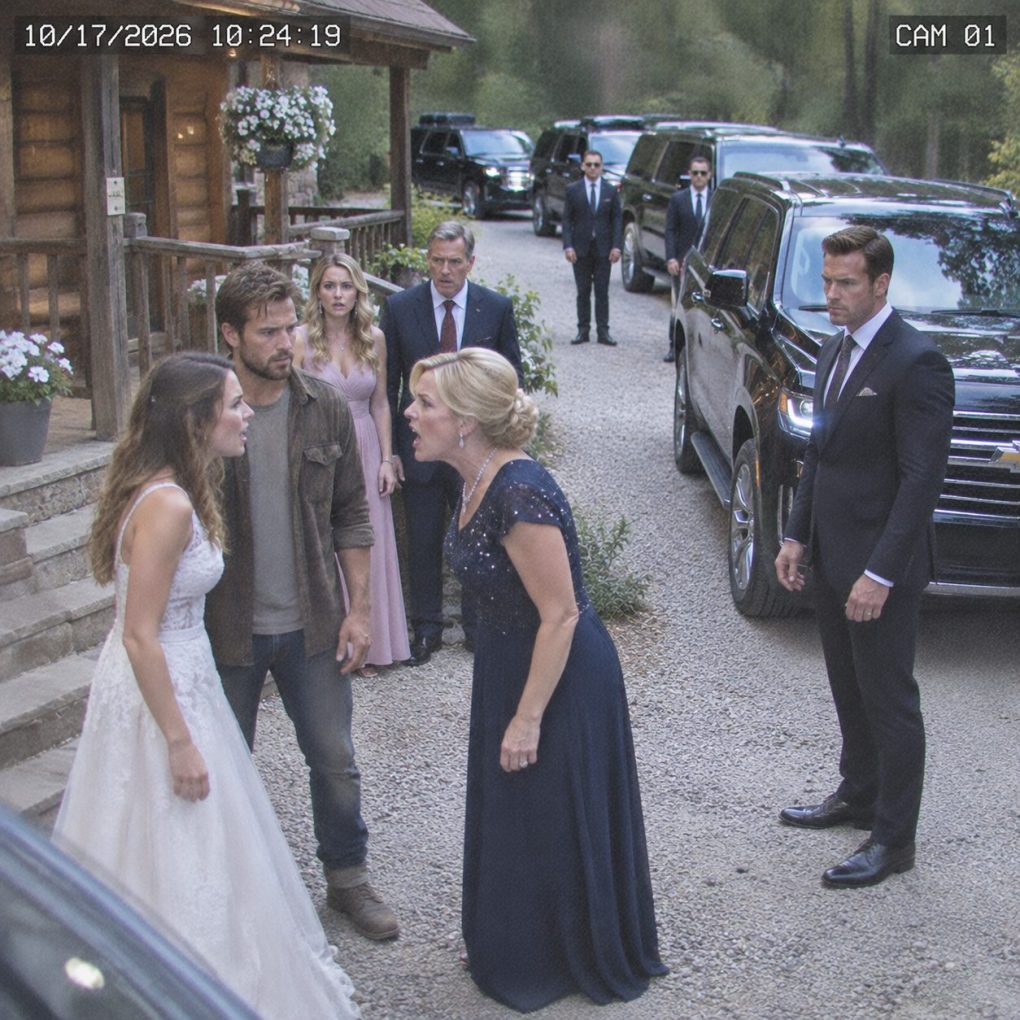
Before I could ask anything else, tires crunched over gravel outside.
Four black SUVs rolled toward the cabin.
Victoria, Dad, and Madison happened to be arriving behind them. Victoria had come to “check whether married life had humbled me yet.”
The first SUV stopped.
A silver-haired man stepped out.
He looked at Noah.
Then smiled with visible relief.
“Mr. Reed,” he said, “the board accepted your terms.”
Victoria stopped walking.
Madison’s mouth fell open.
The man extended his hand.
“Your $2.4 billion transaction is ready for signature.”
Noah did not look at them.
He looked at me.
And quietly said, “This time, nobody signs anything unless Claire understands every page first.”
The silver-haired man was Thomas Grant, general counsel for Mercer Aerospace Systems. The other vehicles carried two board representatives, a tax attorney, and Noah’s private financial adviser. Nobody had arrived to hand him a giant check. They came because a private-equity consortium had offered to purchase part of his remaining stake, and Noah’s approval was required before the transaction could proceed.
The $2.4 billion figure was not cash sitting in a checking account. It was the estimated value of Noah’s equity position under the proposed deal. Taxes, restrictions, voting rights, and transaction terms still mattered. That explanation somehow made Victoria’s expression even more fascinating.
She immediately changed personalities. Five minutes earlier, Noah had been “that handyman.” Now she called him “Mr. Reed” and asked whether Mercer Aerospace worked with her brother’s investment firm. Noah answered politely but gave her nothing.
Dad looked more ashamed than surprised. He admitted later that he had known Noah was educated and financially independent, though not about the aerospace company. He had allowed Victoria to ridicule him because challenging her had become easier to avoid after his stroke.
That hurt me more than her cruelty.
Noah asked everyone to leave except me and the legal team. Victoria refused at first, insisting that because I was his wife, “our family” should understand the deal. Thomas corrected her calmly: the transaction involved Noah’s separate premarital business interests, and attendance was Noah’s decision.
The door closed on her face.
Then Noah explained why he had never told me. After his first wife died, distant relatives, old friends, and even strangers began treating him differently once newspapers published estimates of his wealth. He withdrew from public life and used his mother’s surname, Reed, socially.
He had not planned to marry again.
When Victoria suggested me as a humiliation, Noah initially intended to refuse. Then he learned why I was trapped in the situation and offered a legal marriage of convenience only after we privately negotiated boundaries. We had signed a simple prenup protecting both sides.
“What if I had cared about the money?” I asked.
“Then I would’ve ended the arrangement honestly.”
His answer irritated me because it sounded like another test.
I told him that.
He apologized immediately.
That mattered.
The next complication came from my own family. Victoria had apparently told several relatives that Noah and I married because I was financially desperate. She had also persuaded Dad to sign a document promising Madison most of his remaining investment assets, arguing that I was now “provided for by my husband.”
