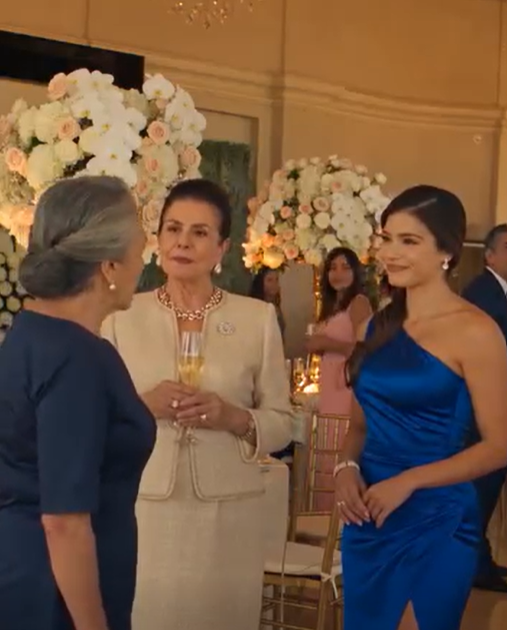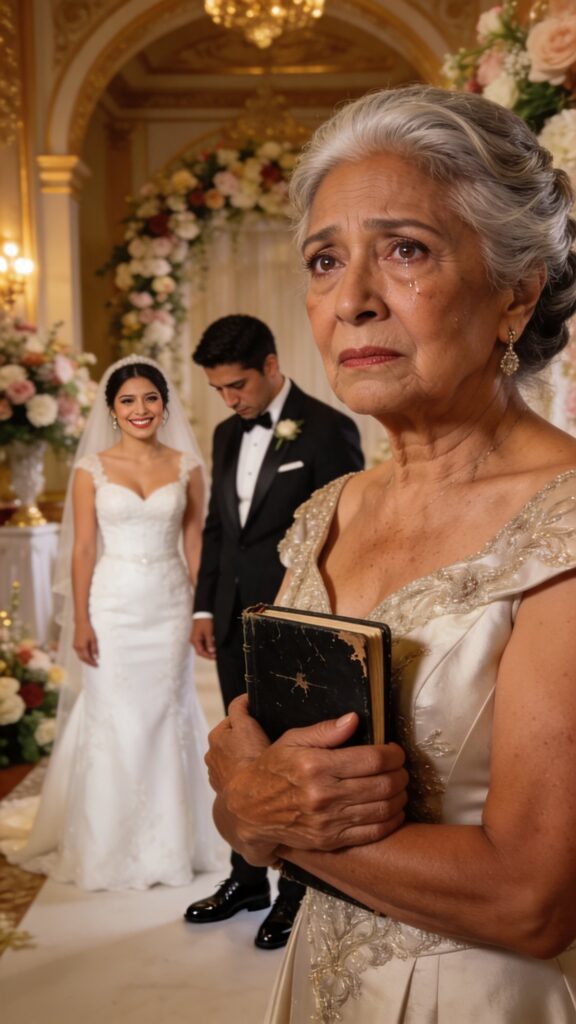
Chapter 1: The mother who was superfluous at her own son’s wedding
The bride waited until all two hundred guests were watching before pointing me out and telling me I had no place at my own son’s wedding.
—I need you to leave, Judith. This isn’t your place.
Amanda uttered those words with such a cold smile that, for a moment, I thought I hadn’t heard correctly.
A few steps away from her, Jacob, my only son, was wearing a rented tuxedo and had his hands clasped in front of him. He didn’t look me in the eye. Not even when I said his name.
—Jacob…
He lowered his head even further.
And at that moment, surrounded by flowers that I had paid for, under the lights that I had financed, and in front of two hundred people who had dined thanks to my money, I understood something that hurt me more than any insult.
My son had grown up.
But the child I had raised seemed to have disappeared.
My name is Judith Emerson. I was seventy-three years old when I discovered that some people don’t love you for who you are, but for everything you can do for them.
My husband, Harold, had been dead for four years. For forty-two years we had built a simple life, without great luxuries, but with enough discipline to save and enjoy our old age without depending on anyone.
We were never the kind of rich people you see in magazines.
We were rich in another way.
We had a paid-off house, a savings account, a small investment portfolio, and a habit that Harold never abandoned: recording every expense in an old black ledger.
He said that money had a memory.
“If you don’t know where every dollar went, one day you’ll wake up wondering why you have nothing left,” I would repeat to myself while writing down the price of purchases or the electricity bill.
I used to make fun of him.
—Harold, one day you’re going to keep track of even the cookies you eat.
“Of course,” he replied, very seriously. “Especially the ones you’re hiding from me.”
Then he would burst out laughing.
I would give anything to hear it again.
On the morning of the wedding, while I was getting ready in front of the mirror, I had placed that black book inside my bag. I also carried a sealed letter that I had written the night before, after checking every last receipt related to the celebration.
I wasn’t planning to open it.
In fact, he had prayed that he wouldn’t have to do it.
But life has a cruel way of testing the promises a woman makes to herself.
It had all started six months earlier, when Jacob came to my house to announce that he was going to marry Amanda.
I didn’t even know the relationship was so serious.
My son was thirty-eight years old. He worked as a sales consultant and had been living on his own for several years. Since Harold’s death, our phone calls had become shorter and our visits less frequent.
Even so, when I saw him sitting in my kitchen, nervously moving the little spoon inside his coffee cup, I felt the same tenderness as when he was little.
—What’s wrong, honey?
Jacob smiled.
—I’m getting married, Mom.
I left the coffee maker on the table.
-That?
—Amanda and I are going to get married.
I got up so fast I almost knocked over the chair.
I hugged him. I kissed his cheek and started asking questions about the date, the ceremony, and the preparations.
For the first time in months, my son stayed with me for more than an hour.
When he mentioned the place Amanda dreamed of booking, I saw her enthusiasm wane.
“She wants it to be at Hollow Creek Vineyard,” she said. “It’s a beautiful place, but it’s very expensive.”
I knew that vineyard. It had enormous gardens, a stone house, a terrace overlooking the hills, and a lounge where the lamps looked like small crystal waterfalls.
She also knew that organizing a wedding there cost a fortune.
“Have you spoken to the administrator yet?” I asked.
—Not yet. Amanda says if we can’t do it right, we’d better wait another year.
My son tried to hide his disappointment.
I remembered all the times Harold and I had sacrificed our vacations to pay for his studies. I remembered the nights I stayed awake waiting for him to come home from university. I remembered the boy I had been.
And I made a mistake that would take me months to acknowledge.
I confused helping him with regaining his closeness.
—Let me talk to them—I told him.
Two days later, I received a folder with budgets, contracts, floral proposals, and an initial invoice for forty-eight thousand dollars.