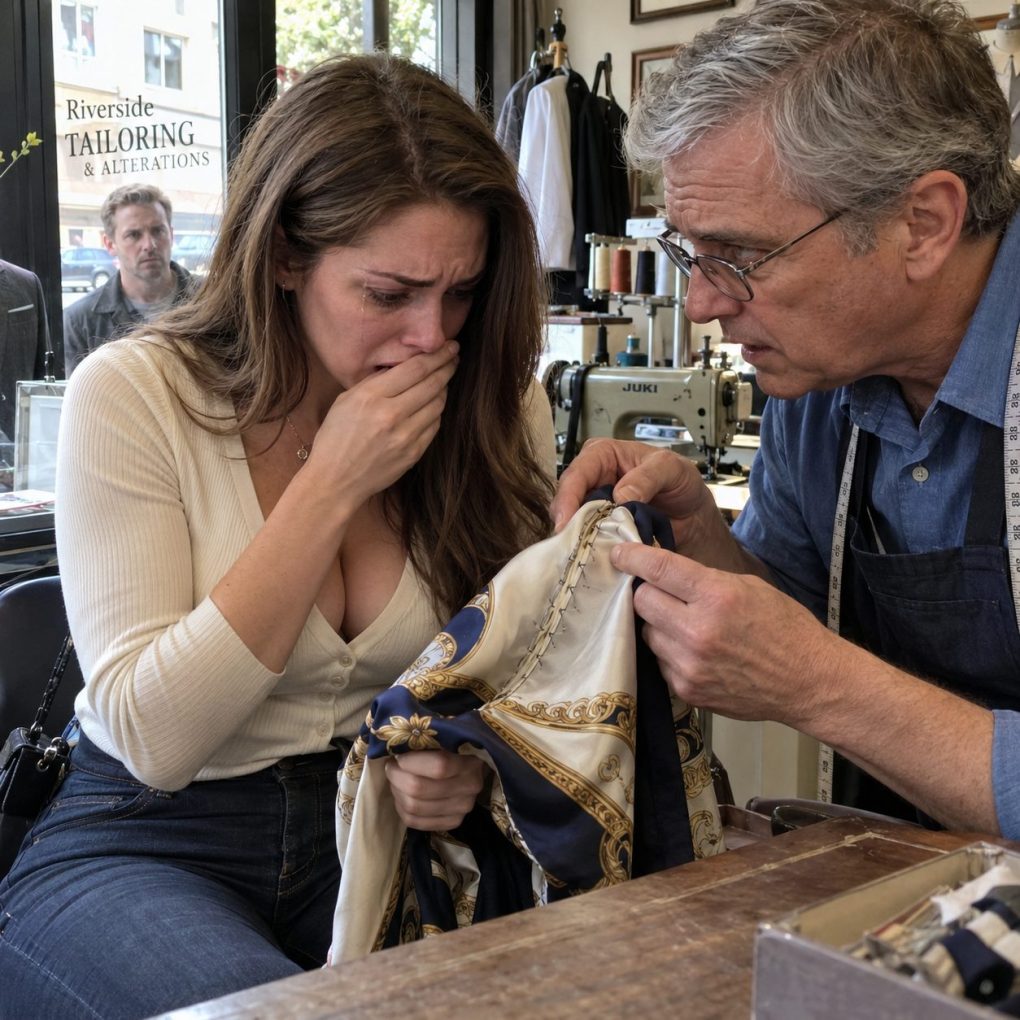
The next morning, I gave an investigator every message I still had. There were reminders to wear the scarf, complaints when photographs showed my bare neck, and texts telling me that scratching was proof I couldn’t control myself. Separately, Mr. Alvarez gave his account of finding the scarf on the bus and examining its unusual border. He explained that he had worked on costumes and had seen itching pranks before. His suspicion had been real; his advice had been reckless. When he called to apologize, I let him finish. “You helped me notice,” I said. “But someone else could have been hurt.” He agreed.
The investigators recovered the scarf and bedding. Later, testing identified a substance capable of causing skin irritation. The report didn’t claim to explain every symptom I’d experienced. My clinician didn’t either. But the hidden material, the pattern of exposure, and the improvement after I stopped wearing it supported what Evan had dismissed as imagination. The powder on his pillow had appeared because material escaped from the disturbed stitching overnight. There had been no curse, no mysterious message, no supernatural punishment. His scream came from recognizing something he had never expected to find beside his own face.
I kept returning to that moment. “Did you open the seam?” He had known exactly where to look. He had tried to remove the bedding before anyone could examine it. Neither fact proved the whole case alone, the investigator explained, but both mattered alongside the other evidence. That distinction helped me breathe. I didn’t need one perfect sentence that magically convicted him. I needed to tell the truth, preserve what I had, and let each piece support the next.
The larger betrayal emerged from his messages. Evan had told Megan, my mother, and two friends that I was showing signs of a breakdown. He shared short clips without the parts where I asked him for help. In one, I was sobbing after another sleepless night. He captioned it as an unexplained episode. In another, he calmly asked why I kept hurting myself while I begged him to stop recording. Watching those videos with my sister, I finally heard how carefully he kept his own voice gentle.
Then the investigator asked about a woman named Dana. She had dated Evan before our marriage and had contacted police after hearing that he was under investigation. Dana had no scarf story. Hers involved canceled appointments, missing bank statements, and relatives receiving worried calls about her judgment. “I can’t tell you what happened to you,” she said when we eventually spoke. “I can tell you he wanted me dependent on him.” The twist wasn’t a second poisoned gift. It was learning that the language he used to make me doubt myself had a history.
His motive became clearer when my attorney reviewed the financial documents. Evan had substantial debts I knew nothing about. He had already asked a lender about borrowing against my rental property, but he lacked authority to pledge it. The proposed power of attorney would have given him broad control over assets that belonged to me. When I had resisted selling the house months earlier, he called me selfish. Now I understood why he had started saying I needed someone to make decisions for me.
Evan sent messages through relatives after I stopped answering him. First he said the scarf had been contaminated accidentally. Then he claimed Mr. Alvarez had tampered with it. Finally, he admitted in a voicemail that he had wanted me uncomfortable, while insisting I was exaggerating the consequences. “I just needed you to listen for once,” he said. I forwarded it to my attorney. I didn’t write back. Every explanation still ended with the same demand: accept his version and surrender mine.
Over the following months, the criminal case moved forward, and my attorney helped me obtain protection and file for divorce. I gave a statement about the scarf, the recordings, and the fear of being dismissed when I asked for help. Evan eventually pleaded guilty to charges arising from what he had done. The sentence included restrictions on contacting me. The divorce addressed our shared finances; Grandma’s house stayed mine. It wasn’t a single courtroom speech that fixed everything. It was paperwork, appointments, evidence, and people who kept showing up.
My mother apologized for believing his calls before calling me. I told her I loved her, but trust would take time. Megan stayed through the evenings when I still caught myself reaching for something to cover my neck. Slowly, the irritation subsided. Sleep returned unevenly. At a follow-up visit, I answered questions without glancing toward an empty chair to see whether my husband approved. That small change felt bigger than any dramatic victory.
A few months later, on my way to look at a rental property, I passed by Mr. Alvarez’s shop. He came out and asked how I was doing. “I’m getting better,” I replied, and I truly was. I didn’t buy another scarf that day. I went home, opened the window, and placed my grandmother’s picture by the front door. Evan had called that gift a reminder of love. Now, whenever I leave the house, I only check my keys and phone; I don’t take anything else. No one is waiting to scrutinize my outfit anymore.
