Dad had contacted Rachel instead. He gave her bank statements, the questionable invoices, and instructions to remove Daniel’s access. He also described a conversation in which Daniel offered to “simplify things” by moving the house into his company. Dad refused. “I didn’t tell you because you looked so tired,” he wrote. “I thought I could handle it without giving you another burden. Keeping it from you was a mistake. If he asks you to sign anything, take it to Rachel first. This house is yours. You never have to earn permission to live in it.”
I cried harder at that sentence than I had at his funeral. For months, Daniel had called me selfish for keeping the property in my name. He said my father had wanted us to share everything. He said a good wife trusted her husband. Dad’s letter answered each accusation in a voice I could almost hear. Rachel explained that the copies in her office meant destroying the safe’s contents would never have erased the records. Daniel apparently hadn’t known that. The returned letters were another thing the investigators would examine.
The next morning, I stayed at a hotel while a locksmith changed the locks with arrangements Rachel had checked first. She helped me seek a protective order and challenge the deed. My accounts received new passwords, and my bank received notice that Daniel had no authority to act for me. None of it felt triumphant. I forgot to eat. I checked the hall every time a door closed. When my phone lit up with his name, my stomach still tightened before I remembered I could let the call go unanswered.
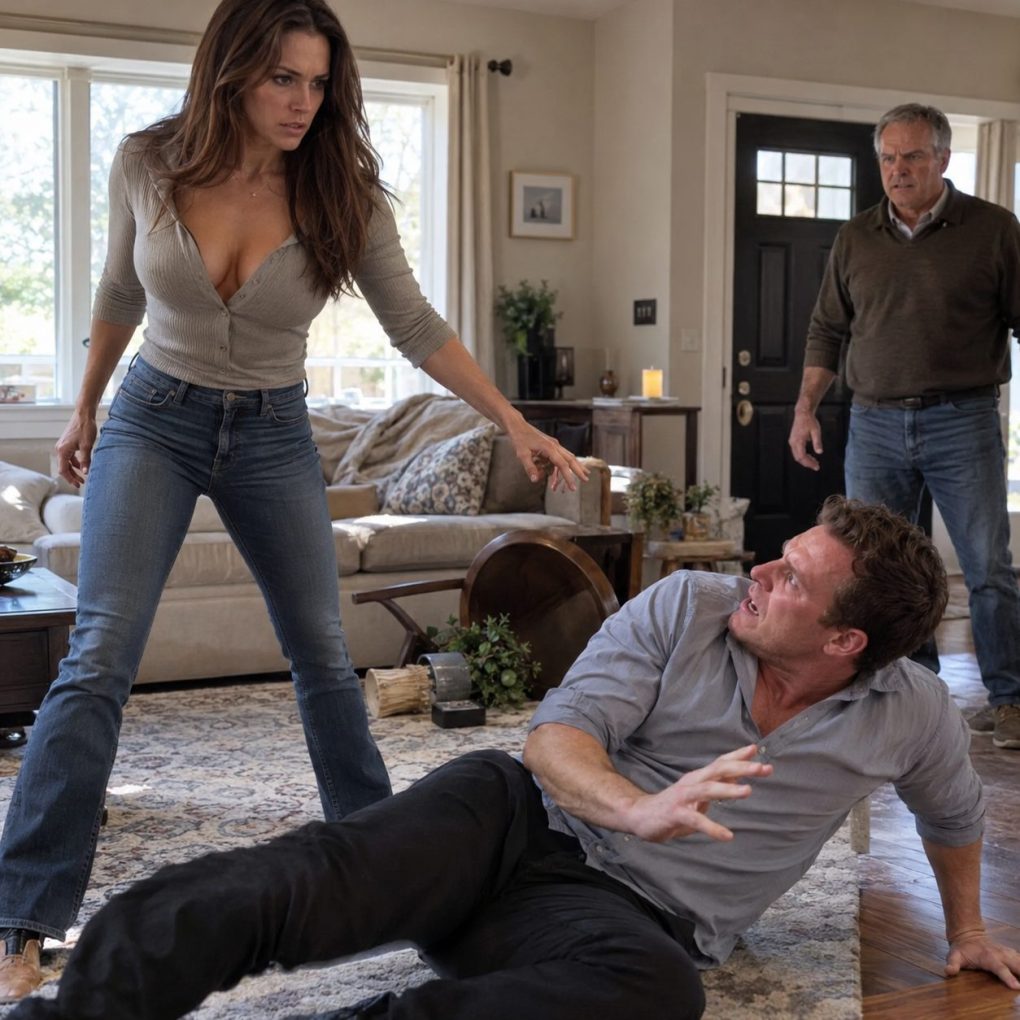
The complete kitchen recording became the turning point. Investigators obtained it through the process required to access the camera account. Daniel had sent police a cropped export; he hadn’t deleted the original. It showed him placing the papers before me, blocking my exit, raising his hand, and lunging. It also recorded what happened afterward: I retreated, called for medical help, and never approached him again. His wrist was fractured in the fall. The injury was real. So was the attack that came before it.
His next attempt arrived through a relative: he would “forgive” me if I withdrew my complaint and signed the loan application. I forwarded the message to Rachel. Then I stopped replying. Investigators compared the recorded deed with documents containing my actual signature. Linda’s notarization claimed I had appeared before her; I hadn’t. Messages obtained during the investigation connected her, Eric, and Daniel to the transfer and the search of the safe. The unsigned loan application was their unfinished step. The lender hadn’t released the money. My refusal had interrupted them before the house could secure that debt.
Months passed before the consequences became clear. The forged transfer was set aside, and the county record was corrected. Daniel’s account of an unprovoked attack collapsed against the full recording. Prosecutors pursued the assault and financial crimes supported by the evidence. He eventually accepted a plea agreement that included jail time and restitution. Linda faced consequences for her part in the forged documents, and Eric for his involvement in taking the papers. I attended the hearings with Rachel. Some days I barely spoke. Showing up was enough.
At the final divorce hearing, Daniel looked smaller than I remembered, though his expression was familiar. When we left the courtroom, he asked, “Was all this really necessary?” Rachel stopped beside me. I could have listed the threats, the stolen letters, the deed, the fist. Instead, I said, “You could have let me walk out of the kitchen.” He stared at me as if that possibility had never occurred to him. I kept walking. The woman he had expected to frighten into signing was carrying her own copy of the judgment.
I returned to Dad’s house gradually. First for an afternoon, then a night. I removed the clock from the kitchen shelf and replaced the broken chair. Dad’s letter went into a frame beside a photograph of us after my first self-defense class, my crooked grin missing two front teeth. On the first morning I felt safe enough to leave my bedroom door open, I made coffee and sat at the table without listening for footsteps. By midnight that terrible night, I had already planned my next move: leave safely, preserve the evidence, and take back my life. It took longer than I wanted. But every key in my pocket was finally mine.
