“Her attorney brought her in for questioning this afternoon.”
Damian looked up.
“You contacted law enforcement?”
“Like you told me to.”
Damian leaned back.
Years earlier, his answer would have been different.
People who betrayed Cross did not get interviews.
They disappeared from his world one way or another.
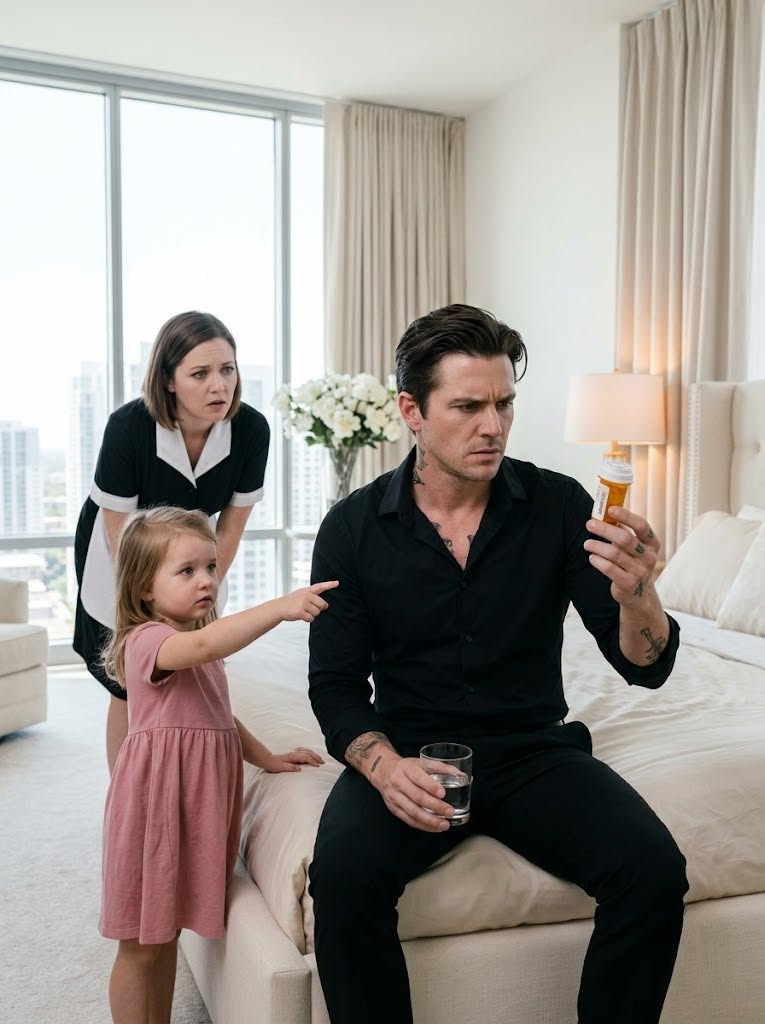
But Sophia had been standing in the doorway when this started.
Six years old.
Yellow shirt.
Crooked braids.
She had seen something wrong and spoken.
Damian suddenly understood the kind of house he wanted her to believe she lived in.
One where telling the truth caused adults to investigate.
Not one where telling the truth caused somebody to vanish.
“Good.”
Marcus studied him.
“That’s all?”
“What were you expecting?”
“A table overturned.”
“Too expensive.”
Marcus laughed once.
Then Damian became serious.
“Bell?”
“Cooperating.”
“Adrian?”
“Devastated.”
Damian nodded.
“Keep him away from the children until he’s ready to behave like an uncle, not a defense attorney.”
The criminal investigation moved forward.
Damian did not direct charges.
Evidence did.
Bell admitted his role.
Victoria denied involvement until financial records and communications contradicted her.
The attempted poisoning charge was ultimately handled alongside fraud, conspiracy, and evidence-tampering allegations.
Damian testified when required.
Nothing more.
The harder part happened inside the mansion.
Security found eleven weaknesses in household procedures.
Too much trust concentrated in too few people.
Shared access.
Poor separation between medical and household staff.
Bad habits accepted because nothing had gone wrong before.
Damian fixed them.
But one fact bothered him most.
The most sophisticated security system in the house had not protected him.
A six-year-old had.
Not because Sophia understood danger.
Because she paid attention.
Three weeks after the incident, Damian found her sitting beneath the grand staircase drawing.
He stopped.
“Sophia.”
She looked up.
“Boss.”
“I’ve told you. Damian is fine.”
“My mom says that’s disrespectful.”
“Your mother and I disagree.”
Sophia smiled.
He sat on the bottom step.
“I owe you something.”
“Candy?”
“No.”
“Then maybe.”
He almost smiled.
“You noticed what nobody else did.”
“The blue?”
“Yes.”
“Because it was wrong.”
“I know.”
He paused.
“Why were you paying attention?”
Sophia thought about it.
“Because you look sad when you take them.”
That answer stunned him.
“What?”
“You always look at the window after.”
Damian had never realized.
The surgery three years earlier had happened the same week his younger brother died.
Every morning, the pills reminded him that he survived a week someone else did not.
The adults around him saw routine.
Sophia had seen sadness.
Children noticed what powerful people spent fortunes teaching adults not to mention.
She returned to her drawing.
“My mommy says sometimes people get quiet when something hurts.”
Damian looked down at her.
“Your mother sounds annoyingly wise.”
“She is.”
The following month, Alina asked to speak with him.
She stood inside his study nervously.
“If this is about compensation—”
“It isn’t.”
Damian waited.
“I want to resign.”
That surprised him.
“Why?”
“My daughter shouldn’t be around this.”
He could not argue.
Not immediately.
Alina continued.
“She saved your life, and everyone keeps calling her brave. She’s six. I don’t want her believing danger is something she’s supposed to solve.”
Damian nodded slowly.
That was wiser than anything his advisers had said.
“What do you want?”
“A normal job.”
“You have one.”
She looked around the mansion.
“No offense, Mr. Cross.”
He glanced at the armed guard outside.
“Fair.”
Damian arranged nothing secretly.
He gave Alina references and severance she was contractually owed.
She applied independently for a position managing housekeeping at a private school.
She got it.
Sophia was furious.
“You’re firing us.”
“I am absolutely not firing you.”
“You won’t let Mommy work here.”
“Your mother won’t let your mother work here.”
Sophia considered this legal distinction deeply.
Then:
“Can I still visit?”
“If your mother allows it.”
“She will.”
Alina, standing behind her, mouthed: We’ll see.
They did visit.
Not often.
Enough.
On the anniversary of the incident, Sophia arrived carrying a tiny gift bag.
Damian opened it.
Inside was a blue crayon.
He stared at it.
“The right blue,” she explained.
He laughed.
Then placed it in the drawer beside his medication logs.
Years passed.
People around Damian eventually turned the story into legend.
They said a child had somehow detected poisoned medication by sight and exposed an elaborate assassination conspiracy.
That version irritated him.
Sophia had not solved the case.
She noticed one inconsistency.
Doctors tested the pills.
Investigators traced access.
Security reconstructed events.
Financial auditors found motive.
Police built the case.
Dozens of people did their jobs.
Sophia simply made the first one possible.
That distinction mattered.
Because Damian had spent years believing power meant noticing everything himself.
It didn’t.
Power meant building a place where the smallest person in the room could say:
Something looks wrong.
And be heard before somebody important decided she was too small to matter.
At 7:04 every morning afterward, Damian still took two pills.
But he looked at them first.
Not because he distrusted everyone.
Because trust was not the absence of attention.
And sometimes, just before swallowing them, he remembered a six-year-old girl in crooked braids standing in his doorway.
Boss.
That medicine looks different today.
Fourteen words.
No accusation.
No fear.
Just observation.
They had been enough to save his life.
More importantly, they taught Damian something no bodyguard, lawyer, or security system ever had.
The safest house was not the one where nobody dared speak.
It was the one where even a child knew she could.
The End.
