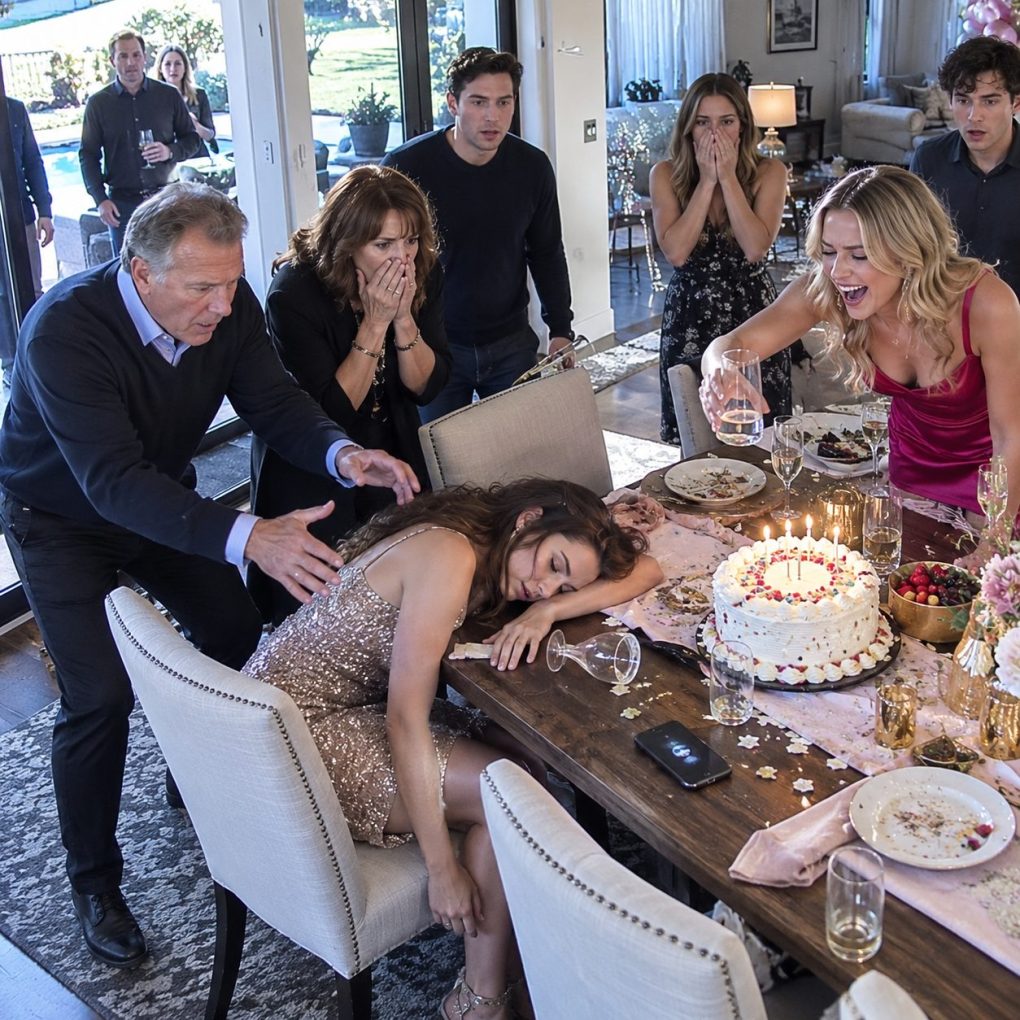
At my sister’s birthday dinner, she slipped something into my drink and laughed when I collapsed beside the cake. “It’s just a joke!” she shouted. My parents begged me not to involve the police. Then the hospital’s toxicology report arrived—and my father’s hands started shaking.
“It was just a joke!” my sister laughed as I collapsed beside her birthday cake.
I remember reaching for the dining table, knocking over a glass of water, and hearing my mother complain about the mess before anyone realized I couldn’t get up.
My name is Rachel Bennett. I was thirty-two when my younger sister, Madison, decided that humiliating me in front of fourteen relatives would be the perfect entertainment for her birthday.
Ten minutes earlier, she’d handed me a glass of lemonade.
“Peace offering,” she said, smiling.
We’d barely spoken in six months. Madison had always resented the attention I received after our grandmother left me her little house in Ohio. She called it favoritism. I called it the place where Grandma had taught me to make pancakes on Sunday mornings.
I accepted the drink because I was tired of fighting.
Soon afterward, my vision blurred. My hands felt strangely heavy, and the kitchen lights seemed to move whenever I turned my head.
“Madison,” I whispered. “Something’s wrong.”
She laughed.
“Relax. I put a little something in your drink. You’re always so uptight.”
I tried to stand. My knees buckled, and I struck my shoulder against a chair.
My father rushed forward, but Madison waved him away.
“She’s being dramatic.”
Then I heard my eight-year-old daughter, Sophie.
“Mommy?”
She was standing beside the doorway, clutching the birthday card she’d made for her aunt.
I tried to tell her not to be frightened.
The words wouldn’t come.
My cousin Daniel called 911 despite my father’s protests. By the time the paramedics arrived, I could barely keep my eyes open.
At the hospital, doctors treated me for suspected drug exposure. They collected blood and urine samples while asking what I had consumed.
Madison told the responding officer she’d played a harmless prank.
My mother sat beside my bed, smoothing the blanket over my knees.
“Please don’t make this a police matter,” she whispered. “Your sister could lose her job.”
I looked at the hospital bracelet around my wrist.
“What about Sophie?”
Mom’s hand stopped moving.
The next morning, Daniel visited with a photograph from the birthday dinner. It showed Madison laughing beside my overturned chair.
But that wasn’t what caught my attention.
In the background, my father stood near the kitchen counter, holding a small amber prescription bottle.
I recognized the bottle.
I’d seen it in his bathroom cabinet the previous Christmas.
And suddenly, I remembered something Madison had said before handing me the lemonade.
“Dad says this will finally make you listen.”
My father arrived at the hospital twenty minutes after Daniel left.
He brought my favorite blueberry muffin from the bakery near our old house, still wrapped in its white paper bag.
He placed it beside my untouched breakfast tray.
“You look better,” he said.
I watched him straighten the bag twice.
“Dad, what did Madison put in my drink?”
His expression barely changed.
“Something stupid. She wasn’t thinking.”
“Where did she get it?”
He pulled out the visitor’s chair.
“Rachel, she’s twenty-nine. One criminal charge could ruin everything she’s worked for.”
I waited.
He leaned closer.
“Your grandmother wouldn’t have wanted this family destroyed over one mistake.”
Grandma had been dead for three years. He still knew exactly when to use her name.
I turned toward the window.
“Then tell me what happened.”
He didn’t.
By afternoon, Madison had posted a message in our family group chat claiming I’d suffered a panic attack after drinking too much at her party.
My aunt responded with a prayer emoji.
My mother wrote, *Let’s keep this private.*
Then Madison sent another message.
*Rachel has always needed to be the center of attention.*
I read it twice before turning off my phone.
Daniel later told me that Madison had asked him to delete his photographs. When he refused, she threatened to tell his employer he’d been drinking at the party.
“She called me six times,” he said. “I saved the messages.”
I asked him to keep everything.
That evening, Detective Harris visited my hospital room. I told her what Madison had admitted, showed her the messages, and explained the prescription bottle in Daniel’s photograph.
She listened without interrupting.
“Your father’s medication?” she asked.
“I believe so. I don’t know whether he gave it to her.”
“That’s something we’ll investigate.”
After she left, Mom called.
“Your father hasn’t slept,” she said. “Madison is terrified. Is this really what you want?”
I looked at Sophie, asleep in the chair beside my bed. She’d insisted on staying until visiting hours ended, her small fingers curled around the strap of her backpack.
“I want to know what was put in my body.”
Mom sighed.
“Families forgive things, Rachel.”
I watched Sophie breathe.
“Families are supposed to protect people, too.”
Three days later, I was discharged. My parents were waiting outside the hospital, hoping I’d withdraw my complaint.
I walked past them.
The following Monday, Detective Harris called. The hospital’s confirmatory toxicology results were available, and investigators had obtained additional evidence concerning the prescription bottle.
She asked me to come to the station.
When I arrived, she placed a laboratory report and a photograph on the table.
“Rachel,” she said, “we need to talk about what your father knew before the party.”
Detective Harris slid the report toward me.
“The laboratory confirmed a prescription sedative in your system,” she said. “It’s consistent with the medication prescribed to your father.”
I stared at the paper.
There was my name, the date of collection, and a substance I’d never knowingly taken.
“The toxicology report establishes exposure,” she continued. “It doesn’t tell us who put it in your drink. But we’ve found evidence about that, too.”
She opened a folder containing printed messages.
