“Stop being dramatic. You don’t need those pills,” my stepmother snapped, slamming my medicine cabinet shut. I stood there clutching an empty prescription bottle, my heart already racing. Three days later, I was fighting for my life in the ICU. Then the doctor asked her one question…
“Stop being dramatic,” my stepmother said when I asked where my heart medication had gone. “It’s all in your head. You’re twenty-six, Emily. Stop acting like you’re dying every time something doesn’t go your way.”
She said it at Sunday dinner, in front of my father and two visiting relatives, while I stood beside the table holding an empty prescription bottle.
Dad didn’t look up from his plate.
I’d been diagnosed with congenital long QT syndrome when I was sixteen, after collapsing during a high school volleyball game. The condition could cause dangerous heart rhythms. My cardiologist prescribed medication to reduce that risk, and for ten years, taking it had been as ordinary as brushing my teeth.
Until that Sunday.
I’d recently moved back into my father’s house outside Columbus, Ohio, after a burst pipe flooded my apartment. It was supposed to be temporary.
My stepmother, Vanessa, had spent those six weeks reminding me that I was an inconvenience.
She complained about my shoes by the door, the groceries I kept in the refrigerator, and the small plastic pill organizer I placed beside the kitchen window.
That evening, both my organizer and prescription bottle were missing.
“I left them right here,” I said, pointing toward the counter.
Vanessa continued cutting her chicken.
“Maybe if you weren’t so obsessed with being sick, you’d remember where you put things.”
“Vanessa, I need that medication.”
“And I need one peaceful dinner.”
I looked at Dad.
He shifted in his chair, then said, “Emily, honey, just check your room again.”
I already had.
Twice.
After dinner, I called the pharmacy. My refill wasn’t due yet, and replacing the medication required an override and a prescription from my doctor. I contacted the cardiology service that evening and was told to seek emergency care if symptoms developed.
I spent Monday arranging a replacement prescription and calling pharmacies about availability.
All the while, Vanessa behaved as though nothing had happened.
When I asked again, she rolled her eyes.
“You’re making this entire house miserable.”
By Tuesday night, I’d begun feeling brief spells of dizziness. I called the medical service again, and they directed me to the emergency department. My friend Rachel drove me there. I was evaluated, given treatment, and discharged with instructions for close follow-up.
The following morning, while getting dressed, my heart suddenly began pounding so violently that I grabbed the bedroom doorframe.
I remember my phone slipping from my hand.
Then the floor came toward me.
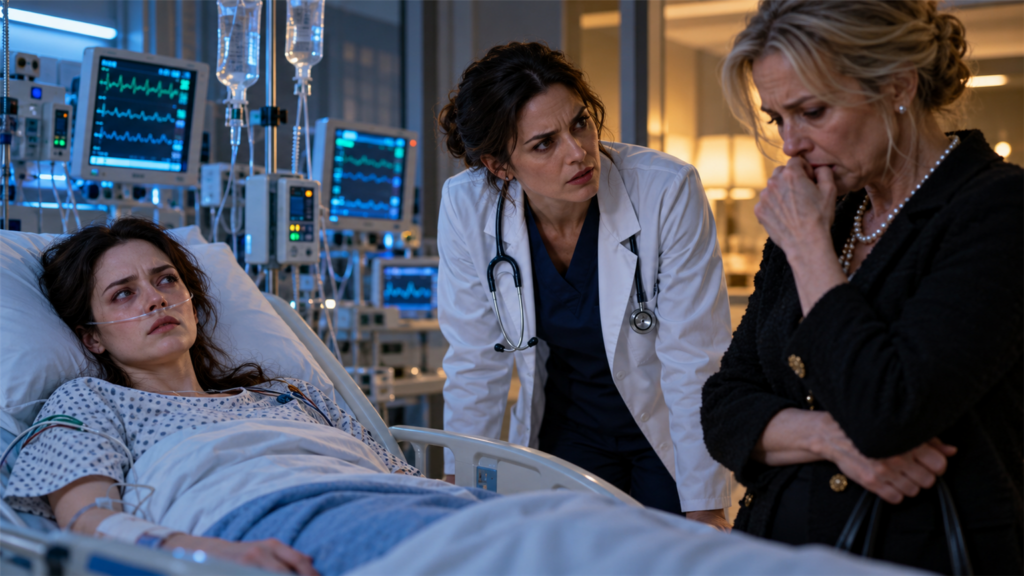
When I regained consciousness, I was in a hospital bed surrounded by monitors. A doctor explained that I’d experienced a dangerous heart rhythm and needed intensive care.
My father was sitting beside me.
Vanessa stood near the window.
The doctor looked between them.
“There’s something we need to clarify,” she said.
“Your family told us you deliberately stopped taking your medication.”
I turned toward Vanessa.
She wouldn’t meet my eyes.
Then the doctor asked one more question.
“Emily, did someone prevent you from taking it?”
The room became so quiet that I could hear the soft clicking of the infusion pump beside my bed.
I looked at my father.
He was staring at the floor, rubbing his thumb across his wedding ring.
“I didn’t stop taking it,” I whispered. “It disappeared.”
Vanessa immediately stepped forward.
“Doctor, Emily has always exaggerated her symptoms. We’ve been dealing with this since she moved in.”
Dr. Caroline Mitchell didn’t raise her voice.
“Mrs. Parker, this patient has a documented cardiac condition. She experienced a serious ventricular arrhythmia. Her illness is not imaginary.”
Vanessa’s expression tightened.
“Well, she seemed perfectly fine yesterday.”
Dr. Mitchell glanced at the monitor.
“People with heart rhythm disorders can appear well before a dangerous event. Interrupting prescribed treatment may increase their risk. We’re reviewing what contributed to this episode.”
My father finally looked up.
“Are you saying she could’ve died?”
The doctor paused.
“Yes. This was potentially life-threatening.”
Dad pressed his fingers against his mouth.
For a moment, I remembered being sixteen, waking in another hospital while he sat beside me, holding a paper cup of water. He’d cried that day and promised he’d always help me stay safe.
Now he couldn’t look at me.
Vanessa folded her arms.
“So suddenly this is my fault?”
“I haven’t accused anyone,” the doctor replied. “I’m asking how Emily lost access to essential medication.”
Vanessa said nothing.
After they stepped outside, a hospital social worker came to speak with me privately.
She asked whether I felt safe returning home.
I stared at the blanket covering my knees.
“I don’t know.”
She waited.
Then I told her about the empty bottle, the missing organizer, and how Vanessa had repeatedly dismissed my condition.
I showed her the messages I’d saved.
One from Monday afternoon read:
You don’t need another bottle. Stop trying to make everyone feel sorry for you.
Another, sent Tuesday morning:
Your father and I are tired of your medical drama.
The social worker documented my account and asked permission to include the messages in the hospital’s safeguarding assessment.
Later that afternoon, Rachel brought my phone charger and clean clothes.
She sat beside my bed, smoothing the wrinkles from a sweatshirt she’d washed for me.
“I should’ve come sooner,” she whispered.
“You came when I called.”
She looked down, blinking quickly.
That small gesture hurt more than I expected. Someone who wasn’t related to me had driven through the night because I needed help, while the people who called themselves my family had argued over whether I deserved to be believed.
Just before visiting hours ended, Dad returned alone.
He looked older than he had three days earlier.
“Emily,” he said, pulling a chair beside my bed, “there’s something I need to tell you.”
