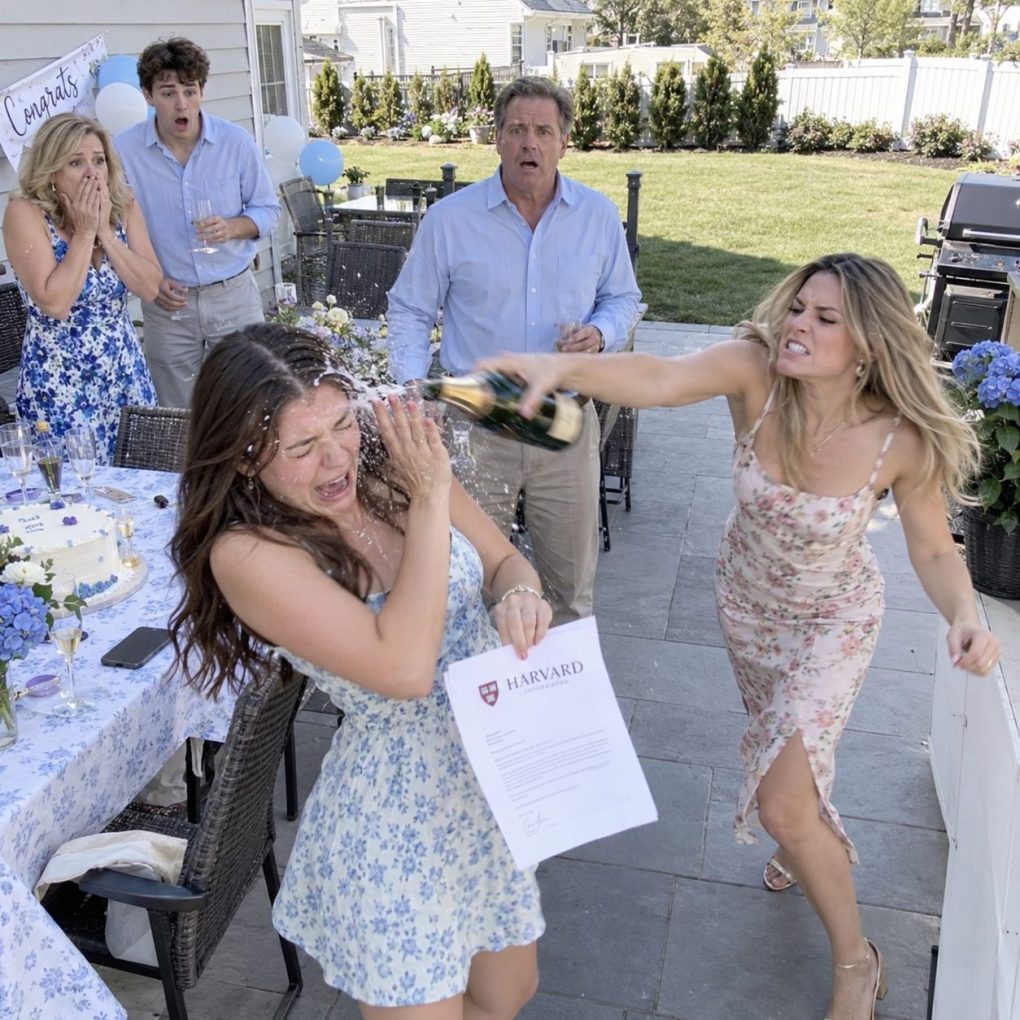
It was a letter from a county child protective services caseworker, dated sixteen years earlier.
My name appeared near the top.
The letter summarized a completed investigation into my childhood injury. According to the agency’s findings, Vanessa, then eleven, had pushed me down a short flight of basement stairs during an argument.
My mother had witnessed the incident.
But instead of immediately seeking help, she had waited until Dad returned from work. At the hospital, both parents had described the injury as an accidental fall.
The investigation had eventually established what happened through separate interviews, including a statement Vanessa made to the caseworker.
I read the final paragraph twice.
The agency had required a family safety plan, counseling, and follow-up visits. The case had later been closed.
“You knew?” I whispered.
Dad nodded.
“Why didn’t you tell me?”
He rubbed his forehead.
“Your mother said Vanessa was a child. That telling you would destroy your relationship with your sister.”
I looked at him.
“So you let me believe I was the problem?”
His eyes filled.
“I thought we could move past it.”
I remembered every birthday when Vanessa received the bigger present. Every time Mom told me not to upset her. Every family photograph where I stood at the edge because Vanessa wanted the middle.
For years, I had mistaken their constant protection of her for love.
Now I could see something else beneath it.
They had been protecting themselves from the truth.
Mom stepped forward.
“Emily, your sister had behavioral problems when she was younger. We were trying to keep the family together.”
“By lying to me?”
“She was eleven!”
“And tonight she’s twenty-seven.”
Mom had no answer.
I folded the letter carefully and placed it beside my hospital bracelet.
Then I asked them to leave.
Dad tried to touch my shoulder, but I moved away.
“Please,” I said.
He stopped.
That night, I gave the police my statement. Rachel provided her account, and the restaurant supplied security footage showing Vanessa striking me with the bottle.
The hospital documented my injuries, including several facial cuts and a small fracture near my cheekbone. Fortunately, my eye itself had not been permanently damaged.
Vanessa was arrested and charged with aggravated assault under our state’s law. Months later, she accepted a plea agreement that included a felony conviction, supervised probation, counseling, restitution for my medical expenses, and a no-contact order.
My parents paid for her attorney.
They did not offer to pay my hospital bills.
That detail hurt less than I expected. Perhaps because, for the first time, I wasn’t surprised.
I hired my own attorney to help me understand the old records and protect my interests. We discussed the childhood case, but I chose not to pursue a separate civil claim. The evidence was old, the legal issues complicated, and I wanted my future to belong to me.
Dad called repeatedly.
Eventually, I answered.
“I should have protected you,” he said.
“Yes,” I replied. “You should have.”
He cried quietly.
I didn’t comfort him.
Some apologies arrive so late that the person receiving them has already learned to live without them.
Three months later, I moved to Cambridge.
My face had healed, leaving a thin scar near my left cheekbone. On orientation day, I stood outside the university library holding the same acceptance letter Rachel had rescued from beneath the restaurant table.
Its corner was stained. One edge was permanently creased.
I had considered replacing it with a clean copy.
Instead, I kept it.
Because the letter reminded me of something I had spent twenty-two years trying to understand.
My sister could break a bottle against my face. My mother could rewrite my childhood. My father could remain silent when I needed him most.
But none of them could erase what I had earned.
That evening, I called Rachel.
“How’s Harvard?” she asked.
I looked through my apartment window at students crossing the courtyard, laughing beneath the early autumn trees.
“It’s good,” I said.
Then I smiled.
“For the first time, I think I’m exactly where I’m supposed to be.”
And when I hung up, I placed the stained acceptance letter on my desk.
Not as proof that I was better than my sister.
But as proof that I had finally stopped asking my family for permission to become myself.
