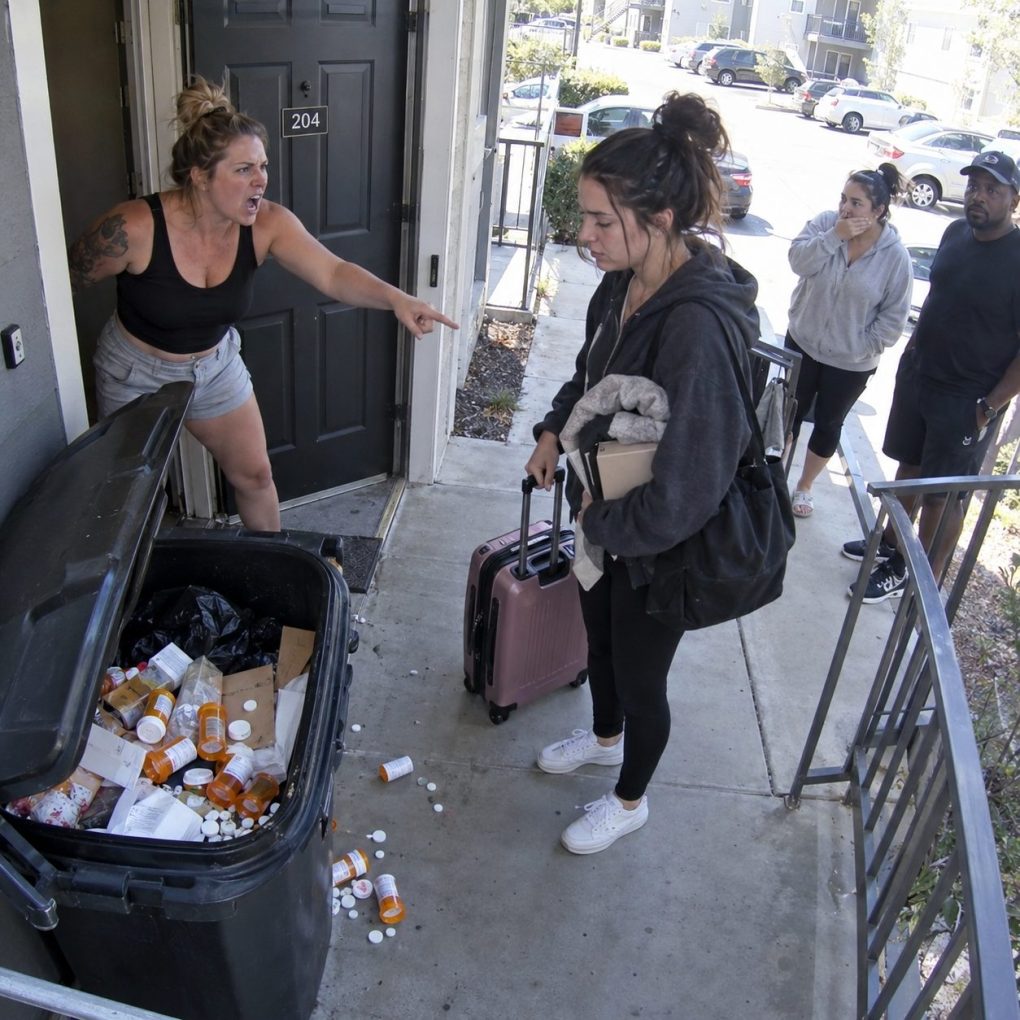
At my sister’s apartment, she dumped my prescription pills into the trash and shoved my suitcase outside. “Stop pretending you’re sick!” she screamed. I left without arguing. Five years later, I bought the building she lived in. This morning, her overdue rent file landed on my desk.
My sister threw my prescription medication into the trash and pushed my suitcase outside her apartment. “Get out, you attention seeker!” she screamed. I was still recovering from a hospital stay, and my hands were shaking so badly I could barely lift my bag. I didn’t argue. I just picked up my suitcase and left. Five years later, I bought an apartment complex in Ohio. This morning, an overdue rent notice landed on my desk. When I saw the tenant’s name, I stopped breathing for a moment.
Natalie Brooks.
My sister.
Five years earlier, I’d spent six weeks sleeping in her spare bedroom after complications from an autoimmune condition left me too weak to manage alone.
I was twenty-seven, working in commercial lending, and had taken medical leave while I recovered. Natalie was thirty, newly engaged, and increasingly irritated by my presence.
I paid her $650 a month, bought groceries, and cleaned whenever I could. Still, every time I needed to rest, she sighed as though I’d personally ruined her day.
That Thursday afternoon, I was sitting at her kitchen table when she picked up my prescription bottle.
“You’re still taking these?”
“My doctor said I need them.”
She shook the bottle.
“Funny how you’re always sick when somebody needs something from you.”
“Natalie, please put those down.”
Instead, she unscrewed the cap and emptied the pills into the garbage.
I remember the little white tablets hitting a coffee-stained paper towel.
“Stop pretending you’re sick!”
My mother was standing near the refrigerator.
She saw everything.
“Mom?” I whispered.
She looked away.
“Natalie’s under a lot of stress, honey. Maybe you should stay somewhere else for a while.”
I waited for her to say something more.
She didn’t.
I collected my suitcase, called my doctor’s office about replacing the medication, and drove to a small motel near the highway.
I sat on the bed that night, holding a paper pharmacy bag against my chest, wondering how people who’d known me my entire life could make me feel like a stranger.
Eventually, I recovered.
I returned to work, moved into my own apartment, and stopped calling home.
Over the next five years, I advanced in commercial real estate finance, purchased a duplex, and gradually built enough savings and investment experience to acquire a sixteen-unit apartment building with two partners.
I never imagined Natalie would be living there.
Until that Tuesday morning.
I opened her tenant file again.
Two months of unpaid rent.
An unanswered payment reminder.
And beneath the emergency contact information, one name I hadn’t expected to see.
Mine.
After five years of silence, my sister had listed me as the person to call when something went wrong.
But the note attached to her account was even more unsettling.
Tenant requests urgent meeting with property owner. Says this is a family matter.
And suddenly, I knew she was already aware of who had bought the building….Pick up the story here.
My property manager, Sophie, confirmed it the next morning.
“Natalie found your name on our company’s website. She called yesterday and asked whether you were the same Olivia Brooks who grew up in Dayton.”
“What did you tell her?”
“That I couldn’t discuss your personal relationship. She requested a meeting anyway.”
I stared at the overdue balance: $3,240, including permitted late charges. Three thousand dollars wouldn’t destroy my business, but waiving it because Natalie was my sister wouldn’t be fair to my partners or the other tenants.
“Schedule the meeting,” I said. “And please stay with us.”
Natalie arrived Friday wearing a faded gray cardigan. Her hair was shorter, and there were pale circles beneath her eyes. She carried a manila folder and kept twisting the strap of her handbag.
For a moment, neither of us spoke.
Then she looked around the office.
“So it’s true. You own this place.”
“I’m one of the owners.”
She gave a humorless laugh.
“Must feel pretty good.”
I folded my hands.
“What happened with the rent, Natalie?”
Her expression hardened.
“Seriously? You’re going to sit there and act like a landlord?”
“That’s why we’re meeting.”
She pushed her folder across the desk. Inside were medical bills, reduced-work-hour notices, and receipts for home-care supplies.
“Mom had surgery in February. She’s been staying with me since March. I’ve missed work taking her to appointments.”
I looked at the receipts. Some were dated only three days apart.
“Does she have anyone helping?”
“No. It’s just me.”
The words hung between us.
Five years earlier, Mom had watched Natalie throw away medication I needed. Now Natalie was sleeping beside Mom’s bed because she was afraid she’d fall trying to reach the bathroom.
I kept reading.
Sophie explained the standard repayment options. Natalie barely listened.
“You could erase the balance,” she said. “One click, right?”
“It isn’t that simple.”
“Of course not. You finally get your chance to punish me.”
I looked up.
“Is that what you think this is?”
“You’ve hated me for five years.”
“No, Natalie. I stopped contacting you because you threw away my medication and told me to leave.”
She looked toward the window.
“That was one bad afternoon.”
“It was the afternoon I learned I couldn’t trust you when I needed help.”
Her fingers tightened around the folder.
“Mom says family should forgive.”
I remembered the motel’s stiff white pillow and the empty prescription bottle I’d carried to the pharmacy.
“Mom had the opportunity to say something about family that day.”
Natalie’s eyes filled, but she said nothing.
Sometimes the deepest wounds don’t come from strangers who misunderstand us. They come from people who know exactly where we’re vulnerable and press there anyway, then expect time to make the injury disappear. I had spent five years learning to live without my sister. Sitting across from her now, I realized that financial success hadn’t erased what happened. It had simply given me the freedom to decide what happened next.
