Natalie’s eyes filled, but she said nothing.
Sometimes the deepest wounds don’t come from strangers who misunderstand us. They come from people who know exactly where we’re vulnerable and press there anyway, then expect time to make the injury disappear. I had spent five years learning to live without my sister. Sitting across from her now, I realized that financial success hadn’t erased what happened. It had simply given me the freedom to decide what happened next.
Then Natalie reached into her handbag and pulled out an old envelope.
My name was written across the front.
“I wrote this after you left,” she whispered. “It came back because you’d moved.”
She pushed it toward me.
“I should’ve tried again. But I was ashamed.”
I turned the envelope over.
It had never been opened.
And before I could unfold the letter inside, Natalie said something that made Sophie quietly excuse herself from the conversation.
“Olivia, there’s another reason I listed you as my emergency contact. I need to tell you what happened to Mom last month.”
Natalie stared at the envelope between us.
“Mom fell in the bathroom last month. I was at work. She lay there for almost an hour before a neighbor heard her calling.”
I slowly lowered the letter.
“Was she hurt?”
“A fractured wrist. She’s recovering.” Natalie wiped her cheek with her sleeve. “At the hospital, she kept asking me to call you.”
“Why didn’t you?”
“Because I remembered what she did when you needed her.”
I looked toward the window. Across the parking lot, someone was helping an elderly man climb into a car.
“She should’ve called me herself.”
“I know.”
Natalie hesitated.
“When I filled out the rental application eighteen months ago, I put your name down as my emergency contact. I still had your old number. I guess I wanted to believe you’d answer if something terrible happened.”
I looked at her.
“You never asked whether I wanted to be that person.”
She nodded.
“That was selfish.”
I opened the envelope.
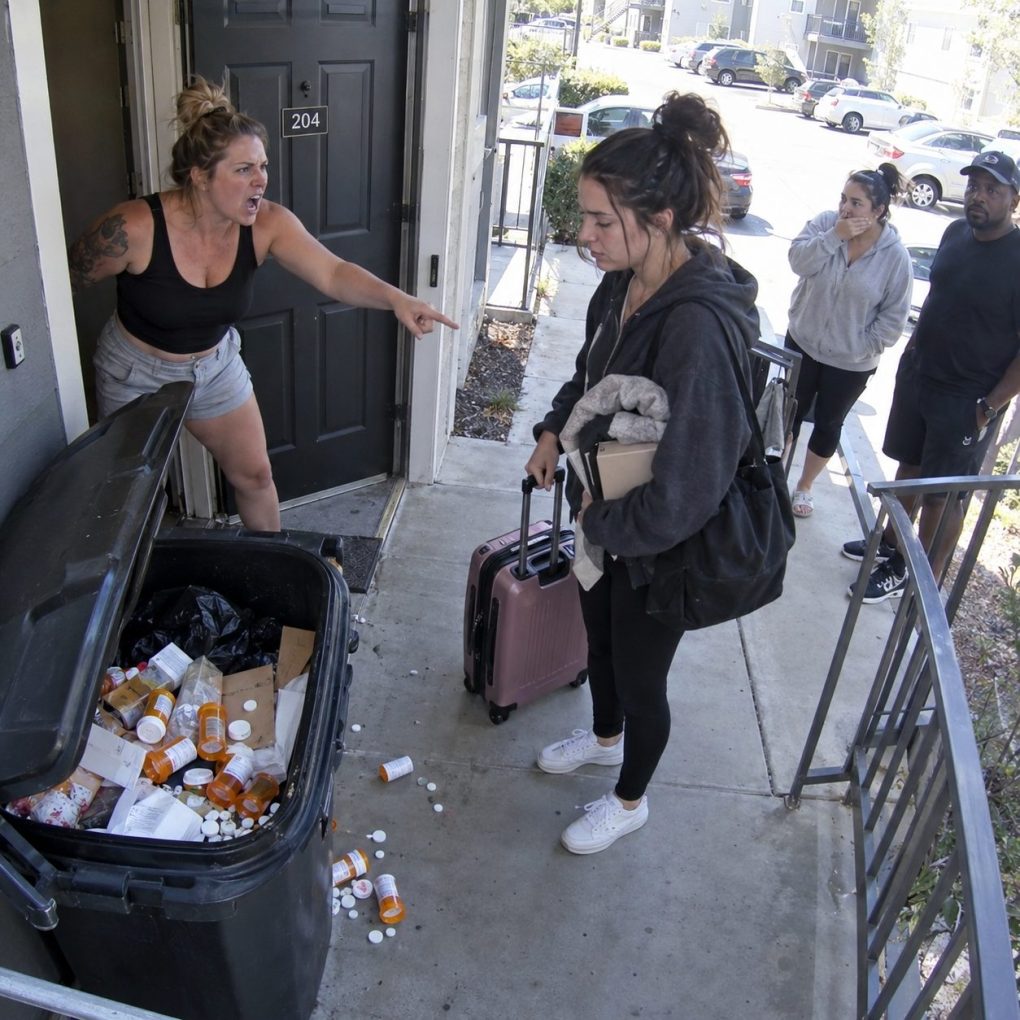
The letter was dated five years earlier, eleven days after she’d thrown away my medication.
Olivia, I know you weren’t pretending to be sick. I knew it even when I said those things. I was angry because everyone seemed worried about you, and I thought nobody noticed how difficult my life had become. I took it out on you. When I saw your suitcase outside, I knew I’d gone too far, but I was too proud to ask you to stay.
I stopped reading.
For years, I’d imagined Natalie laughing about the day she threw me out. I’d never imagined her sitting alone, writing an apology she couldn’t bring herself to deliver.
“Why didn’t you call afterward?” I asked.
“I tried once. Your number went to voicemail. Then I told myself you hated me.”
“You could’ve left a message.”
“I know.”
There was nothing dramatic about her answer. Just two words that arrived five years late.
I placed the letter beside her unpaid rent statement.
“I’m not going to evict you because of what happened between us,” I said. “But I’m not going to erase your rent either.”
Natalie looked down.
“Sophie can review a repayment arrangement with you. The same one available to other tenants in financial hardship.”
She nodded slowly.
“And Mom?”
“I’ll call her. But I can’t become her full-time caregiver. I’ve already learned what happens when I give more than I can afford.”
Before Natalie left, I asked her to replace my name on the emergency-contact form unless we discussed it and agreed otherwise.
She promised she would.
Over the following month, Natalie arranged additional help for Mom through local senior services. With someone assisting during several weekday appointments, she was able to accept more shifts at work.
She signed a six-month repayment agreement and made every payment on time.
I didn’t monitor her account personally. Sophie handled it as she handled every other tenant’s.
Mom called me one Sunday afternoon.
“I’m sorry I didn’t defend you,” she said.
I stood by my kitchen window, watching rain collect on the fire escape.
“Why didn’t you?”
She was quiet for a long time.
“Because it was easier to let Natalie be angry with you than with me.”
I closed my eyes.
That answer hurt more than another excuse would have. But at least it was the truth.
We began speaking occasionally. I visited once, bringing groceries and staying for coffee. When Mom asked whether I’d move closer, I told her I was happy where I lived.
Six months later, Natalie’s final overdue payment cleared.
She sent a message.
I know paying the rent doesn’t fix what I did. But thank you for treating me fairly when you didn’t have to.
I read it twice before answering.
I hope you understand now why that mattered.
A week later, a small package arrived at my apartment.
Inside was a new travel pill organizer, still in its wrapping, and a handwritten card.
I know this can’t replace what I threw away. I just wanted to give you something instead of taking something from you.
I sat at my kitchen table for a long time, holding the card.
I didn’t suddenly trust Natalie again. Five years of silence couldn’t be repaired with six months of rent payments or a thoughtful gift.
But I kept the card.
That evening, I placed my medication neatly inside the organizer, closed the lid, and set it beside my keys.
Five years earlier, my sister had thrown away something I needed and made me believe I had nowhere to go.
Today, I had a home, a career, and the freedom to decide who belonged in my life.
I hadn’t bought her apartment building to make her homeless. I’d worked hard enough to build a life where nobody could make me feel homeless again.
And perhaps that was the only kind of victory I had ever needed.
THE END.
