“Before that.”
“Why?”
“Because you were alive.”
There was nothing to defend.
“I know.”
He looked toward the field.
“Then I got angry at myself for being angry at you.”
“I did that too.”
Richard nodded.
“I read the corrected review.”
“I’m sorry.”
“For Boone?”
“For all of it.”
“He didn’t plant the bomb.”
“No.”
“But he lied.”
“Yes.”
Richard stared toward Megan’s plaque through the open headquarters door.
“For years I thought somebody had to be responsible in a way I could understand.”
I knew that feeling.
He turned to me.
“Turns out there are things people cause and things they just make worse afterward.”
That may have been the most accurate sentence anyone ever said about Victor Boone.
That afternoon, we went into the hallway together.
Daniel’s plaque and Megan’s had been moved.
Not removed.
Moved to the center of a larger memorial display containing photographs of the entire convoy team and a written account based on the corrected official record.
My portrait remained.
But it was no longer alone.
That mattered more than I expected.
Near the bottom of the display was one sentence about the route concern:
A PRE-MISSION ROUTE OBSERVATION WAS DOCUMENTED BUT IMPROPERLY OMITTED FROM THE INITIAL ADMINISTRATIVE REVIEW. THE RECORD WAS CORRECTED IN 2026.
No accusation.
No drama.
Truth did not need decorations.
Sergeant Reddick stood beside the staff duty desk while a new private signed in.
“Before you report upstairs,” he told him, “read the memorial.”
The private nodded.
“All of it.”
“Yes, Sergeant.”
Reddick glanced toward me.
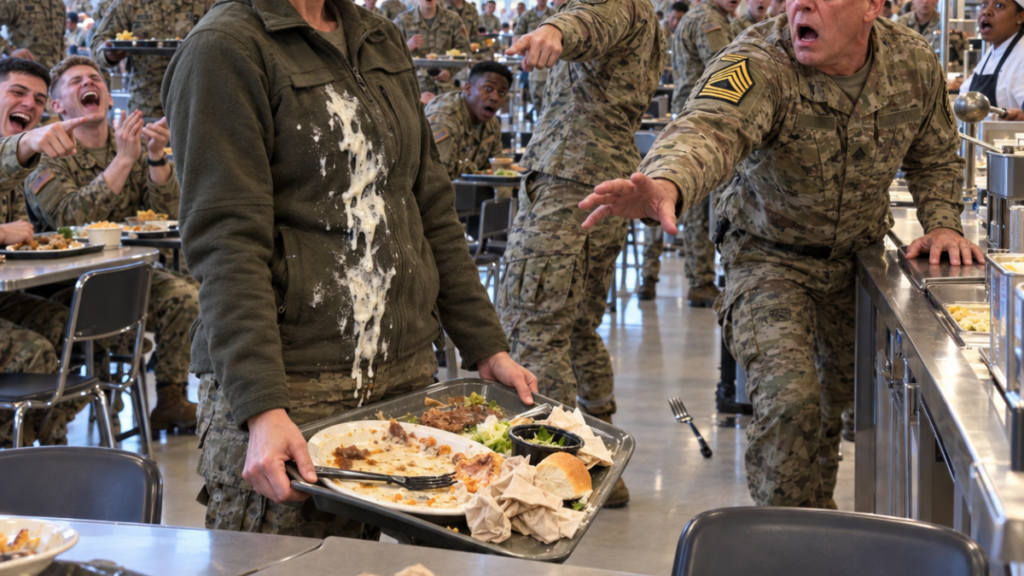
I remembered him yelling about wiping a table.
People change unevenly.
That is still change.
Later that evening, I returned home and found an envelope in my mailbox.
No return address.
Georgia postmark.
I knew.
Inside was a handwritten letter from Victor Boone.
Three pages.
I read the first paragraph.
He said he was sorry the investigation had “caused pain.”
I stopped.
That sentence told me everything I needed.
The investigation had not caused the pain.
His decisions had.
I folded the letter back along its original creases.
For years, I had imagined an apology from him as if the right combination of words could unlock something in me. Maybe he would admit the truth, maybe he would explain why he said what he said, maybe he would tell me that everyone in that conference room had known I deserved to be there.
I no longer needed any of that.
I put the letter in a drawer with tax receipts and appliance manuals.
Not burned.
Not framed.
Not treasured.
Just filed.
That night, I finally opened the blue medal case.
The ribbon had darkened slightly with age.
The medal looked heavier than I remembered.
I touched it with the fingers that still worked on my left hand.
Then I closed the case.
The next morning, instead of returning it to the closet, I left it on the kitchen table.
I put my keys on top of it when I came home from work.
Not because it was unimportant.
Because it belonged in my life.
Not above it.
Not hidden behind it.
Part 8
A year after the tray incident, I still worked days at the post emergency dispatch center. My console faced the window that opened, and on cool mornings I cracked it two inches so I could smell wet pavement, cut grass, diesel drifting from the motor pools, and coffee from the break room.
I had become known for two things.
Keeping my voice level during ugly calls.
And refusing to participate in conversations about the viral video.
New dispatchers eventually stopped asking.
Glenn Parker retired in the spring and left me his ceramic mug because I was the only person who hated inspirational office quotes as much as he did. It said WORLD’S OKAYEST BOSS.
I drank coffee from it every morning.
Marcus Hale transferred to a division headquarters.
Before leaving, he came to dispatch with no ceremony.
“You planning to vanish again?” he asked.
“No.”
“Good.”
“You planning to salute me in a grocery store?”
“Only if you’re holding somebody else’s trash.”
I pointed toward the door.
He laughed.
Sergeant Evan Reddick became one of the regular patrol supervisors whose units I dispatched on night incidents.
He was still young.
Still sometimes arrogant.
Still capable of irritating me.
Improvement is not sainthood.
One afternoon I saw him in the exchange food court.
I was eating at the same table beside the trash station.
The custodial worker who usually sat there, Lorraine Bennett, had become someone I knew by name.
She had worked on post for seventeen years.
Her husband had died the previous winter.
Her paperback novels were mostly murder mysteries.
None of those things had been visible the day Reddick mistook me for her.
That was the point.
Reddick entered with two younger soldiers.
They finished lunch and stood.
One private gathered his tray, looked toward the trash station, and then left it on the table.
Reddick stopped him.
“Forget something?”
The private looked around.
“My tray?”
“Unless you hired somebody to carry it.”
The private flushed.
He picked it up.
Reddick noticed me watching.
He did not smile.
Neither did I.
He simply carried his own tray to the trash and held the bin flap open for Lorraine, who was emptying a smaller container into it.
“Afternoon, Ms. Bennett.”
“Afternoon, Sergeant.”
Then he walked out.
No lesson announced.
No salute.
No audience.
That was better.
Sofia Ruiz was finishing community college and planning to become an emergency medical technician.
She texted sometimes.
Richard Cole sent a Christmas card every year now.
Owen still sent three words every October 1.
Still here, Sarge.
I still answered the same way.
Me too.
The corrected review brought other changes, mostly small ones.
The battalion created a requirement that disputed pre-mission observations remain attached to after-action records instead of disappearing into rewritten summaries. Leadership training began using our case as an example of why uncomfortable information should remain visible even when it complicates a clean narrative.
