Not reconciliation.
Not relief from every painful memory.
But clarity.
Garrett hadn’t made a single impulsive mistake.
He had made a series of decisions designed to obtain control over property I had refused to put at risk.
The affair was part of the betrayal.
The driveway was its public expression.
But the deeper damage came from realizing he’d stopped treating my consent as something that mattered.
I stood.
Garrett looked up.
“Caroline, is there any chance we could start over?”
I felt tears rise.
For a moment, I remembered our wedding.
The first time he carried me across the threshold of the Westerville house.
The way he said we’d grow old there.
Then I looked at him.
“No.”
He began crying.
I took a breath.
“I loved you, Garrett.”
He nodded.
“But I can’t trust you with my future.”
For several seconds, he couldn’t speak.
Then whispered, “I understand.”
I hoped he did.
But whether he understood no longer determined my decision.
I thanked him for speaking honestly.
Then left.
The divorce became final the following year.
Margaret called on a quiet Thursday afternoon.
I was sitting at my dining table reviewing plans for a community healthcare project when the phone rang.
“Caroline, the final order has been entered.”
For several seconds, I couldn’t speak.
Then whispered, “Thank you.”
She asked how I felt.
I thought carefully.
“Sad.”
She waited.
“And relieved.”
Margaret’s voice softened.
“Both are understandable.”
After the call, I walked through the house.
The living room looked beautiful.
The kitchen smelled of fresh coffee.
Sunlight moved across the polished wooden floors.
Outside, the hydrangeas were beginning to bloom.
For the first time in months, I didn’t feel as though I was living in a place someone had tried to steal.
I felt like I was home.
I went to the front door.
Opened it.
And stepped onto the porch.
The driveway had been cleaned.
The muddy patches were gone.
There were no suitcases.
No shouting.
No neighbors watching an argument.
Just the familiar street in Westerville and the gentle sound of afternoon traffic.
I stood there for several minutes.
Then I smiled.
Not because the divorce had made everything easy.
It hadn’t.
I had lost nine years of marriage.
A person I once trusted.
And a future I’d imagined sharing with someone I loved.
But I had also learned something important.
I could survive losing the marriage without losing myself.
The house became the center of a new chapter.
I hosted Sunday dinners for Diane and Richard.
Invited friends over for summer barbecues.
And began volunteering with a local organization that helped people understand household budgeting and financial planning.
Sometimes people asked why I was willing to talk about financial boundaries after everything that happened.
I usually told them the same thing.
Supporting someone doesn’t require agreeing to risks you don’t understand.
A marriage can involve shared responsibilities without eliminating the need for honest consent.
And ownership documents should never be treated as a substitute for open communication.
I didn’t give lectures about Garrett.
I didn’t need to.
The experience had taught me enough.
Almost two years after the divorce, I met a man named Nathan Brooks at a community fundraising event in Columbus.
He worked in landscape architecture and had spent years designing public parks.
We began talking about gardens.
Then old houses.
Then the difficulty of keeping hydrangeas healthy through unpredictable Ohio weather.
He was funny.
Patient.
And unusually comfortable admitting when he didn’t know something.
We became friends.
Eventually, we started dating.
I told him about Garrett when the relationship became serious.
I explained the disputed deed.
The attempted financing.
The affair.
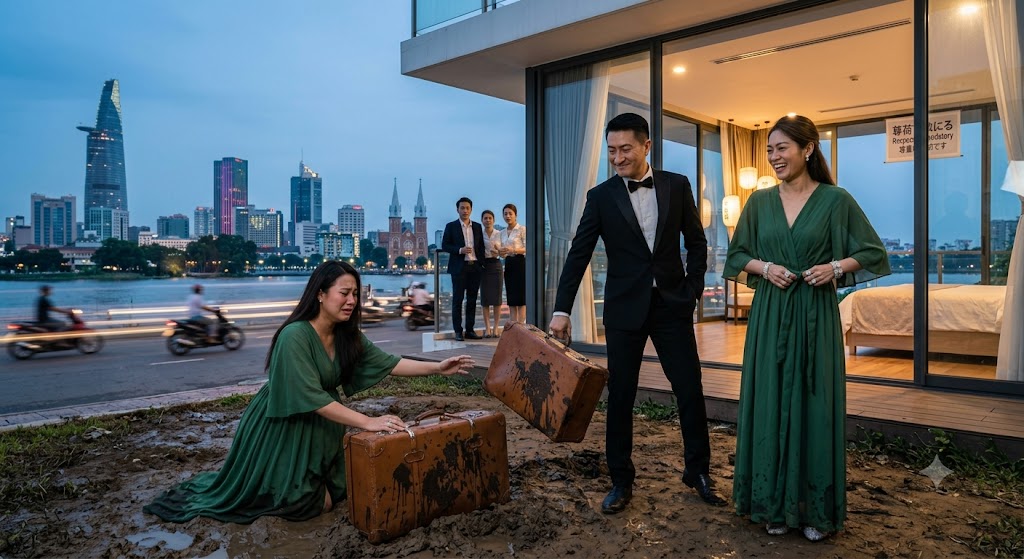
And the afternoon my suitcases ended up in the mud.
Nathan listened carefully.
When I finished, he asked something that surprised me.
“What do you need from a relationship now?”
I thought for a long moment.
“Honesty.”
He nodded.
“And?”
I smiled faintly.
“The ability to say no without someone treating it as betrayal.”
Nathan looked at me.
“That seems reasonable.”
For the first time in years, I began imagining a relationship that didn’t depend on me proving my love through sacrifice.
We took things slowly.
Discussed money openly.
Respected each other’s decisions.
And allowed disagreements to exist without turning them into threats.
Nothing was perfect.
But when Nathan wanted to make a major decision, he included me in the conversation.
And when I needed time to think, he gave it to me.
I discovered how peaceful that could feel.
One spring afternoon, Nathan helped me plant new hydrangeas beside the porch.
We worked quietly until the sun began moving behind the trees.
Then he stood and looked toward the house.
“Your grandmother had good taste.”
I smiled.
“She did.”
He nodded toward the flower beds.
“She must have loved this place.”
My throat tightened.
“Very much.”
Nathan took my hand.
For a moment, I remembered Garrett standing in the same garden years earlier.
He once told me he wanted to turn the house into something grander.
Larger.
More impressive.
I had loved the property exactly as it was.
Now Nathan looked around and simply appreciated it.
I smiled.
“Thank you for helping.”
He kissed my forehead.
“Anytime.”
For the first time, the gesture didn’t remind me of what I’d lost.
It reminded me that love could be gentle.
Not demanding.
Not controlling.
Simply present.
Several months later, Richard visited for dinner.
Afterward, we sat on the porch drinking iced tea.
He looked toward the garden.
“Your grandmother would love what you’ve done.”
I felt tears rise.
“Do you think so?”
He smiled.
“Absolutely.”
For a moment, we sat quietly.
Then he said, “I still remember Garrett’s face when I arrived that afternoon.”
I laughed softly.
“So do I.”
Richard shook his head.
“I don’t think he’d expected anyone to challenge what he was claiming.”
I looked toward the driveway.
“No.”
Then I smiled faintly.
“He thought if he said everything belonged to him confidently enough, everyone would accept it.”
Richard nodded.
