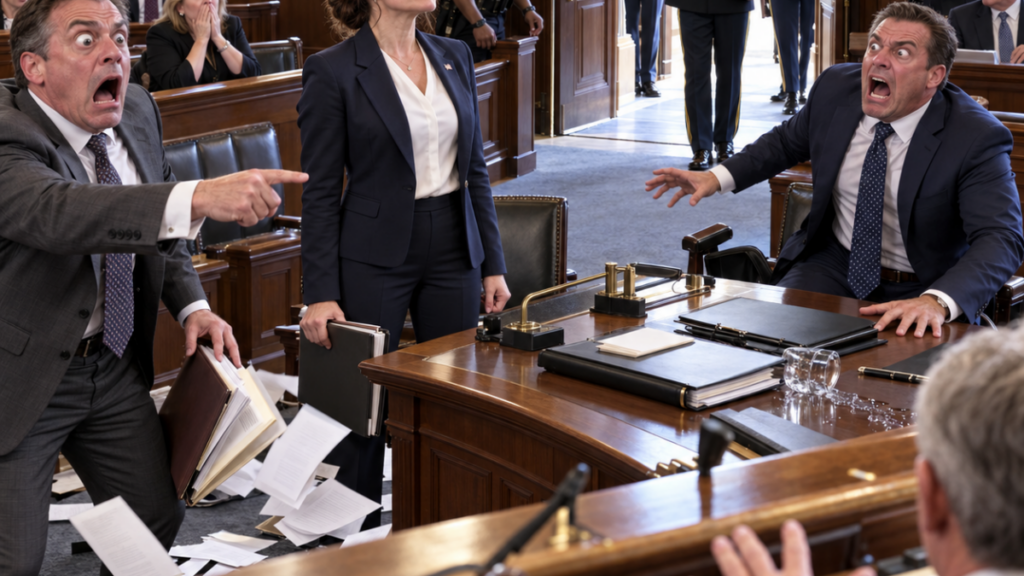
“Stop. Matthew, just stop.”
He paused it there.
The silence afterward was worse than the recording.
Next came a photograph of me sitting at the kitchen table at six in the morning, hair flattened on one side, hands around a mug, eyes swollen with exhaustion.
“Would you describe that as normal appearance for Mrs. Grant?” Richard asked.
Matthew sighed before answering.
“No.”
I remembered the photograph.
I had returned from Germany after nineteen hours of travel following an emergency hospital supply audit. Matthew had snapped the picture from the doorway.
“Rough trip?” he had asked.
I thought it was affection.
Richard displayed a text I had sent after Matthew missed Ben’s dental appointment for the third time.
I cannot believe you did this again.
Read neutrally, it was frustration.
Richard read it as though every word had teeth.
He produced notes Matthew had kept on his phone. Dates, times, observations.
Claire awake at 3:12 a.m., distressed, looking through old deployment papers.
Claire raised voice over missed appointment.
Claire became withdrawn after disagreement.
I remembered the night I had been awake at three. I was rereading letters from soldiers I had commanded after one of them died unexpectedly years after leaving the service.
Matthew had stood in the doorway watching me.
Apparently, he had also been taking notes.
I changed attorneys two days later.
My first lawyer was competent but frightened of the story Richard was telling.
“If we settle quietly,” she said, “we might keep some of this from becoming part of a larger public record.”
“My mental state?”
She avoided my eyes.
“Perception matters.”
I stood.
“Then I need someone who understands the difference between perception and evidence.”
That someone was Evelyn Shaw.
Her office sat above a dry cleaner in Alexandria and smelled faintly of starch from downstairs. Evelyn was fifty-six, wore tortoiseshell reading glasses on a chain, and did not interrupt while I spoke.
When I finished, she spread the photographs of Matthew’s emails across her desk.
“I could walk into court tomorrow,” she said, “and tell Judge Mercer your husband is manipulating everyone.”
I waited.
“They’ll say that’s your interpretation. Richard will tell a more dramatic story. We don’t beat his story with another story.”
She tapped the printed bank statement.
“We build a record so boring nobody can argue with it.”
For the next month, boring became beautiful.
School attendance records.
Medical appointments.
Parent-teacher emails.
Receipts.
Calendar entries.
The $15,000 retainer.
Texts in which Matthew praised my parenting before he decided it was strategically useful to criticize it.
We documented thirteen of Ben’s sixteen medical visits. I had attended twelve. We found every school conference from the previous three years. My name appeared on almost all of them.
Then one Friday, Evelyn found something neither of us had been looking for.
She was reviewing Matthew’s filings when she stopped turning pages.
“What is this?”
She slid a declaration across her desk.
It stated that I acknowledged experiencing episodes of emotional dysregulation serious enough to require intervention.
At the bottom was my signature.
Claire Grant.
The loop on the C looked right.
The G leaned exactly the way mine did.
My mouth went dry.
“Did you sign this?” Evelyn asked.
“No.”
“Are you certain?”
I looked closer.
Then I saw it.
Since West Point, I had crossed the letter t with a hard horizontal stroke. In the signature before me, both t’s curved slightly upward.
“I never signed that.”
Evelyn did not react dramatically.
She simply picked up her phone.
By Monday, a forensic document examiner had the declaration.
Four days later, he called us into his office.
Dr. Malcolm Avery was a quiet man who handled paper as though it might bruise. He placed enlarged photographs on a light table and pointed to tiny hesitations in the ink.
“This signature was traced.”
The room seemed to tilt.
Someone had placed one of my genuine signatures beneath another sheet and followed it.
A pen lift appeared where my hand never stopped.
A stroke slowed unnaturally.
A curve had been copied instead of written.
Evelyn stared at the document for several seconds.
Then she looked at me.
“Claire,” she said, “your husband’s case just became something other than a divorce.”
She was right.
But we did not yet know how far beyond the divorce it had already gone.
Part 3
Once you discover one document has been manufactured, every document becomes a question.
Evelyn subpoenaed the source records for every exhibit Matthew had filed. Most were predictable: photographs from his phone, screenshots, school emails, selected texts. Then we reached a section marked BACKGROUND.
Inside were eleven pages from my military records.
My stomach tightened before I finished the first page.
Evaluation excerpts.
An old counseling statement.
A medical screening form.
A deployment readiness report.
They had been cropped so carefully that ordinary sentences looked sinister.
One evaluation included a sentence noting fatigue and irritability after extended operations. Matthew’s copy ended there. The original continued by praising my performance and recommending me for early advancement.
The next page contained a notation from a particularly difficult deployment year. Its context had disappeared entirely.
“Where would he have gotten these?” Evelyn asked.
I knew.
Years earlier, after one of our moves, I stored old personal records in a gray archival box inside the home office closet. It contained documents I had never needed but never wanted to destroy. Matthew had carried that box upstairs himself.
I remembered him joking, “Don’t lose this. This is twenty years of Claire Grant in cardboard.”
That evening, I went home, opened the closet, and pulled the box toward me.
Several folders were missing.
I sat on the floor.
My back touched the wall.
For perhaps thirty seconds, I did nothing.
Then I called Evelyn.
“Don’t move anything else,” she said. “And Claire, if those records have controlled markings, do not photograph them.”
“I know.”
Nineteen years with a clearance had taught me that some procedures become instinct.
