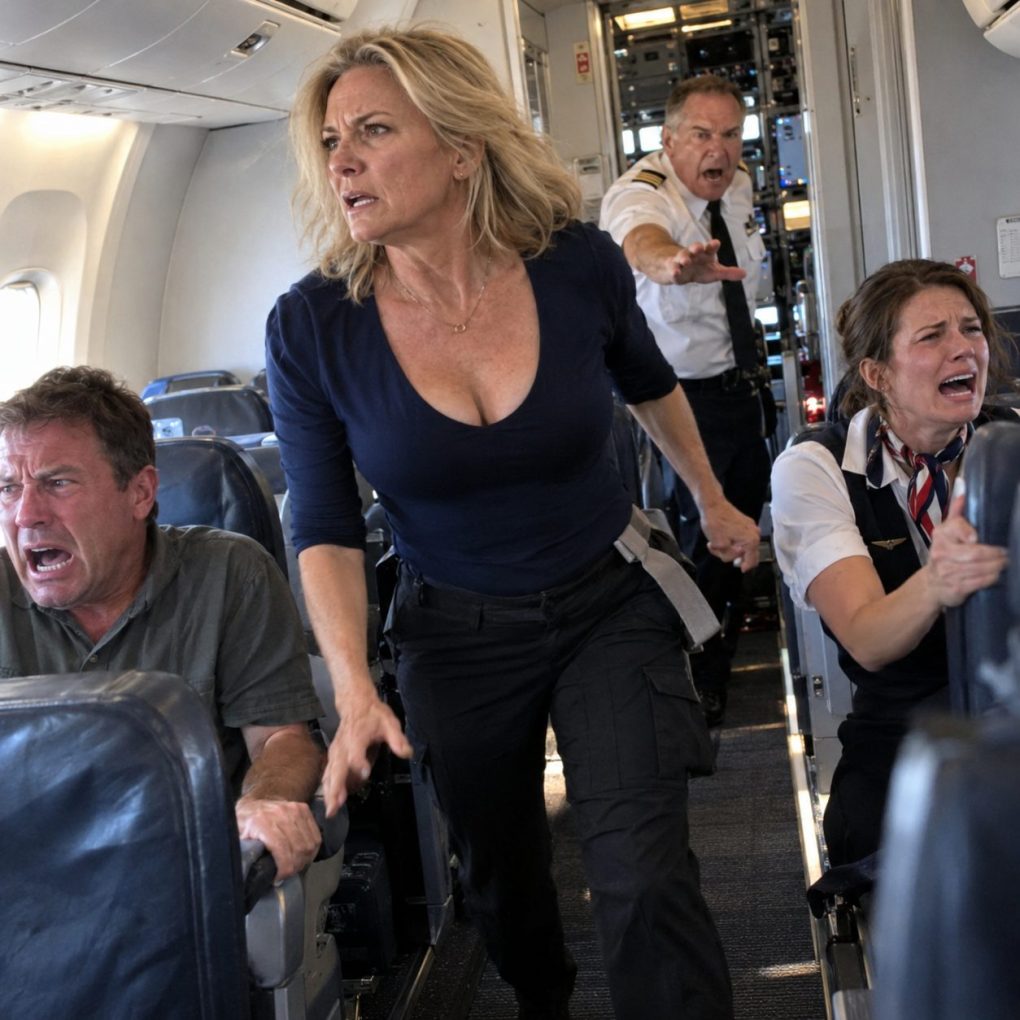
For one terrible moment, the nose dipped again. Daniel caught the remaining response, but his breathing turned ragged. “Stay here with us,” I said. He gave one short nod. “I am.” The pavement grew wider. A truck was moving away from it, its driver abandoning whatever job had seemed important a minute earlier. Luis called out the last checks. There was no miraculous silence, no sudden recovery. The airplane was still broken when we hit. The first impact knocked my teeth together. The second threw me against my harness. Then came the long, brutal sound of metal dragging.
We stopped with the cockpit windows facing a chain-link fence. For a heartbeat, none of us spoke. Luis was the first to move. Daniel gave the evacuation command, and the cabin crew took over their part of the rescue. I followed them out into shouting, smoke, and people sliding onto the pavement. A man tried to carry a suitcase. An attendant made him leave it. The little girl from across my aisle came down with her mother, both alive, both crying. I stood clear of the airplane, helping direct passengers farther away until firefighters reached us.
The count took time. Ambulances arrived. People with cuts and injured wrists sat together on the grass while crews checked the cabin. Each new group brought another rush of relief and another moment of waiting. Finally, a firefighter told Daniel everyone was accounted for. All 187 of us were alive. Daniel bent forward, hands on his knees. I thought he was being sick. Then I heard him sob. I put my hand between his shoulders and left it there. Thirty-two years ago, he had cried against that same hand, too small to understand why his mother was not following us.
At the hospital that evening, after we had been examined, he found me sitting beside a vending machine. He held the envelope. “I shouldn’t have asked you that in the cockpit.” I looked at his bandaged chin. “You asked it before you knew who I was to you today.” He sat down. For years, a newspaper photograph had been the whole story in his house: me carrying him away from the wreckage, his mother somewhere behind us. His father had blamed me whenever grief became anger. A child had believed him.
I told Daniel what the picture could not show. His leg had been trapped under a bent seat frame. Helen was farther back, pinned by debris I could not move alone. She had been conscious. She had seen me struggling to free him. “She told me where your leg was caught,” I said. “She kept talking to you while I worked.” When smoke thickened, she made me promise I would take him out first. Outside, I handed him to a firefighter and turned back. The firefighter stopped me as flames spread through the cabin. Two rescuers tried another entrance. Neither could reach her.
“I didn’t choose to leave her,” I said. “I ran out of time.” Daniel pressed his palms together until his knuckles whitened. His father had kept my statement, the rescue reports, and correspondence from the investigators in a locked cabinet. After his death, Daniel had read them. They described the failed rescue attempts. They also described Helen directing me toward her son. He had known the facts before sending the invitation. What he had wanted, he admitted, was to hear whether I remembered her as anything more than the person I could not save.
“She had a blue cardigan,” I said. “One sleeve was torn. She called you Danny. And she asked me to tell you she wasn’t afraid, although she was.” He unfolded her letter. She had written it before their trip, when she and his father were discussing a separation. It was meant for Daniel when he was older. She wanted him to know their problems were not his fault, and that loving someone did not mean making another person the villain. His father had never given it to him. Daniel read the last paragraph aloud, then covered his face.
Months later, investigators explained our emergency. A failed component had damaged part of the flight-control system. The earlier crash had involved a different aircraft and a different failure, but the pattern I recognized helped us stop wasting precious time on corrections that were making our situation worse. Recognition bought us a chance. Daniel, Luis, the cabin crew, controllers, and rescuers turned that chance into 187 people going home. I made sure every reporter heard that. Phoenix was an old call sign, not a woman who could save an airplane alone.
Daniel postponed the foundation event until winter. When I finally spoke, Helen’s photograph stood beside the lectern. Afterward, the little girl from our flight handed me a drawing of an airplane with everyone standing safely outside. Daniel waited until the room emptied. Then he put the old crash photograph into its envelope. “I don’t need this to ask you anything anymore,” he said. He hugged me, and this time there was no smoke between us, no voice calling from somewhere I could not reach. When he let go, he smiled through his tears. “Thank you for bringing me home. Both times.”
