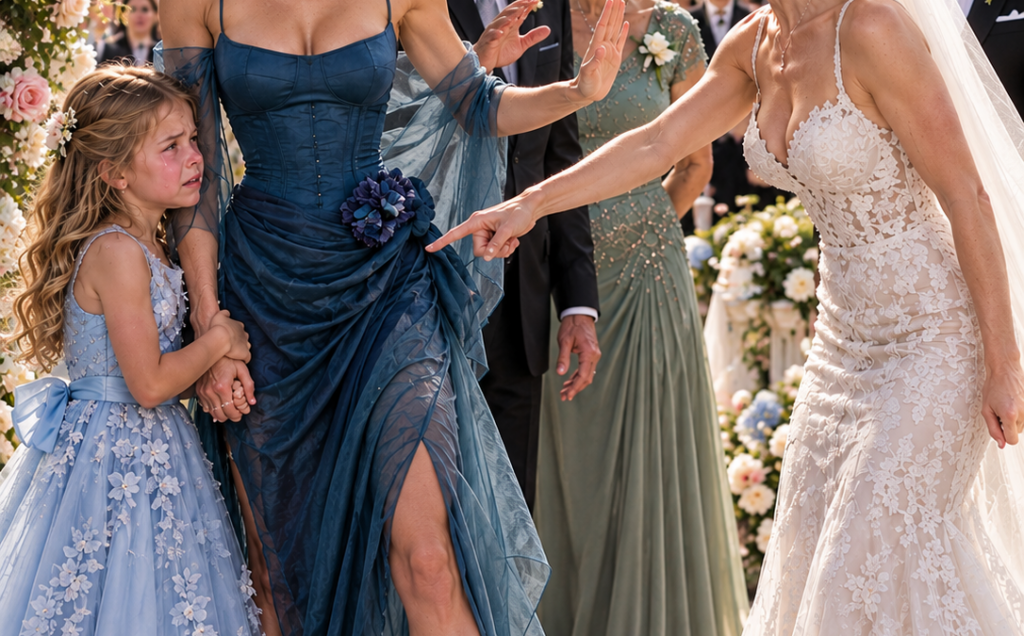
But opening the door wider would not have changed what he came to ask. He wanted me to make Vanessa’s life easier by taking responsibility for what she had done. I left the chain fastened.
The following week, Vanessa tried to make herself the injured party in public. She wrote a long post about toxic relatives and people who used children to attract attention. My name was absent, but anyone who had attended the wedding knew what she meant. Nicole contradicted the account. So did other witnesses, including a bridesmaid who said Lily deserved an apology. Within an hour, Vanessa removed the post.
Then she called me from a blocked number. I answered because I was expecting a call from Lily’s school. When I heard my sister’s voice, I stepped into the laundry room and closed the door so my daughter would not hear.
“You ruined my life.”
“Don’t call me again.”
She accused me of wanting everyone to hate her. She said I believed I was perfect. I stood beside the washing machine, looking at the door, making sure my voice stayed low enough that Lily would not have to become part of this conversation. “I haven’t made your decisions for you, Vanessa.”
Then she returned to the photograph. “She ruined my wedding pictures.”
After the doctor’s visit, the recording, Grant leaving, and the charge, my sister still wanted to discuss petals. “She’s nine.”
“She should have listened.”
I tightened my hand around the phone. “If you contact me again, I’m giving this recording to the officer handling your case.”
For a moment, she said nothing. Then she warned that Mom and Dad would never forgive me. Their approval had mattered to me for so long that I waited for the familiar impulse to explain myself better. I had already explained. I had shown them a child who needed help, and they had chosen to defend the adult who hurt her.
“They can choose where they stand,” I said. “They won’t be bringing this near my daughter.” I ended the call.
Vanessa had not asked how Lily was doing. She had not offered an apology I needed to decide whether to accept. I could not build a safer relationship out of an apology she was still unwilling to make.
Two months later, she accepted a plea agreement. She received probation, required anger management classes, community service, and a court-ordered restriction barring contact with Lily. The hearing was mostly paperwork. There were signatures, explanations, and a judge looking over his glasses as he told Vanessa that anger did not give her permission to hit a child.
I watched my sister cry. I could not know whether she regretted hurting Lily or regretted the consequences. I did not try to decide by studying her face. What I could understand was the order protecting my daughter and the requirements Vanessa would now have to meet. Those consequences did not depend on our parents agreeing with them.
Grant continued to pursue an annulment at first. Later, on his attorney’s advice, he changed the filing to a divorce because it was legally simpler. Their marriage lasted seventy-six days.
I knew when he filed and when the marriage ended, but I did not make those dates milestones for Lily. She had not caused the marriage to fail. She did not need to feel responsible for either keeping it together or celebrating its end. My attention stayed on the small changes at home, on therapy appointments, and on letting her ask questions without worrying that the answers would upset me.
When her tenth birthday came, I invited my parents once by email. I told them they needed to apologize directly to Lily and acknowledge that Vanessa had hurt her. I did not ask them to stop loving my sister. I asked them to tell their granddaughter the truth about what had happened and about their response.
Mom’s answer was brief. “We will not participate in your punishment campaign.”
I read it, then returned to planning the party. There would be no conversation in which Lily had to reassure her grandmother that she had forgiven something her grandmother refused to acknowledge. My parents chose not to come.
Lily’s cake was chocolate with raspberry cream. Her friends wore colorful paper crowns, and during charades she laughed so hard that she fell onto the living room rug. I looked over when it happened, then saw her laughing with the others. There was my daughter, taking up space in a room without first checking whether an adult considered her too much trouble.
After the guests left, she leaned against me while we wiped sprinkles from the dining table. “Mom?”
“Yeah?”
“I’m glad we left the wedding.”
I stopped moving the cloth. “So am I.”
For a moment, we stood there together, looking at the scattered sprinkles. Then she said she had still loved the blue dress. “You looked lovely in it.”
“Can we keep it?”
“Of course.”
I had wondered what the dress would mean to her afterward. I did not want to decide that for her by getting rid of something she had loved. She could keep it. She could like how it looked. The memory of what Vanessa did did not have to make every part of the day belong to Vanessa.
Several months later, Lily wore it again for a school music concert. By then, the mark on her cheek was gone. The hurt she had carried longer was easing, too. I did not pretend it had disappeared just because she could laugh at a party and enjoy her dress again. But those moments mattered. She was making choices about things she liked instead of letting her aunt’s anger decide what she was allowed to enjoy.
The distance from my family remained. Different relatives tried to close it on my parents’ behalf. Aunt Carol told me Mom was heartbroken. My cousin Beth said Dad did not know how to put things right. I listened without agreeing to the conclusion they wanted.
