Later, she asked whether Eleanor had believed she was dead.
I hesitated.
Then I told her about the questions her mother had asked.
About the doubts she’d never let go of.
Laura began crying again.
“She knew something was wrong.”
I nodded.
“She did.”
And for the first time, I allowed myself to say something I’d carried silently for years.
“I wish I’d listened to her.”
Emma came to live with me under emergency protective arrangements while the courts addressed her care.
For the first time, she had a bedroom with a proper desk, a bookshelf, and a closet full of clothes that fit.
She chose purple paint for the walls.
A very bright purple.
Eleanor would have laughed herself silly.
Emma asked about Laura constantly.
“Does Mommy remember me?”
“She’s working very hard to remember things.”
“Does she know I’m coming?”
“Yes, sweetheart.”
“Will she want me?”
That question nearly broke my heart.
I knelt in front of her.
“Emma, your mother has wanted you every day she’s been away.”
The doctors carefully prepared them for their first reunion.
We didn’t want Emma to expect her mother to be exactly as she appeared in photographs.
Laura was still recovering.
She used a wheelchair for longer distances.
Her speech could be slow.
And she tired easily.
But none of that mattered when the day arrived.
Emma entered the rehabilitation center’s sunroom holding my hand.
Laura sat beside the window wearing a yellow blouse.
Her hair had been cut to her shoulders.
She looked nervous.
Emma stopped a few feet away.
For several seconds, neither spoke.
Then Laura lifted her left hand and tucked a strand of hair behind her ear.
Emma’s face changed.
“Mommy?”
Laura began crying.
“Emma.”
My granddaughter slowly crossed the room.
“Do you know me?”
Laura nodded.
“Of course.”
Her words were soft and slightly uncertain.
But her eyes never left Emma’s face.
Emma reached for her mother’s hand.
Laura touched her cheek, just as she’d done during that frightening visit to the farmhouse.
Then Emma wrapped her arms around her.
“I knew it was you,” she whispered.
Laura held her close.
And I stood beside the window, trying to comprehend the extraordinary sight of my daughter embracing the child she’d been denied the chance to raise.
There was no magical cure in that room.
No sudden restoration of lost years.
Only a mother and daughter who had endured things neither should ever have experienced.
But it was a beginning.
And after seven years, a beginning felt like a miracle.
Laura eventually came home.
I converted Eleanor’s downstairs sewing room into a bedroom so she wouldn’t have to climb the stairs.
We installed grab bars in the bathroom and rearranged the kitchen so she could reach what she needed.
Her therapists continued working with her.
Emma began attending counseling to help her understand and recover from what she’d experienced.
We were careful not to expect either of them to heal on anyone else’s schedule.
Some evenings were difficult.
Laura would become frustrated because she couldn’t remember a word.
Emma would grow frightened if I was late returning from the store.
Occasionally, I woke in the night convinced the whole thing had been a dream.
Then I’d hear Laura moving around downstairs.
Or Emma laughing at something on television.
And I’d remember.
They were home.
Both of them.
I eventually sold Miller’s Corner Market to a young couple who promised to keep the name.
I’d worked there most of my adult life.
I thought giving it up would hurt more than it did.
But one afternoon, when I was helping Emma with her spelling homework and Laura sat beside us sorting family photographs, I realized something.
For years, I’d believed being responsible meant working harder, earning more, and solving problems with money.
I hadn’t understood that the people I loved needed something more difficult to give.
My attention.
My presence.
My willingness to ask uncomfortable questions.
I couldn’t recover the seven years we’d lost.
I couldn’t bring Eleanor back.
And I couldn’t undo every mistake I’d made.
But I could stop making the same mistakes.
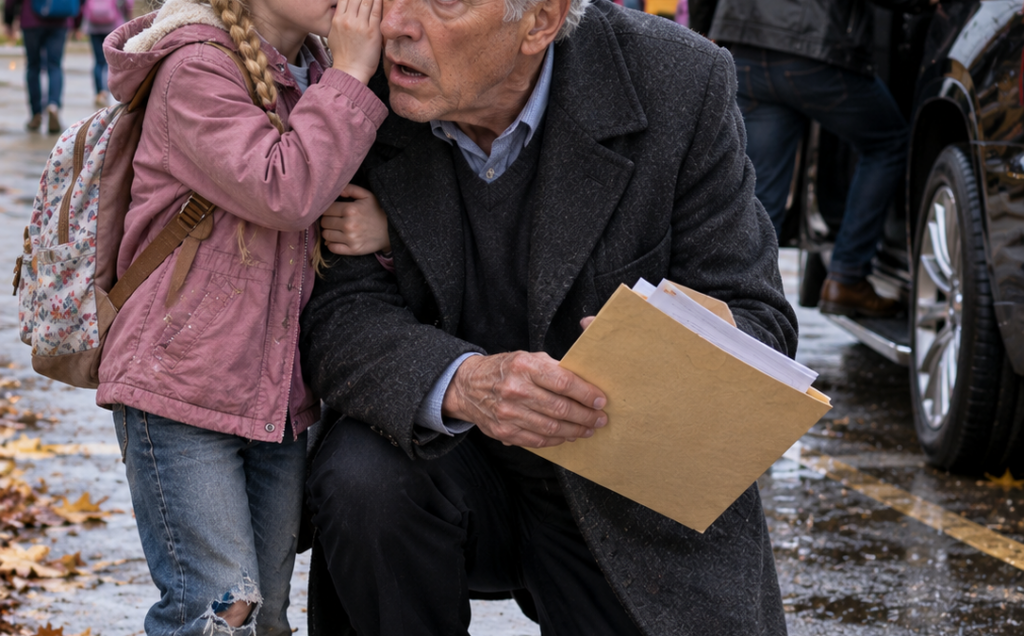
One Saturday in October, almost a year after Emma first whispered to me beneath the oak tree, the three of us walked to Dolly’s Dairy Bar.
Laura used a cane.
She walked slowly, with Emma holding one hand and me walking beside her.
People recognized us.
Some stopped to speak.
Others simply smiled.
At the ice cream window, Emma ordered three strawberry swirls.
I raised an eyebrow.
“Three? What happened to my chocolate?”
She grinned.
“Today we’re all having Mommy’s favorite.”
Laura laughed.
It was a beautiful sound.
Her laughter didn’t come as easily as it once had.
But when it did, I could hear the young woman she’d been.
We carried our cones to Riverside Park.
The oak tree stood beside the water, its leaves turning gold in the autumn sunshine.
Laura sat between us on the bench.
Emma leaned against her shoulder.
For a while, we simply watched the river.
Then Emma looked up.
“Mom, did Grandpa tell you why strawberry swirl is my favorite?”
Laura smiled.
“Because you have excellent taste?”
Emma laughed.
“No. Because he told me it was yours.”
Laura looked at me.
Her gray-green eyes filled.
“Really?”
I nodded.
“You always ordered it when you were little.”
Laura studied her ice cream.
Then she smiled.
“I remember.”
Emma sat up straighter.
“You do?”
Laura nodded slowly.
“Your grandma used to tell me I’d turn into a strawberry if I ate enough of it.”
I laughed.
“She certainly did.”
Laura looked toward the river.
“She used to sing to me, too.”
My throat tightened.
“Yes, sweetheart.”
She reached for my hand.
“Sometimes, when I was in that house, I could hear her singing in my head.”
I couldn’t answer.
“I didn’t remember who she was,” Laura continued. “I didn’t remember much of anything. But I remembered feeling safe when I heard that song.”
Emma rested her head against her mother again.
