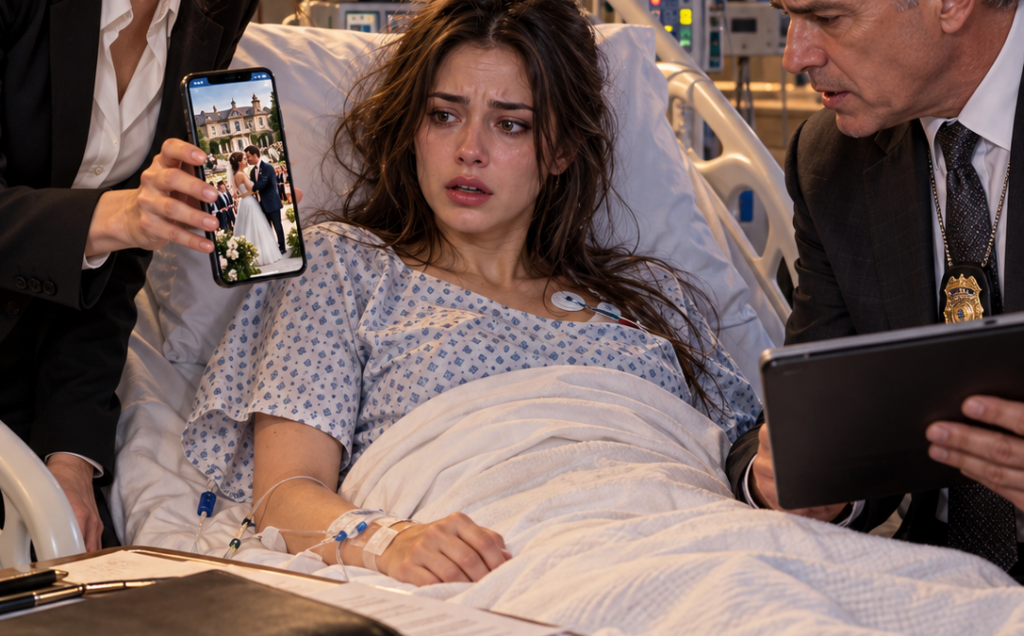
Jennifer had believed those words gave her power.
Instead, they had exposed how little she understood about ownership, responsibility, and the consequences of her choices.
But the story didn’t end when I fell asleep in the intensive care unit.
In some ways, that was where the hardest part began.
Recovery was nothing like the dramatic moments people imagine when they hear that someone survived a terrible accident.
There was no single morning when I woke up feeling whole again.
There were weeks of medical appointments, difficult physical therapy sessions, and nights when even changing position in bed required assistance.
I had always been independent.
I was the woman who climbed ladders to inspect the estate’s roof after storms, who carried folding chairs when the event staff needed help, who stayed up late reviewing contracts and returned to the property before sunrise.
Suddenly, I needed someone to help me stand.
I hated it.
Not because there was anything shameful about needing assistance.
But because accepting help required me to acknowledge how much had changed.
Sarah Kim visited regularly.
Sometimes she brought updates about the investigation.
Sometimes she brought paperwork from the venue.
And sometimes she brought nothing but coffee and sat beside me while we talked about things that had absolutely nothing to do with Jennifer.
My venue manager, Rebecca, took over daily operations.
She had worked at Riverside Estate for eleven years.
When I called to apologize for leaving so much responsibility on her shoulders, she interrupted me.
“Sarah, stop.”
I could hear people talking in the background.
“We’ve got this. Your grandparents built a good business, and you built a good team. Let us prove it.”
That conversation made me cry harder than almost anything else.
Because for months, I had been told that refusing to surrender the venue meant I didn’t care about family.
Yet the people who showed up for me were the ones who understood that care wasn’t measured by what someone could demand from me.
It was measured by what they were willing to do when I had nothing left to give.
December fourteenth arrived on a cold, clear Saturday.
I was still recovering and couldn’t attend the Morrison wedding.
Rebecca called from the estate that afternoon.
“Everything is beautiful,” she said. “The flowers are in place, the musicians are ready, and the bride just walked in.”
She turned on her camera.
For the first time since the accident, I saw Riverside Estate filled with people.
White flowers lined the aisle.
Soft lights glowed beneath the wooden beams.
Guests sat in neat rows facing the western windows.
Outside, the river reflected the pale winter sky.
Then the bride appeared.
She was smiling through tears as she walked toward the man waiting for her.
I watched on my tablet from the hospital, wrapped in a blanket, with my legs carefully supported.
When the couple exchanged vows, I found myself crying.
Not because of everything Jennifer had taken from me.
But because of something she hadn’t been able to take.
That wedding happened exactly as promised.
Two people who had trusted my business were able to begin their marriage surrounded by the people they loved.
Their happiness had not been sacrificed to someone else’s demands.
That evening, Rebecca sent me a photograph.
The bride and groom stood beneath the cathedral ceiling, holding hands.
Behind them, the sunset filled the windows with gold.
The message beneath the photograph read:
“They asked me to tell you thank you.”
A few days later, a handwritten card arrived.
The Morrisons thanked me for honoring their reservation despite everything that had happened.
They wished me a complete recovery.
And at the bottom, the bride had added one sentence.
“We will always remember the kindness and integrity behind the place where we began our marriage.”
I read that sentence over and over.
My grandparents would have loved it.
Meanwhile, the legal case continued.
Investigators examined Jennifer’s messages, her search history, and the conversations leading up to the incident.
They interviewed the people who had been at Common Grounds.
They reviewed the security recordings from Riverside Estate.
They questioned Marcus, Amber, and Marcus’s mother about their unauthorized visit.
The family initially claimed they believed Jennifer had permission to use the property.
But there was no signed agreement.
No reservation.
No permission from me.
Only the demands Jennifer had been making for months.
Marcus continued insisting that he had never known what Jennifer intended to do at the intersection.
I didn’t know whether to believe him.
The investigation eventually distinguished between the evidence against Jennifer and what could actually be established about the others.
Their conduct at the estate was addressed separately, but investigators could not establish that Marcus, Amber, or his mother had known in advance that Jennifer would push me into traffic.
Knowing that did not erase the hurt.
My brother had watched three months of pressure unfold.
He had seen Jennifer insult me, dismiss my contracts, and claim ownership of property that wasn’t hers.
He hadn’t stopped it.
Even if he never expected the confrontation to end the way it did, he had helped create an atmosphere in which my refusal was treated as an offense that demanded punishment.
Several weeks after I left the hospital, he sent me a long letter.
He wrote that he was sorry.
He said he had been selfish.
He admitted that he had allowed Jennifer to convince him that I was standing between them and their happiness.
He said he never imagined she would go so far.
At the end, he asked whether we could be a family again.
I folded the letter and put it away.
For a long time, I didn’t respond.
Not because I wanted revenge.
But because forgiveness and reconciliation are not the same thing.
I could eventually let go of the anger without reopening a door that no longer felt safe.
Nearly a year after the incident, I returned to Riverside Estate on my own for the first time.
