I still walked carefully.
My body had healed enough for me to move without constant assistance, but there were mornings when the discomfort reminded me how much I had endured.
Rebecca offered to meet me at the entrance.
I told her I wanted a few minutes alone.
I parked beside the old stone pathway and sat in the car, looking at the building.
The barn doors were painted the same deep red my grandfather had chosen years earlier.
The landscaping had been trimmed.
The windows were spotless.
Someone had planted fresh flowers beside the entrance.
Everything looked familiar.
Yet I felt like a stranger returning to a place she had once known by heart.
Finally, I opened the car door.
I walked slowly toward the building.
The autumn air smelled of leaves and damp earth.
When I unlocked the front door, the familiar scent of polished wood greeted me.
I stepped inside.
Sunlight stretched across the hardwood floor.
The empty hall was quiet.
I could almost hear my grandmother’s laughter.
I remembered helping her fold table linens after weddings.
I remembered my grandfather teaching me how to check the heating system before winter events.
I remembered the two of them explaining that owning a business meant being responsible for the promises you made.
My grandfather used to say, “A good reputation takes a lifetime to build and only one careless decision to damage.”
I had heard those words hundreds of times.
Standing in that quiet hall, I finally understood how much they had shaped my life.
Jennifer had seen Riverside Estate as something she deserved.
My grandparents had seen it as something they were responsible for.
And they had trusted me to continue that responsibility.
I sat on one of the wooden benches near the windows.
For a long time, I simply watched the river.
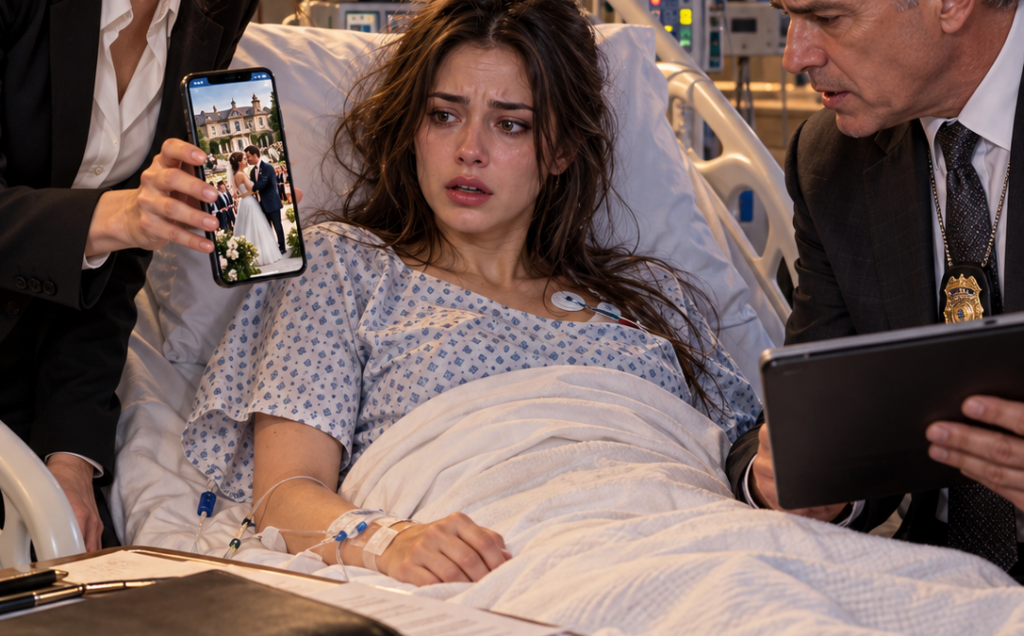
Then I took my phone out and opened the photograph Rebecca had sent from the Morrison wedding.
The couple stood smiling beneath the golden light.
I looked from the photograph to the empty hall.
For the first time since the accident, I felt something stronger than fear.
I felt at home.
The following months brought more court hearings.
Eventually, after the evidence was presented and the case proceeded through trial, Jennifer was found guilty of the most serious offense arising from the incident.
The judge imposed a lengthy prison sentence.
I attended the sentencing with Sarah Kim beside me.
Jennifer looked different from the woman who had sat across from me at Common Grounds.
She no longer wore the certainty that everyone would eventually give her what she wanted.
When she was given the opportunity to speak, she apologized.
I listened.
I didn’t interrupt.
I didn’t try to decide whether she was sincere.
I had spent too much of my life feeling responsible for other people’s emotions.
What mattered now was that the legal process had reached its conclusion.
When the judge asked whether I wished to make a statement, I stood carefully.
My hands trembled.
But my voice remained steady.
“I was asked to give up something that legally belonged to me. When I refused, I was made to feel guilty for protecting it.”
I looked toward the judge.
“My grandparents left me a business because they trusted me to care for it. I was honoring that trust.”
I paused.
“I did not deserve what happened to me because I said no.”
The courtroom was quiet.
“I spent months learning to walk comfortably again. I missed work, holidays, and ordinary moments I used to take for granted. I will carry the effects of that day for a long time.”
I looked briefly toward Jennifer.
“But I am still here.”
My voice grew stronger.
“And I want the court to understand that this was never about withholding a building from someone who needed it. It was about one person’s refusal to accept that another person had the right to make a decision.”
I swallowed.
“No wedding venue, family disagreement, or disappointment could ever justify what happened.”
Then I sat down.
I didn’t feel victorious.
There was no sudden wave of happiness.
No overwhelming satisfaction.
Mostly, I felt tired.
But beneath that exhaustion was a quiet sense of relief.
I had told the truth.
And I didn’t have to spend the rest of my life arguing for the right to own what had already been given to me.
Marcus was present that day.
Afterward, he approached me in the courthouse hallway.
For several seconds, neither of us spoke.
Then he said, “Sarah, I’m sorry.”
I looked at him.
His eyes filled.
“I should have stopped this long before that day.”
I nodded slowly.
“Yes,” I said. “You should have.”
He lowered his head.
“I don’t expect you to forgive me.”
I thought about that.
“Maybe someday, Marcus. But I need distance. And I need you to respect that.”
He nodded.
For once, he didn’t argue.
He didn’t mention family loyalty.
He didn’t ask me to sacrifice my peace to make everyone else more comfortable.
He simply stepped aside and let me leave.
That was the first sign that he might finally understand something he should have understood from the beginning.
Today, Riverside Estate is still mine.
The business is thriving.
Rebecca has taken on greater responsibilities, and we’ve expanded the staff so that no single person has to carry everything alone.
We still host weddings beneath the cathedral ceilings.
Couples still exchange vows in front of the river.
Every December, the western windows catch the last warm light of the afternoon, and the entire hall glows just as it did when my grandparents were alive.
Sometimes I stand quietly near the entrance while guests arrive.
I watch parents straighten their children’s jackets.
I watch grandparents help one another across the polished floor.
I watch brides and grooms looking at each other as though the whole world has narrowed to one person.
And I think about how strange it is that someone nearly destroyed so many lives over a place that was built to celebrate love.
