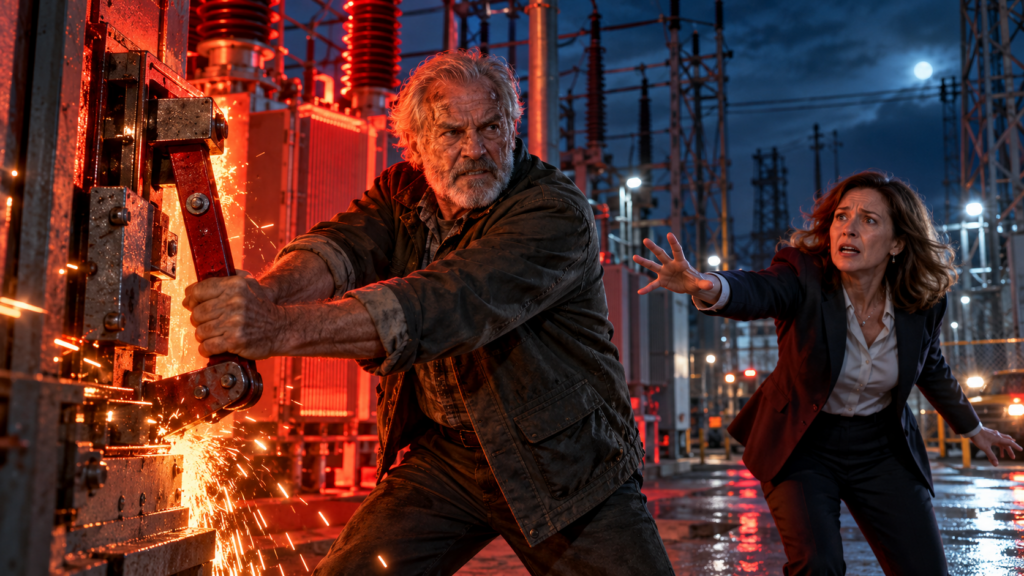
The communities had been told their infrastructure was being strengthened while the system beneath my ranch was being pushed closer to failure.
Caroline resigned two days after the engineering emails became public.
Her statement cited “personal reasons and the need to reduce distractions.”
Nobody believed that.
The proposed fourth development collapsed next.
Investors withdrew.
The eighty-three-home project disappeared from marketing materials.
Then state regulators asked the question every executive feared.
Who knew?
That question produced subpoenas.
Emails.
Text messages.
Meeting notes.
Consultant presentations.
And eventually, a closed-door meeting Sarah described as “the fastest collapse of coordinated amnesia I’ve ever witnessed.”
Once executives realized other companies were producing records, everyone started producing records.
The full story emerged.
Falcon Lake developers had known for years that the Mercer corridor sat on a limited agricultural easement.
Their own title reports said so.
Rather than secure broader rights immediately, they treated formalizing the corridor as something they could negotiate later.
The logic was simple.
Build first.
Create dependence.
Then approach the landowner after thousands of residents relied on the system.
At that point, they assumed no owner would dare say no.
My father had.
Years before I inherited the ranch, Harold Mercer had been approached about widening the easement.
He declined.
His handwritten note was still clipped to the correspondence.
Existing easement already exceeds what I prefer on the ranch. No expansion.
The developers knew.
They continued anyway.
That was why Caroline’s seven-figure offer had come so quickly once I found the trench.
They weren’t purchasing a new opportunity.
They were trying to legalize years of unauthorized use before regulators saw it.
The late-night bypass made more sense too.
If they could build enough replacement equipment inside the same area before inspection, they hoped to argue that the corridor had become operationally indispensable.
Sarah called it “manufactured necessity.”
“They wanted the violation to become too important to undo.”
It didn’t work.
The state ordered every unauthorized installation removed.
Two weeks after the blackout, excavators returned to my ranch.
This time everything looked different.
Permits on every truck.
Surveyors working in daylight.
Government inspectors present.
Work logs.
Environmental controls.
No hidden construction.
No black SUVs.
One by one, the commercial switching cabinets came out.
Underground feeders were removed.
Improvised transfer equipment was disconnected.
The ranch was scarred for months.
Trenches.
Mud.
Dead grass.
But each week, another piece of the illegal corridor disappeared.
At the same time, engineers designed a legitimate transmission route east of the lake.
That project required difficult conversations.
Land purchases.
Environmental review.
Public hearings.
Compensation.
Real permits.
Actual engineering.
It took months longer and cost millions more than using my ranch.
Which was exactly why nobody wanted to do it originally.
Daniel Ortiz, the cooperative engineer, showed me the final design one afternoon.
The new corridor crossed land acquired specifically for utility use.
“Every easement signed?”
“Yes.”
“Every landowner paid?”
“Yes.”
“Every permit?”
He smiled.
“Painfully yes.”
I folded the plan.
“So this is what legal infrastructure looks like.”
“It looks expensive.”
“Funny how that works.”
He laughed.
The financial settlements came next.
Most defendants preferred mediation.
Sarah wasn’t surprised.
“Discovery is dangerous when your emails already look this bad.”
The final agreements funded restoration of my property, reimbursed unauthorized use, and required independent infrastructure audits for the lake communities.
The developers paid regulatory penalties.
Several executives lost positions.
Professional licensing boards reviewed others.
The cooperative implemented new controls requiring direct verification of easement scope before privately financed upgrades could connect to its network.
There was no single courtroom scene where one judge pointed at Caroline and declared her the villain.
Reality was more complicated.
Contractors made decisions.
Executives made decisions.
HOA boards approved budgets.
Utilities missed warning signs.
Developers chose speed.
Caroline pushed the hardest, but a system that large doesn’t fail because of one person.
It fails because many people decide one small shortcut is acceptable.
Then another.
Then another.
Until the shortcut becomes the system.
The homeowners around Falcon Lake had their own reckoning.
At first, some still blamed me.
One man approached me outside a regulatory hearing.
“My mother’s medical equipment stopped during the outage.”
“I’m sorry.”
“You could’ve killed her.”
That hurt because he wasn’t wrong about the danger.
“I understand why you’re angry.”
“Do you?”
“Yes.”
He stared at me.
“Then why did you do it?”
“Because the transformer was arcing over dry grass while still energized.”
I paused.
“If that equipment failed catastrophically, firefighters couldn’t safely approach it until somebody disconnected the corridor anyway.”
He looked away.
“The backup battery lasted twenty minutes.”
“I know.”
That surprised him.
After the blackout, regulators required the HOAs to report all medically dependent households and emergency-power planning gaps.
His mother’s situation was in the report.
“We should never have let communities become that dependent on one illegal corridor.”
He looked back at me.
“You mean they shouldn’t have.”
“No.”
“I mean all of us.”
He didn’t forgive me that day.
I didn’t expect him to.
Months later, he mailed me a note.
It contained four words.
I read the report.
Nothing else.
That was enough.
A year after the blackout, the new transmission system came online.
My daughter Rachel visited for the commissioning.
We sat on folding chairs on the ridge above the ranch.
At sunset, crews energized the new corridor.
Lakeside Hills lit first.
Then Juniper Point.
Then Canyon Harbor.
Streetlights appeared.
Marinas glowed.
Security gates came back online.
Homes reflected across the lake.
Rachel watched quietly.
“So who caused the blackout?”
“You’ve been waiting a year to ask that?”
“Pretty much.”
I thought about Caroline.
The contractors.
The developers.
The emails.
My father’s easement.
The overheating transformer.
My hand on the disconnect.
“If you mean who pulled the switch, I did.”
“That isn’t what I asked.”
I smiled.
“No.”
She waited.
“The blackout happened because too many people spent too many years pretending a dangerous system still had time.”
She looked toward the lake.
“They knew?”
“Some did.”
“And nobody fixed it?”
“Fixing it was expensive.”
