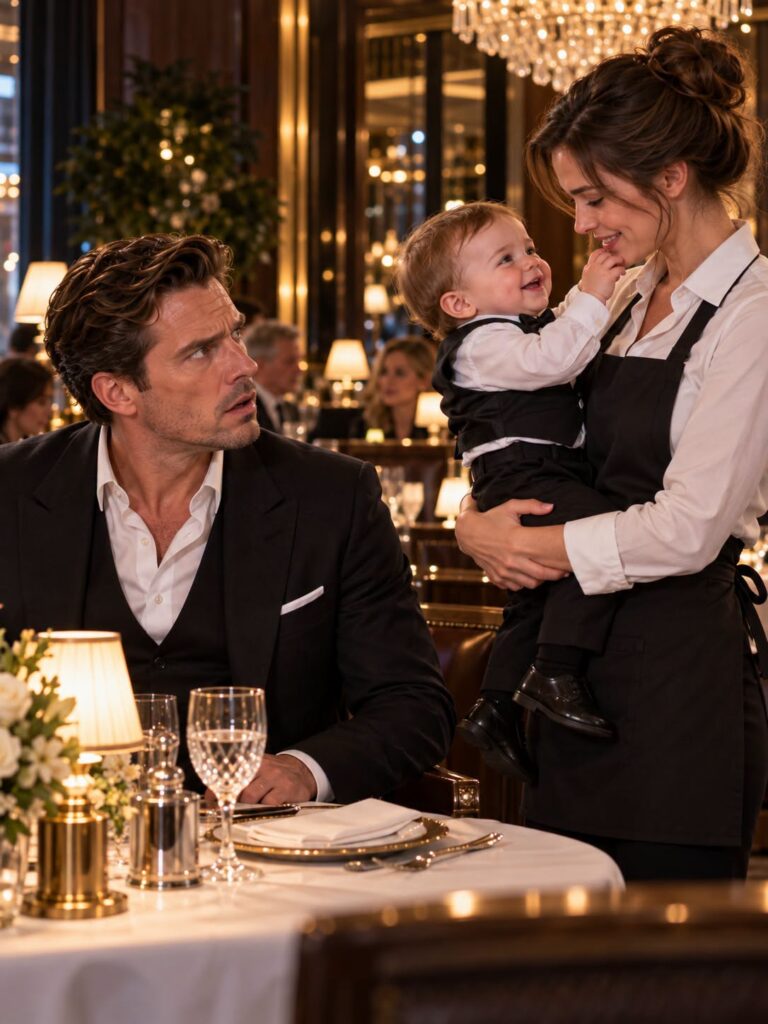
Elina understood enough not to ask what kind of organization.
Roman continued.
“My uncle believed finding Marisol would bring old problems back.”
“So he stopped your wife from meeting her own mother?”
“He told Alessia Marisol wanted nothing to do with her.”
“Was that true?”
Roman’s silence answered.
Elina looked down at Gabriel.
The baby had fallen asleep.
His fingers still held her blouse.
“What did Alessia believe when she died?”
Roman’s face changed.
“She stopped believing him.”
He opened the last section.
Letters.
Several.
All written by Marisol Valdez.
None opened.
RETURN TO SENDER stamped across envelopes.
Elina recognized her mother’s handwriting instantly.
Roman placed one letter beside her.
“She had written back?”
“Yes.”
“How did your uncle get them?”
“That is one of the things I intend to find out.”
Elina stared at him.
“You didn’t know?”
“No.”
“And you expect me to believe that?”
Roman met her anger without reacting.
“No.”
That surprised her.
“You shouldn’t believe me because I say it.”
He pushed the file toward her.
“You should verify everything.”
For a man everyone feared, it was the least threatening thing he had said.
Elina looked again at the photograph behind the bar.
“Why is her picture here?”
Roman’s expression softened.
“She loved this restaurant.”
“Did she work here?”
“She redesigned it.”
Elina blinked.
Roman almost smiled.
“She hated my taste.”
The first human thing he had said.
“She said everything I chose looked like a funeral home for rich men.”
Elina looked around at the dark wood and gold lights.
“She wasn’t wrong.”
One bodyguard coughed into his fist.
Roman stared at Elina.
Then, unexpectedly, laughed.
A small sound.
Gabriel stirred.
Elina instinctively rocked him.
Left.
Right.
Then she hummed.
Three notes.
A little tune her mother had used when Elina was sick.
Gabriel’s eyes opened.
He smiled.
Roman stood.
“What was that?”
Elina stopped humming.
“What?”
“That song.”
“My mother used to sing it.”
Roman looked toward the photograph.
His face drained.
“Alessia sang the same thing.”
Nobody spoke.
Roman pulled out his phone again.
This time his hand was not steady.
“Get Dr. Bell.”
Elina’s expression hardened.
“Who?”
“A geneticist.”
“No.”
Roman stopped.
“You don’t get to order tests on me because your son likes me.”
“You may be Alessia’s sister.”
“I may also be a waitress who resembles your dead wife.”
“Exactly.”
His voice quieted.
“That’s why we verify.”
Elina thought of the returned letters.
Her mother’s silence.
The name whispered years ago.
Alessia.
She looked at Gabriel.
Then back at Roman.
“I choose the lab.”
He nodded immediately.
“And I receive my results directly.”
“Yes.”
“No Moretti doctor.”
“Yes.”
“No one touches my mother until I speak to her.”
A pause.
Then:
“Agreed.”
The DNA test came back six days later.
Elina opened the email in her apartment.
She read the result three times.
Probability of full sibling relationship between Elina Valdez and stored reference DNA from Alessia Valdez DeLuca:
Consistent with maternal half-siblings.
Not twins.
Not coincidence.
Sisters.
Elina sat on the kitchen floor until her legs went numb.
Her mother arrived forty minutes later.
Elina had called and said only:
“I need you.”
Marisol stepped inside carrying groceries.
She saw the papers.
Stopped.
Then she saw the photograph Elina had printed.
Alessia in the black dress.
The grocery bag slipped from her hands.
Oranges rolled across the floor.
“No.”
Elina’s voice broke.
“You knew.”
Marisol began crying before she answered.
“I thought she was gone.”
“She looked for you.”
Her mother covered her mouth.
“I know.”
“You wrote letters.”
“Yes.”
“Why didn’t you tell me?”
Marisol sat down heavily.
“Because I was ashamed.”
“Ashamed of what?”
“Losing her.”
The story came slowly.
At nineteen, Marisol worked in a hotel laundry.
Alessia’s father was a wealthy contractor twice her age.
When she became pregnant, he promised to leave his wife.
He never did.
His family offered money.
Marisol refused.
Then they threatened to report her immigration status, destroy her mother’s job, and take the baby through the courts.
Terrified, alone, and barely speaking English, Marisol signed guardianship papers she did not fully understand.
Within months, Alessia belonged legally to another family.
Years later, after rebuilding her life, Marisol had Elina.
Different father.
A kind man who died when Elina was four.
“I wanted to tell you.”
“When?”
Marisol stared at the floor.
“Always.”
“That isn’t an answer.”
“No.”
Her mother wiped her eyes.
“It isn’t.”
Elina showed her the returned letters.
Marisol touched one envelope.
“I sent this seven years ago.”
“Alessia never saw it.”
Marisol’s expression changed.
“How do you know?”
“Because someone intercepted them.”
That someone was Lorenzo DeLuca.
Roman’s uncle.
The confrontation happened not in a back room or warehouse but in a lawyer’s office.
Roman insisted.
He had spent nine months questioning everything surrounding Alessia’s final year.
He was done relying on family explanations.
Lorenzo arrived irritated.
Then saw Elina.
He stopped dead.
For one second, he believed he was seeing Alessia.
That reaction was enough to tell Roman how much he knew.
The rest came from records.
Payments to the private investigator.
Instructions to redirect correspondence.
A false email sent to Alessia claiming Marisol refused contact.
Another sent to Marisol’s old address saying Alessia requested no communication.
Lorenzo had separated them deliberately.
“Why?” Roman asked.
His uncle finally answered.
“Because Alessia wouldn’t leave it alone.”
“Her mother?”
“Her father.”
Roman went still.
Lorenzo explained that Alessia had discovered her biological father had used businesses connected to the DeLuca network decades earlier to hide financial crimes.
Most of the people involved were dead.
Some were not.
She wanted records opened.
Lorenzo believed exposing the past would destroy families, businesses, reputations.
So he manipulated her search.
Not because he caused the original adoption.
Because he feared what reunification might uncover.
“And the accident?” Roman asked.
The room changed.
Lorenzo looked genuinely shocked.
“I had nothing to do with her accident.”
Roman stared.
This time, instead of deciding guilt based on hatred, he waited for evidence.
