Not my father’s.
Ours.
We sold the dairy herd over the next year.
We kept a smaller beef operation and leased twenty acres to two young farmers who had been priced out of buying land of their own.
We converted the old milking barn into a workshop and agricultural classroom.
My engineering firm donated materials for a rainwater collection system after I designed it.
Emma connected us with an organization that ran horticultural programs for seniors and adults recovering from injuries.
Harold helped us place a conservation easement over most of Willowbrook.
Not because the farm could never change.
Because this time we wanted to choose what change looked like.
Mom insisted the easement allow future agricultural buildings.
“I’m not having some twenty-five-year-old lawyer tell my grandchildren where to put a greenhouse,” she said.
Harold grinned.
“That’s why I like you, Margaret.”
The engagement ring paid for part of the barn roof.
I sold it in December.
Mom thought that was hilarious.
“Stephanie finally contributed to the farm.”
“Mom.”
“What?”
“That was mean.”
“She called me a peasant.”
“Fair.”
A year and four months after the wedding that never happened, Willowbrook hosted its first autumn harvest dinner.
We put long wooden tables inside the restored barn.
Nearly eighty people came.
Neighbors.
Farmers.
Friends from my office.
Emma drove in from Philadelphia with two pies and a man she insisted was “just a friend,” though they spent most of the evening pretending not to look at each other.
Harold brought a bottle of bourbon he claimed was older than some attorneys in his firm.
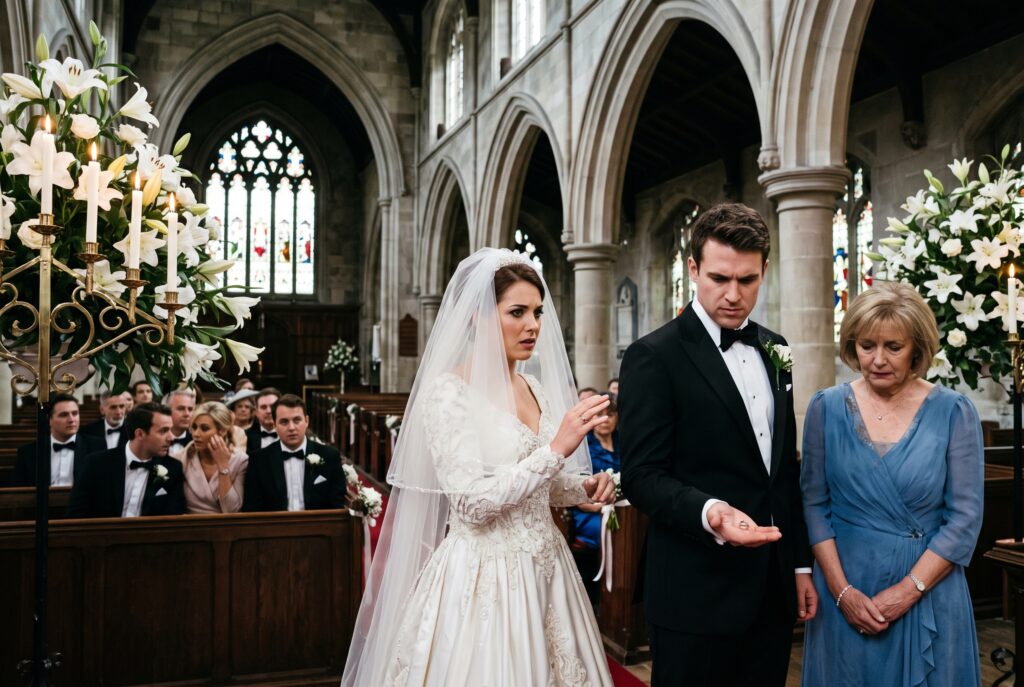
Mom wore the blue dress again.
The one from the wedding.
I noticed immediately.
“You kept it.”
She looked down.
“Why wouldn’t I?”
“I thought maybe it had bad memories.”
She smoothed the fabric.
“Good dress.”
That was Mom.
Objects did not inherit shame unless you gave it to them.
Outside, October rain had darkened the earth.
People carried mud into the barn on their boots.
Nobody apologized.
Halfway through dinner, I noticed Mom standing near the open doors.
She was watching the rain.
I went over.
“You okay?”
She nodded.
“Smell that?”
I inhaled.
Wet soil.
Hay.
Wood smoke from the burn pile.
And, yes, from the cattle lot beyond the barn—
Manure.
I started laughing.
Mom looked offended.
“What?”
“Nothing.”
“You’re acting strange.”
I leaned against the doorframe.
“Just remembering something.”
She understood.
Her expression changed.
Then, slowly, she smiled.
“You know,” she said, “your father used to say manure smelled like money.”
“That sounds like Dad.”
“He also said rain smelled like debt relief.”
“That sounds even more like Dad.”
We stood there together while the rain moved across Willowbrook.
Beyond the barn, the pasture rolled into darkness.
No stone mansions.
No clubhouse.
No decorative lake.
Not because nothing had changed.
Everything had changed.
The cattle were almost gone.
New people worked fields my father had once worked.
Solar panels sat on the south roof of the equipment shed.
The old milk room contained computers and irrigation monitors.
The future had come to Willowbrook after all.
It simply hadn’t arrived with bulldozers.
Mom slipped her arm through mine.
For years, I had thought success meant getting far enough from the farm that nobody could smell it on me.
College.
Engineering school.
A Philadelphia address.
Tailored suits.
Country clubs.
A woman who knew which fork to use before I did.
I had mistaken distance for progress.
That wasn’t Stephanie’s fault.
That part belonged to me.
Inside the barn, someone called for Mom.
One of the young farmers needed her opinion on storing winter squash.
Of course he did.
She released my arm.
Before walking away, she looked down at her boots.
There was mud on them.
Possibly something worse.
“You think I smell all right?” she asked.
I looked at Margaret Hartwell.
Sixty-nine years old.
Widow.
Farmer.
Survivor.
Owner of seventy-eight acres that several rich people had considered more valuable without her on them.
“You smell like Willowbrook.”
She smiled.
Then she crossed the barn without apologizing to anyone.
