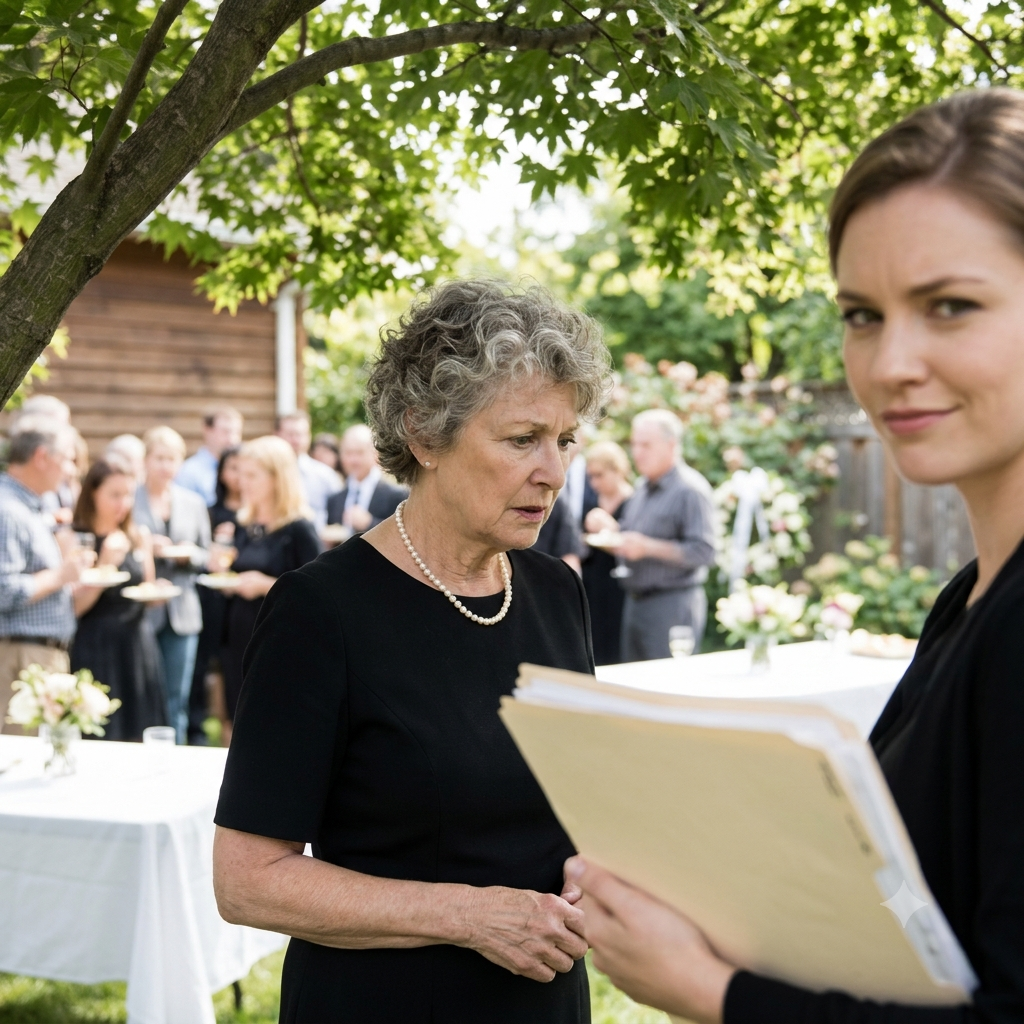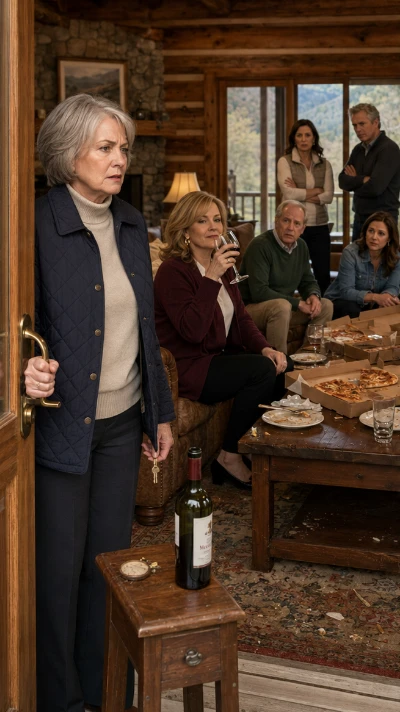
“Every time I looked at you, I saw the woman my son loved.”
Emily covered her mouth.
Margaret’s voice grew quieter.
“That was your chance to become part of this family honestly. You had twelve years.”
“I was afraid.”
“So was Daniel. Look what his fear built.”
Emily lowered the papers.
“Will you stop the investigation?”
“No.”
“Margaret—”
“No. You committed fraud. You exposed my home to strangers. You used my identity. You supported an attempt to have me declared incompetent.”
“My mother said the petition would only delay things.”
“You signed it.”
“I didn’t read all of it.”
Margaret almost laughed.
“You and Mark may have had more in common than either of you realized.”
Emily’s face crumpled.
Margaret opened the door.
“The hearing is Monday. Tell the truth there. It may be the first honest thing this family has done in decades.”
The courtroom was crowded on Monday morning.
Karen sat at the petitioner’s table wearing navy blue and an expression of solemn concern.
Emily sat beside her.
Paul occupied the bench behind them, shoulders hunched.
Across the aisle, Margaret sat with Celia.
Mark arrived alone and took a seat near the back.
Karen’s attorney began by portraying Margaret as a vulnerable widow whose grief and declining memory had caused paranoia.
He introduced photographs of the cabin after the confrontation.
He played a short video recorded by one of Karen’s relatives. It showed Margaret standing beside Deputy Moss, ordering everyone to leave.
The video began halfway through the argument.
There was no footage of Karen drinking wine, claiming future ownership, or insulting Margaret.
Only Margaret’s cold voice.
“Remove them.”
Karen dabbed her eyes.
The attorney called her to testify.
“We were invited by my daughter,” Karen said. “Margaret entered and did not seem to understand who we were. She became aggressive.”
“Has she shown confusion before?”
“Yes. She repeats herself. She forgets conversations.”
“Did she forget giving Emily permission to use the property?”
“That is what we believe.”
Celia rose for cross-examination.
“Mrs. Dawson, how long had you planned to stay at the cabin?”
“Only the weekend.”
“Why were future weekends marked on a calendar?”
“I don’t know.”
“Why had one side of the primary closet been emptied?”
“We wanted to keep our clothes neat.”
“Why was the property advertised online under your daughter’s name?”
Karen’s attorney objected.
The judge allowed the question.
Karen inhaled.
“Emily believed she had permission.”
“From Margaret?”
“From Mark.”
“Does Mark own the cabin?”
“No.”
“Did you tell Deputy Moss the cabin would belong to Emily someday?”
“I may have said something similar.”
“Were you aware that someone attempted to transfer the deed into Emily’s company?”
“No.”
“Were you aware that Margaret’s signature was forged?”
“No.”
“Were you aware that a loan application used the cabin as collateral?”
“No.”
Karen’s denials came more quickly each time.
Celia changed direction.
“Do you know a deceased man named Daniel Hale?”
Karen’s face became rigid.
“I knew him socially.”
“Did you have an affair with him?”
The courtroom erupted in whispers.
Emily stared straight ahead.
Karen’s attorney objected, arguing relevance.
Celia responded, “The petitioner’s motive depends directly upon her financial and familial relationship with the respondent’s late husband.”
The judge allowed the question.
Karen gripped the edge of the witness stand.
“Yes.”
“Did that affair result in a child?”
“Yes.”
“Who?”
Karen looked at Emily.
“My daughter.”
Mark closed his eyes.
Celia continued.
“Did Daniel Hale establish a trust for Emily?”
“I don’t recall.”
“You do not recall administering a trust worth more than two million dollars?”
Karen’s face changed.
Emily slowly turned toward her mother.
“What?” she whispered.
The judge ordered silence.
Celia displayed bank records.
“Is this your signature authorizing a withdrawal of one hundred and eighty thousand dollars?”
“I managed many accounts.”
“The account was titled Emily Dawson Trust.”
Karen’s attorney stood.
Celia produced another statement.
“Is this your signature transferring six hundred and ten thousand dollars from Emily’s trust into Dawson Hospitality Group?”
Paul made a sound from the bench.
Emily looked at him.
“Dad?”
Paul covered his face.
Karen’s composure began to fracture.
“That money was invested for the family.”
“For Emily?”
“For all of us.”
“Did Emily authorize it?”
“She was young.”
“She was twenty-seven.”
Karen looked toward her daughter.
“Emily, you have to understand—”
The judge struck the gavel.
Celia approached the witness stand.
“Mrs. Dawson, did you tell Emily that Margaret controlled the trust?”
Karen said nothing.
“Did you teach your daughter that Margaret had stolen an inheritance you had already spent?”
Karen’s eyes hardened.
“Daniel owed us.”
“Daniel owed Emily. Yet you used her money.”
“I raised her.”
“With money taken from her.”
Karen stood abruptly.
“I gave that girl everything!”
Emily rose too.
“You told me Margaret stole it.”
Karen turned.
“Sit down.”