In June, the Child Support Agency sent a wage withholding order to Satderfield Marine, and by August, every dollar of the arrears had been paid.
My trip to the lake accomplished nothing at all.
The story about my trip, on the other hand, was doing beautifully.
I let it live.
I didn’t correct a single person because correcting gossip is like auditing smoke.
That was a choice.
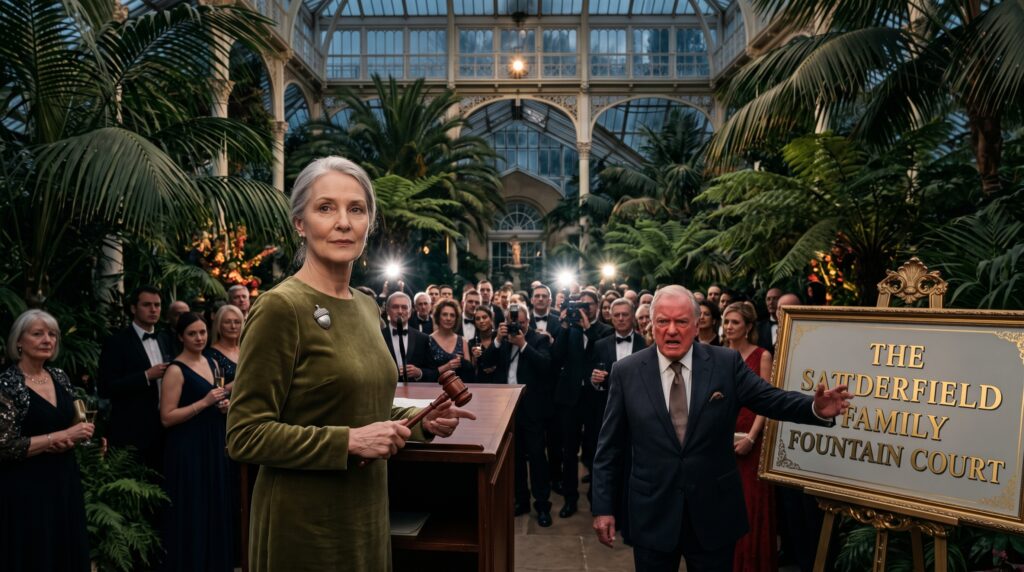
Seventeen months later, that story would walk into a gala right ahead of me.
On Monday, June 9, 2025, Brady filed a motion to cut his child support from $1,410 a month to $612.
His reason was his new salary, $44,000, working for his own father.
There was a second page.
If Juliet could no longer afford a home inside the Carden School District, Brady proposed that the children live at his parents’ lakehouse during the school week, “for stability.”
Juliet read it at her kitchen table with a calculator and a cold cup of tea.
$612 a month would not cover $1,650 in rent.
It wouldn’t come close.
The math was the whole plan.
If the money ran out, the children would follow it to the lake.
Three days later, Joyce called Quinn on the old tablet the kids used for video calls.
Quinn was ten.
Joyce told her, “You’d have your own room with a lake view, sweetheart.”
That night, Quinn asked her mother if they had to move away from the whales.
Juliet tried to handle it herself for a few weeks with forms from the clerk’s office and a library book on Ohio family law.
In late July, the magistrate set the hearing for Thursday, October 30.
That’s when I stopped asking her permission.
“Hire a lawyer,” I said. “A good one. I’ll pay.”
“Mom, you already paid for the last one.”
“I can.”
She looked at me for a long moment, the way she used to look at me when I said we’d manage.
Then she nodded.
On Wednesday, August 6, she signed with Henrietta Mapes, a family lawyer who kept a bowl of peppermints on her desk and had a reputation for reading everything twice.
I wrote the retainer check for $7,500.
They thought I was broke.
I let them think it.
It’s cheaper than arguing.
Henrietta asked for one thing first.
Every tax document Brady had touched since 2023.
That same summer, Doyle Satderfield ran for mayor.
His signs went up all over Front Street, red, white, and navy, with a cartoon pontoon boat in the corner.
DOYLE SATDERFIELD — GIVING BACK TO CARDEN.
The election was Tuesday, November 4.
One of his signs stood in the flower box outside Kesling Hardware, directly under my window.
Mr. Kesling apologized.
I told him it was good for business.
On Wednesday, August 13, I walked through the Palm House restoration with Celia, the executive director of the Harlo County Community Foundation.
I’d been a trustee since 2020.
I wore a hard hat over my braid and stepped around buckets of glazing putty while Celia talked numbers.
4,200 panes of glass.
Forty-foot palms brought back from a greenhouse in Florida.
Opening night set for Saturday, October 18.
We stopped in the fountain court.
The old cast-iron fountain stood in the middle, three tiers high, with three iron herons around the top basin, freshly painted and bone dry.
“A family’s asking to name this court,” Celia said.
“$250,000.”
“Which family?”
“It’s on your committee agenda for the 21st.”
I chaired the foundation’s gift acceptance committee, and on June 26, the board had quietly elected me its next chair.
Under our bylaws, I wouldn’t take office until the annual meeting, which this year was the gala itself.
Philippa Danforth, our chair of nine years, had told me to keep it to myself.
“Nobody needs to know until the gavel moves,” she’d said.
So nobody did.
Not even the Satderfields.
I didn’t ask Celia for the family’s name.
In my line of work, you read the file before you read the faces.
The Palm House belongs to the county.
The Fairweathers gave it to Harlo County in 1971, along with 40 acres of gardens.
And for decades, it was the prettiest thing in the county.
By 2019, it was also the most dangerous.
Rusted iron ribs, cracked panes, and a chain-link fence around the whole thing.
In 2022, our foundation took on the job of raising $4.6 million to save it.
A community foundation sounds grand.
It isn’t.
People in one county pool their charity in one place, and a board of volunteers makes sure it’s spent the way it was meant to be.
We give scholarships.
We buy fire truck tires and fill food pantries, and we hold what are called donor-advised funds.
Here’s how one works in plain English.
A family gives money to the foundation and takes the tax deduction that year.
After that, for as long as they like, they can suggest where the money goes.
Suggest.
From the day it arrives, the money itself belongs to the foundation.
Remember that word.
Suggest.
My committee reviewed every gift that came with strings attached, including every request to put a family’s name on something.
Since 2024, our policy had required one more thing for any naming over $100,000: a signed statement from the donors about where the money came from.
We’d added it after another foundation two states away carved a name in marble and then had to chisel it off.
It had never caught anything here.
That summer, my grandson joined our youth advisory council.
Twelve high school students who give away $10,000 a year in small grants.
Mason joined because I wouldn’t stop talking about it at Sunday dinner.
He wore his council badge to breakfast twice.
The committee packet came by email on Monday, August 18.
Item four said only this:
Naming request — Fountain Court.
Materials to follow.
